

FILTER BY

ASSYST, a leading provider of AI integration, cybersecurity, and digital transformation services, has been awarded a position on the Department of Defense (DoD) Chief Digital and Artificial Intelligence Office (CDAO) AI Talent 2.0 Basic Ordering Agreement (BOA). This strategic vehicle enables DoD components to rapidly access top-tier advisory and assistance support (A&AS) to accelerate mission-focused AI adoption and workforce transformation.
The AI Talent 2.0 BOA is designed to empower DoD’s cross-functional AI teams—comprised of domain experts, engineers, enablers, and program leaders—with industry-leading contractor support. ASSYST will play a critical role in enhancing collaboration across senior leadership, programs of record, data owners, and operational communities to drive sustained AI innovation and impact.
This award builds on ASSYST’s continued momentum in AI, including its First Place recognition in the GSA Federal AI Contest, its delivery of secure Agentic AI solutions, and its commitment to talent development through the ASSYST Green Accelerator, which offers dedicated learning pathways in AI, Cloud, Cybersecurity, and DevSecOps.

"AI Talent is a national security imperative. Through the CDAO AI Talent 2.0 On-Ramp, ASSYST is honored to support the DoD in identifying the right talent, deploying AI-driven solutions, and strengthening the specialized workforce needed to lead in an AI-driven defense environment,” said Joe Anderson, Chief Operating Officer at ASSYST. “We are excited to contribute our strengths in secure AI integration, cyber analytics, and programmatic excellence to help shape the Defense Department’s modernization journey.”
About the AI Talent 2.0 BOA
The AI Talent 2.0 BOA is a decentralized, flexible acquisition mechanism that allows all DoD components to quickly onboard A&AS contractor talent with competitive rates and minimal conflicts of interest. It is specifically designed to help DoD agencies define labor categories, craft performance-based work statements, and accelerate the delivery of AI capabilities through rapid Task Order (TO) awards.
ASSYST Services Under AI Talent 2.0
ASSYST will deliver non-traditional technical and program management support services under the AI Talent 2.0 BOA, spanning key mission areas such as Agile development, cyber analytics, cybersecurity, and cybersecurity risk management. Additional capabilities include integration engineering, Sec/Dev/Ops, systems engineering, system maintenance and sustainment, system security engineering, and machine learning (ML) model development, MLOps, and applied data science. ASSYST also supports testing and evaluation of system performance. Program management services include administration and operations, visual communications and graphics, logistics, project management, and customized training and instructional design—enabling the DoD to accelerate AI adoption, strengthen workforce capabilities, and modernize critical operations.
Visit for more details:
www.assyst.net/aitalent
About ASSYST DoD IT Services:
ASSYST is a trusted provider of secure, scalable, and innovative IT solutions, delivering mission-critical services to defense and civilian agencies for over 30 years. As a Cybersecurity Maturity Model Certification (CMMC) Registered Practitioner Organization (RPO) , we demonstrate our commitment to cybersecurity excellence. Our process maturity is validated by CMMI Level 3 appraisals for both Development and Services, and we hold ISO 9001, ISO 20000, and ISO 27001 certifications, ensuring adherence to international standards in quality management, IT service management, and information security management.
ASSYST's mission focus encompasses a broad spectrum of services, including Application Modernization, Digital Transformation, Cloud Services, Cybersecurity, DevSecOps, and AI/ML solutions. We have a strong track record of supporting various Department of Defense (DoD) agencies and components, such as the Army Aviation Center of Excellence, Army Combat Readiness Center, Army Human Resources Command, Army National Guard, Army Training and Doctrine Command, and Defense Microelectronics Activity. Our work with these organizations includes Program Management, Systems Integration, Information Assurance, Training Development, and Mission Command System Support.
Beyond the DoD, ASSYST collaborates with numerous federal agencies, including the Centers for Disease Control and Prevention, Centers for Medicare and Medicaid Services, Equal Employment Opportunity Commission, Internal Revenue Service, Library of Congress, National Institute of Standards and Technology, and the Program Support Center. Our engagements with these agencies cover areas such as Program Management, Application Modernization, Digital Transformation, Cloud Migration, Cybersecurity, Data Analytics, and Human-Centered Design.
Through our unwavering dedication to process excellence, cybersecurity compliance, and mission alignment, ASSYST continues to deliver transformative solutions that drive operational efficiency, enhance security postures, and support our clients' strategic objectives.



Why Scoping AI Right Matters
Supporting capture, research, and business development, I’ve had the opportunity to evaluate AI requirements across various federal agencies and collaborate closely with the ASSYST AI CoE team, including the winning members of the GSA AI Hackathon. The era of simple automation is over; AI is now about adaptability, intelligence, and integration. The current landscape demands tailored planning, careful model selection, training strategies, infrastructure scalability, and strategic decision-making from the start.
AI touches everything—from infrastructure and governance to how decisions are made. What’s changing? Traditional project lifecycles are evolving in the age of AI. Success increasingly depends on thoughtful planning around new dimensions—such as estimating compute requirements, selecting appropriate agents, and aligning architectures with mission needs. By carefully scoping these elements, teams can ensure more efficient resource use, stronger performance, and smoother integration into existing systems. Additionally, as AI adoption scales, organizations must mature their FinOps (Financial Operations) practices to optimize cloud spend, manage computational costs, and ensure AI investments remain financially sustainable. Proper scoping must now account for architecture components, resource requirements, and cost factors such as compute time, APIs, and data transfer—each of which can significantly impact outcomes. Organizations must balance experimentation and structured governance, ensuring AI initiatives align with business needs while remaining adaptable to evolving capabilities.
Scoping Agentic AI: Architecture, Estimation & Cost Efficiency
Building effective agentic AI systems starts with more than just identifying the business problem- it requires a comprehensive understanding of architectural components, processing demands, and cost implications. As agencies move to automate complex, human-in-the-loop workflows like account provisioning or document verification, the scoping process must evolve from surface-level planning to systems-level thinking.

At the heart of agentic AI lies a modular architecture, where each component plays a distinct and interdependent role:
- Agent Core – Coordinates internal logic, state management, and task orchestration
- Perception Module – Handles intake and contextual interpretation of structured and unstructured inputs
- Planning Module – Generates dynamic, multi-step strategies aligned with defined objectives
- Action Module – Executes tasks through integrated system or user-facing interfaces
- Learning Module – Continuously refines behavior based on feedback loops and observed results
- Memory Module – Maintains context, historical decisions, and reusable knowledge for future interactions
Think of these modules as instruments in a symphony; individually powerful, but only valuable when harmonized under a well-designed system. Each introduces different requirements around compute, memory, latency, and integration complexity, which is why early-stage process mining becomes critical. By analyzing workflows to uncover decision points, loops, exception cases, and bottlenecks, teams can scope more accurately and avoid rework downstream.
Scoping must also take into account real-world resource modeling. For example, if a single document verification task involves a 15-second GPU interaction and generates approximately 1,200 tokens of input-output processing, scaling that across thousands of weekly requests can quickly impact both budget and system throughput. Planning for concurrency, failover, retries, and exception handling adds further complexity. Key cost drivers to account for include compute utilization, API volumes, data storage and transfer, and any licensing tied to external platforms or AI services. Equally important is the role of design maturity: consistent data schemas, naming conventions, validation logic, and standardized logging not only improve maintainability, they also reduce token overhead and compute waste, especially when working with large language models. Small inefficiencies, when scaled, can compound into significant cost and performance issues.
Scoping agentic AI isn't just a project initiation step; it’s a foundational discipline that connects mission goals to scalable execution. The difference between a proof of concept and a production-ready system often lies in how well that discipline is applied from day one.
Automating Healthcare Provider Credentialing
Credentialing healthcare providers in public systems involves license verification, document intake, regulatory checks, and multi-stage approvals, often handled manually across disconnected systems. An agentic AI system can streamline this by extracting and validating credential data, interacting with licensing databases via APIs, managing approval workflows, and flagging edge cases for human review. It can also maintain detailed audit trails to support compliance with HIPAA and other regulatory standards. Scoping such a solution requires estimating compute loads, token usage, concurrency, and integration complexity, ensuring both scalability and trust from day one.

From AI Strategy to Real-World Impact
The path from AI strategy to operational impact in the public sector involves more than deploying a model; it requires clear alignment with mission goals, regulatory requirements, and resource constraints. As agencies explore using agentic AI to streamline services or enhance decision-making, success hinges on building secure, auditable, and long-term sustainable solutions.
Structured frameworks are only as effective as the teams behind them. At ASSYST, our AI team brings deep experience supporting mission-focused organizations, combining technical expertise with a strong understanding of operational and compliance-driven needs. The Green Accelerator provides a practical foundation for delivering AI systems that are scalable, secure, and cost-conscious. It emphasizes disciplined design practices, from standardized data pipelines to reusable agent components, while aligning with governance, performance, and accountability expectations common to large, complex systems.
Whether automating high-volume workflows or enabling intelligent agents to support operational processes, public sector organizations benefit from grounding innovation in standardized, repeatable practices. With the right architectural discipline and operational foresight, AI initiatives can move from pilot programs to production-ready systems that deliver measurable, mission-aligned results.

ASSYST's AI Services
The ASSYST AI Center of Excellence (CoE) partners with customers and their internal business and technology teams to embed AI expertise, enhancing agility and growth as AI matures. The CoE provides AI resources, training, and best practices, embedding data scientists, machine learning experts, and product managers into project teams to work closely with domain experts. Clear communication channels ensure ongoing collaboration and knowledge sharing. The CoE evaluates Agentic AI use cases, prioritizing them based on impact, feasibility, and strategic alignment. These use cases may include automating repetitive tasks, enhancing customer experiences, improving communication strategies by identifying user behavior patterns, and detecting fraud or anomalies in financial transactions. For instance, AI can be used to automate the identification and flagging of potential security threats, thereby enhancing the efficiency of the SOC teams.
We leverage the ASSYST Green Accelerator Program and solutions like Collab AI and ComplySyncAI to deliver accelerators that support these use cases. We focus on data collection, preprocessing, and ensuring data quality and privacy. Model development leverages algorithms such as decision trees, support vector machines, and neural networks with precise training, validation, and performance assessment. By incorporating and committing to human-centered design principles, we deliver intuitive, user-friendly, responsible, and humane AI solutions that meet end-users' needs.
Let’s discuss your Agentic AI Use Case.



Strong partnerships don’t just happen—they stay in motion. The best ones aren’t just about contracts or occasional check-ins; they’re built on small, steady efforts that keep both sides aligned, growing, and delivering real value.
Read More: LinkedIn

It started with an alert. A small county government’s IT team noticed unusual login attempts on their public services portal. At first, it seemed minor—maybe an employee was using the wrong password. But within hours, systems slowed down, files disappeared, and ransom notes replaced crucial service applications. It was ransomware—one of many attacks crippling State and Local governments across the country.
This isn’t just a hypothetical story. It’s the reality that agencies face every day.
The threats are real, the stakes are high, and the resources are limited. Cybercriminals don’t just target large federal agencies; they exploit vulnerabilities in local governments, school systems, utilities, healthcare networks, and emergency services—the infrastructure that communities rely on.
And yet, many agencies don’t have a full-time cybersecurity team, an advanced monitoring system, or an established incident response plan. Compliance frameworks like NIST, CMMC, FedRamp, StateRAMP, and state-specific mandates set guidelines, but staying ahead of threats requires more than checking boxes—it requires continuous security, real-time intelligence, and a proactive cyber strategy.
A New Approach to Cyber Resilience
State and Local leaders know cybersecurity is essential, but challenges like limited budgets, staffing shortages, and aging IT infrastructure make it difficult to implement.
That’s where the shift happens. Instead of treating cybersecurity as an expensive afterthought, agencies are embracing flexible, scalable security services that provide expert leadership and real-time risk management without the overhead of in-house teams.
Three critical services make this possible:
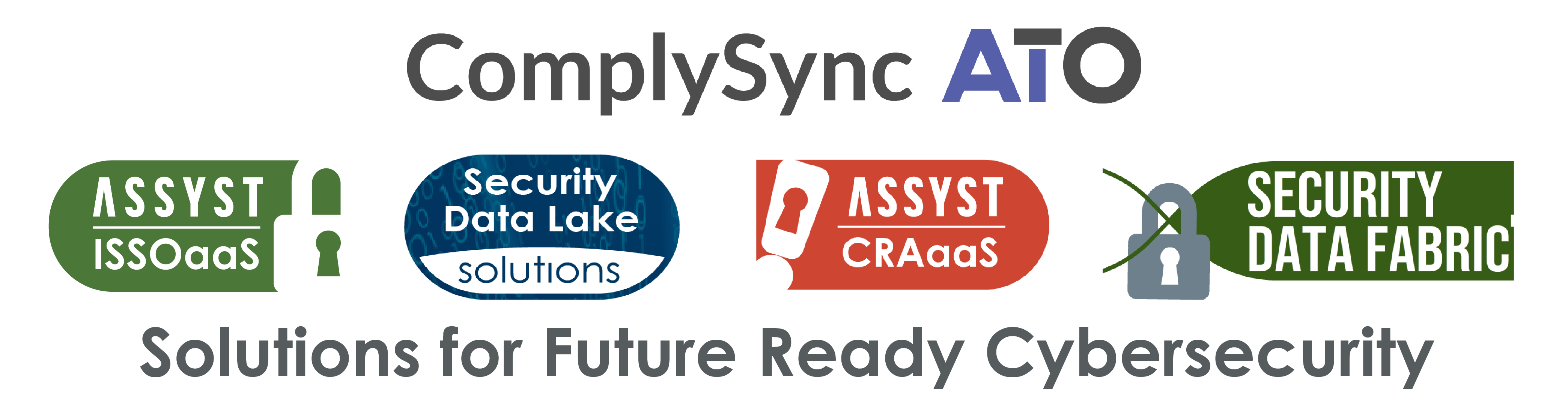
- ISSOaaS (Information Systems Security Officer as a Service) – Providing on-demand security leadership to guide governance, compliance, and policy decisions.
- CRAaaS (Cyber Risk Advisor as a Service) – Offering continuous risk assessments and real-time threat intelligence, so agencies don’t just react to attacks—they anticipate and prevent them.
Applying AI for Compliance – Leveraging AI and automation to simplify governance, risk, and compliance (GRC), reducing manual efforts and ensuring faster, more accurate security assessments and authorization to operate (ATO) processes.

How it Works in Practice?
1. ISSOaaS: Security Expertise Delivered at Scale
Many entities lack a full-time cybersecurity lead and standardized practices that can be streamlined across organizations and enterprise services. ISSOaaS promotes a scalable, flexible, and uniform services model for deploying ISSO expertise who:
- Provides SecOps Leadership and Guidance to security teams.
- Designs a Plan of Action and Milestones (POA&Ms) that aligns with organizational objectives and works within resource constraints.
- Guides Zero Trust implementation to secure users, data, and systems.
- Implements governance policies, guidelines, and standards that enable systems authorization.
- Tests for compliance with NIST, CMMC, and state cybersecurity frameworks.
- Develops and implements an incident response plan and testing program.
Discover ISSOaaS - https://www.assyst.net/OnPoint/ASSYST-ISSO-as-a-Service-CISO
2. CRAaaS: Risk Intelligence That Evolves With Threats
Annual risk assessments are no longer enough—cyber risks evolve daily. CRAaaS transforms risk management into a continuous and collaborative process driven by analytical insights to, provide:
- Enterprise Wide IT Portfolio Management for Cloud and On-Prem assets.
- Expert Guidance in Technical Implementation and Monitoring of Security Posture.
- Collaboration with Business and System Owners to Tailor policies and Processes based on Industry best practices, such as NIST.
- Data-driven risk intelligence to detect vulnerabilities before attackers do.
- Tracks risk, provides remediation strategies, and proactive measures to reduce threat occurrence.
- Threat intelligence reports and executive dashboards to turn cyber risks into actionable decisions.
Discover CRAaaS - https://www.assyst.net/OnPoint/Cyber-Risk-Advisor
3. AI-Driven Compliance with ComplySyncATO
Managing cybersecurity compliance is often manual, resource-intensive, and prone to delays. ComplySyncATO integrates AI-driven automation into the compliance process, providing:
- Automated security control validation to reduce manual compliance workloads
- AI-powered risk scoring to identify areas needing immediate attention
- Faster ATO approvals by streamlining document generation and security control assessments.
- Continuous monitoring that updates compliance postures in real time instead of relying on periodic assessments
Discover ComplySyncATO : https://www.assyst.net/ComplySyncAI
Why This Matters for State and Local Governments
These capabilities help organizations to reduce the risk of operational shutdown, financial loss, and public trust erosion. But with a strategic cybersecurity approach, agencies can:
- Reduce cyber risk without hiring full-time staff.
- Prevent attacks before they happen, instead of just responding to them.
- Automate compliance and security governance, reducing manual effort and errors.
- Turn cybersecurity from a burden into a mission enabler.
- Standardizes Cyber Practices across Organizations for Consistency and Efficiency.
The question is no longer whether agencies need stronger cybersecurity—it’s how we make it achievable. With ISSOaaS, CRAaaS, and AI-driven compliance through ComplySyncATO, cyber resilience becomes an accessible, scalable, and continuous reality.



Diego White | Business Development Analyst | LinkedIn
For government program managers, policy analysts, and communication specialists, effective communication is more than just outreach—it is a strategic function that shapes policy implementation, public trust, and inter-agency collaboration. As government programs become more complex, communication strategies must adapt to new technologies, data-driven insights, and evolving stakeholder expectations while maintaining clarity, accountability, and mission alignment.
The challenge isn’t just about modernizing tools—it’s about ensuring communications are strategic, well-integrated across agencies, and structured for long-term effectiveness.
Strategic Communications: From Information Sharing to Mission-Driven Engagement
Government agencies operate in interconnected ecosystems—public engagement, inter-agency coordination, and internal knowledge sharing all require a cohesive, strategic approach to communications. While digital platforms enhance message reach, policy alignment, security, and trust-building still require human oversight.
- Strengthening Inter-Agency Coordination: Shared knowledge platforms and structured messaging frameworks help ensure agency alignment, reducing duplication and inconsistencies across federal, state, and local governments.
- Enhancing Public Trust and Engagement: AI assisted analytics can assess public sentiment and responsiveness, but experienced communicators shape the message to reflect mission priorities and regulatory nuances.
- Ensuring Policy-Driven Messaging: Strategic communications must be consistent with policy intent, ensuring that regulatory updates, compliance requirements, and program objectives are clearly conveyed to stakeholders.
With several years of digital records, public engagement trends, and performance data, agencies have an opportunity to refine future communication strategies based on proven insights rather than starting from scratch.

Efficiency and Rapid Reuse: Smarter Communication Workflows
Every year, government agencies produce a vast volume of reports, policy updates, and stakeholder briefings. The challenge isn’t just creating content—it’s ensuring the right message reaches the right audience at the right time.
- Standardizing and Streamlining Content Reuse: AI-assisted drafting tools and templated messaging systems ensure that communications are consistent, reducing manual content duplication while maintaining policy accuracy.
- Leveraging Digital Trails for Strategic Messaging: With structured archives and search tools, agencies can rapidly update past communications, maintaining continuity and efficiency instead of re-creating materials from scratch.
- Ensuring Accessibility and Compliance: Automated tools assist in 508-compliant content creation, ensuring that communications are accessible to all stakeholders, including those with disabilities.
Rather than creating more content, the focus should be on organizing knowledge efficiently and making information adaptable across multiple audiences.

Integration Across Front, Middle, and Back Offices: A Unified Communication Strategy
Many communication challenges in government arise from disconnected workflows between public-facing teams, policy managers, and operational support systems. Strategic communications programs must be aligned across these layers to ensure faster response times, better inter-agency coordination, and structured knowledge management.
- Front-Office Communications (Public Engagement): Insights with AI and CX tools help shape messaging based on real-time feedback and sentiment analysis.
- Middle-Office Operations (Policy & Oversight): Structured knowledge-sharing platforms ensure past communication trends and stakeholder input inform policy decisions.
- Back-Office Systems (Data, Compliance, Security): Frequent content audits help agencies maintain consistency across official messaging, reducing outdated or conflicting information risks.
By integrating strategic communications across these layers, agencies can enhance message clarity, streamline decision-making, and reduce inefficiencies caused by fragmented workflows.

Using Data-Driven Insights to Shape Communication Strategies
Government agencies can access extensive digital records, including past policy rollouts, public sentiment data, and multi-year engagement trends. These digital trails provide a valuable foundation for future communications planning.
- Pattern Recognition for Messaging Effectiveness: Agencies can analyze past engagement trends to refine the most effective communication methods for different audiences.
- Automated Knowledge Summaries: AI tools can extract key takeaways from years of reports and discussions, helping communicators quickly develop informed, policy-aligned messages.
- Risk Mitigation and Compliance Monitoring: Digital records help agencies identify inconsistencies, outdated guidance, and regulatory misalignments, ensuring compliance with federal mandates.
Rather than reacting in real time, agencies can proactively use historical data and structured analytics to refine communication plans and stakeholder engagement strategies.

Managing Change & Adoption: The Human Side of Digital Evolution
The success of strategic communications programs does not depend solely on technology—it requires cultural and operational shifts within agencies. Adopting new tools must be accompanied by training, change management, and structured governance.
- Overcoming Resistance to Change: Digital adoption can be slowed by outdated processes and internal hesitations. Leadership can support phased implementation, hands-on training, and clear value demonstrations.
- Workforce Adaptation and Skill Development: AI tools can assist communicators, but subject matter experts, policy analysts, and agency leaders must be trained to use these tools effectively without losing critical oversight.
- Balancing Automation with Strategic Judgment: While automation speeds up workflows, policy interpretation, public trust, and inter-agency coordination require human expertise.
Government agencies integrating structured change management strategies will see faster adoption, higher efficiency, and long-term success in modernizing strategic communications.

Looking Ahead: Preparing for the Next Phase of Government Communications
As agencies continue integrating AI into decision-making, automation, and digital platforms, they must also prepare for new challenges and evolving stakeholder expectations.
- Scaling for Greater Public Transparency: As public expectations for updates grow, agencies need digital communication models that can scale and adapt without sacrificing accuracy.
- Ethical AI and Automation Governance: Preparing for AI-assisted content creation raises questions about bias, accountability, and oversight—agencies can establish clear guidelines on responsible AI use.
- Ensuring Long-Term Knowledge Continuity: With changes, maintaining structured archives, version control, and knowledge retrieval is critical.
The next challenge isn’t just adopting technology—it’s ensuring that digital evolution strengthens public trust, aligns with mission objectives, and upholds government accountability.

The Bottom Line: Aligning Strategy, Impact, and Efficiency in Government Communications
Government agencies are positioned to make communications smarter, faster, and more effective by integrating structured workflows, historical insights, and modern tools. However, the key to success lies in aligning technology with strategic intent rather than relying on automation for automation’s sake.
- Digital tools improve efficiency, but expertise ensures accuracy.
- Automation speeds up communication, but judgment guides its impact.
- AI refines messaging, but trust is built through human relationships.
By using several years of digital trails to guide strategy, government agencies can move from reactive messaging to proactive, mission-driven engagement—ensuring clarity, efficiency, and long-term policy alignment.


As we progress into 2025, AI and machine learning are no longer emerging trends—they are foundational elements of how we work, collaborate, and innovate. In this conversation, Allison Schiller, a leading voice in Human-Centered Design (HCD), joins us to discuss how organizations must evolve their design processes to ensure AI-driven systems remain intuitive, transparent, and human-centered. Allison explores how to align AI capabilities with user workflows, adapt HCD practices to meet the needs of a multi-generational workforce, and reimagine persona templates to capture users' evolving relationships with AI.
Follow and Read on LinkedIn 

AI has been synonymous with automation for years, handling repetitive tasks, making predictions, and accelerating processes. While it has been useful, efficient, and impressive in many ways, it has also been limited. AI models could classify documents, detect anomalies, or chat with users, but operate in isolation. Each AI system was like a solo performer—talented but disconnected from the bigger picture, highlighting the need for a more collaborative approach. That's changing. AI is evolving from single-task systems to intelligent, collaborative ecosystems. At ASSYST's AI Center of Excellence (AI CoE), my team is developing multi-agent AI systems that can perform tasks, coordinate, communicate, and adapt in sync. The goal is no longer just automation—it's about intelligent orchestration.
Imagine an AI that doesn't just detect a cybersecurity threat but actively coordinates with another AI system to patch vulnerabilities in real time or an AI-driven GRC compliance system that self-adjusts policies in response to evolving regulations. This is where we're headed, and the implications are massive.
What's Changing? The Shift from Single-Function to Multi-Agent AI
When AI adoption began gaining momentum, Single-Function AI models were designed to perform one task extremely well. These AI systems were good at handling structured, rule-based problems—automated document classification, chatbot-based customer service, and fraud detection are prime examples.
As organizations sought more from AI, Multi-Function AI emerged, expanding AI's capabilities to handle multiple tasks within the same system. An AI-driven policy review assistant that combines Natural Language Processing (NLP) with real-time analytics, or an AI-powered risk assessment tool that cross-references financial transactions, represents this evolution. These solutions were smarter but still functioned independently within their workflows, requiring human intervention to coordinate insights across systems.

Then came Agentic AI, where AI systems could operate with greater autonomy. Instead of identifying cybersecurity risks, an agentic AI could detect vulnerabilities, recommend mitigations, and execute security patches. In public health, an AI-driven system could monitor supply chains, forecast shortages, and autonomously initiate procurement. While these AI agents were more independent, they still lacked collaborative intelligence—they made decisions in isolation, without coordinating with other AI systems.
This is where Multi-Agent AI takes center stage. Instead of operating as isolated entities, AI systems now collaborate, share intelligence, and make coordinated decisions.

AI Agents as Secondary Personas in Multi-Agent Systems
A significant shift we're witnessing in AI system design is the role of AI Agents. Traditionally, AI has been viewed as a tool—an extension of human workflows. Now, AI Agents are becoming active decision-makers in their own right, playing specific roles within workflows, making decisions based on evolving data and system-wide policies, and communicating with other AI agents to coordinate responses.
At ASSYST AI CoE, we treat AI Agents as secondary personas, meaning they:
- Have specific roles within workflows, much like human counterparts.
- Make decisions based on evolving data and system-wide policies.
- Communicate with other AI agents to coordinate responses.
For example, a risk detection AI agent continuously scans transactions in financial compliance. In contrast, a policy enforcement AI agent cross-references evolving regulatory standards, forming a foundation for AI-powered governance that ensures real-time policy adaptation and compliance enforcement. Instead of flagging every anomaly for human review, these agents collaborate to prioritize cases, dynamically adjust thresholds, and automate reporting, thereby reducing compliance overhead without increasing risk.
Similarly, in disaster response, multiple AI agents can:
- Analyze geospatial data to predict areas at risk.
- Coordinate emergency response teams to ensure efficient deployment.
- Optimize resource allocation based on real-time supply chain conditions.
- Organizations can increase efficiency, improve decision-making, and reduce operational risks by shifting from static automation to active AI collaboration.

Building the Infrastructure for Multi-Agent AI
Organizations require a robust technical foundation to implement Multi-Agent AI successfully. This includes:
- Federated learning frameworks that train AI models across distributed environments while maintaining privacy.
- Real-time data streaming to ensure AI agents are working with synchronized and up-to-date information.
- Secure inter-agent communication protocols to allow AI agents to exchange information while maintaining data integrity and compliance.
- AI-ready data and Observability are equally critical. Organizations must be able to monitor AI-driven decisions, trace interactions, and ensure transparency.
We prioritize AI explainability, auditability, and real-time monitoring to ensure that AI systems remain accountable and aligned with organizational goals.
How ASSYST AI CoE is Driving Multi-Agent AI Adoption
We are developing a reference architecture for Multi-Agent AI solutions that enable organizations to transform their compliance, risk management, operational intelligence, and digital services.
- Green Accelerator offers a cloud-based AI development platform, enabling the rapid modernization of applications and workflows through AI-driven innovation.
- Collab AI enhances decision-making and content management, streamlining how organizations analyze and act on insights.
- ComplySyncAI integrates agentic AI for compliance automation, leveraging AI-driven intelligence to accelerate risk assessments and automate governance frameworks.
The Future of AI: Intelligent, Collaborative, and Scalable
The shift from Single-Function AI to Multi-Agent AI marks a fundamental change in how AI is designed, deployed, and managed. By embedding AI-powered governance into multi-agent systems, organizations can ensure AI operates within ethical, regulatory, and strategic boundaries, fostering trust and accountability. AI is not just an assistant but also a coordinator and problem-solver—it’s becoming a network of intelligent collaborators. Imagine AI systems communicating like a team of experts, solving complex problems in real time. Organizations that adopt Multi-Agent AI will gain a strategic advantage by incorporating AI as an active participant in their decision-making frameworks.
ASSYST aims to be at the forefront of this transformation, ensuring that AI-driven solutions are scalable, secure, and seamlessly integrated into enterprise and government operations. AI isn't just getting smarter; it's also better at collaborating. The future is collaborative AI, and we're making it happen.

ASSYST AI Services
The ASSYST AI Center of Excellence (CoE) collaborates with customers and their internal business and technology teams to integrate AI expertise, fostering agility and driving growth as AI capabilities evolve. The CoE provides AI resources, training, and best practices, embedding data scientists, machine learning experts, and product managers into project teams to work alongside domain experts. To accelerate this transformation, frameworks like ASSYST Green Accelerator (https://assyst.net/greenaccelerator) focus on rapidly building AI solutions and come with Agent Accelerators that can be embedded to support various use cases. They help customers modernize existing applications while integrating AI-ready capabilities for secure, scalable, and interoperable operations.


Taylor: Welcome to ASSYST QikBits! I’m Taylor. Today, we’re looking beyond technology to explore a deeper question: How can we Modernize Government Technology to create lasting efficiency—both today and for future generations?
Efficiency isn’t just about doing more with less— it’s about thoughtful design, sustainable architectures, and seamless experiences across generations of users. Joining me to discuss this is Vinay Shirke, Chief Information Officer at ASSYST, who has been at the forefront of transforming federal systems with a focus on human-centered design, minimalism, and future-ready modernization. Vinay, welcome!
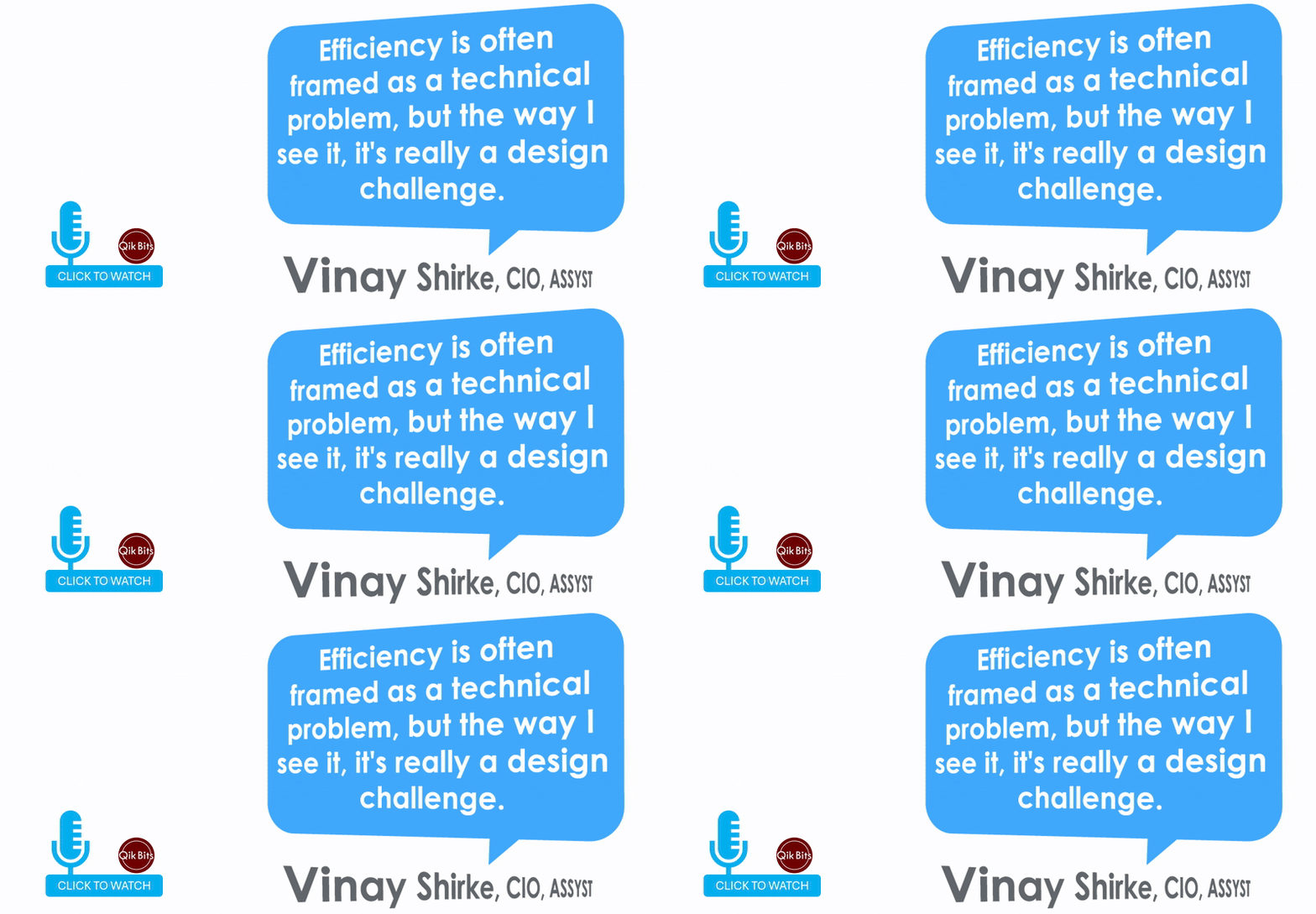
Vinay: Thanks, Taylor! So, you know, interestingly, efficiency is often framed as a technical problem, but the way I see it, it’s really a design challenge. To me, the most efficient systems are the ones that remove unnecessary steps, anticipate needs, and scale effortlessly.
Taylor: Let’s talk about that minimalistic design. We often think of modernization as adding more features, but how does minimalism actually improve efficiency?

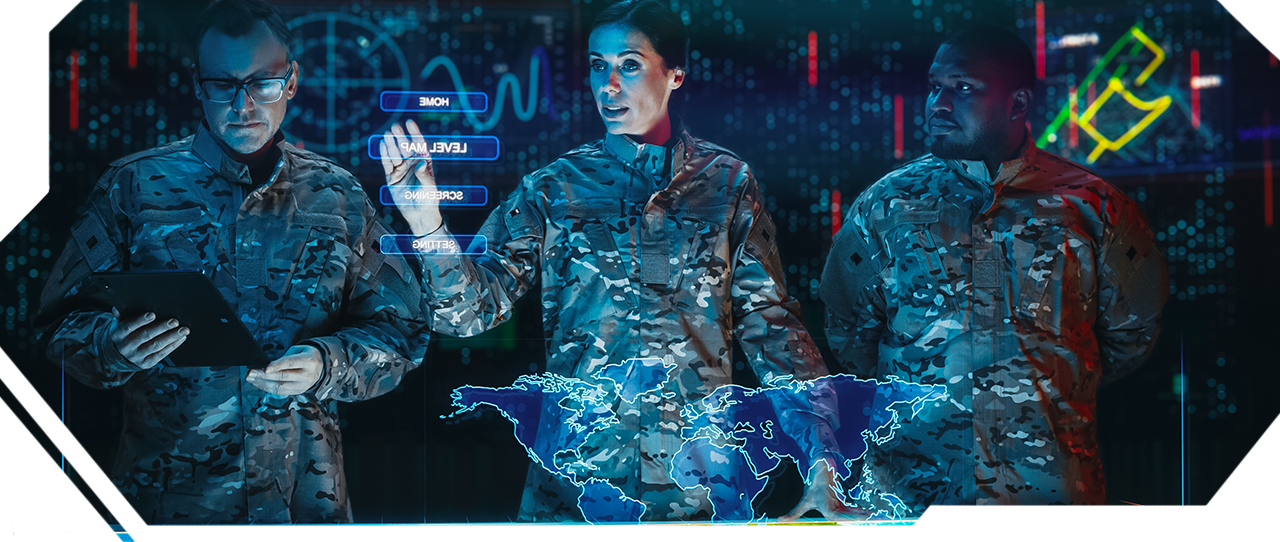
In today’s rapidly evolving operational landscape, data is the ultimate force multiplier—enabling superior decision-making, accelerating mission readiness, and securing information advantage. The challenge, however, is not just managing data at scale but ensuring it is trusted, accessible, interoperable, and secure within complex, multi-domain environments.
For organizations responsible for national security, operational effectiveness, and strategic intelligence, the ability to process, analyze, and act on data in real time is essential. This requires a next-generation data architecture that supports:
- Domain-governed data ecosystems for multi-tiered, cross-domain access
- AI-powered automation to enhance data-driven decision-making
- Zero Trust security models to safeguard mission-critical information
- Scalable, federated data platforms for enterprise-wide interoperability
ASSYST specializes in building mission-ready data solutions that integrate advanced data engineering, automation, AI/ML, and cybersecurity to drive decision intelligence, operational resilience, and compliance at all levels. Here’s how a modern data program can be architected to deliver secure, scalable, and AI-driven mission outcomes.

Transforming Data Silos into a Mission-Ready Data Ecosystem
For mission-driven organizations, fragmented and siloed data infrastructures limit operational visibility, intelligence synthesis, and real-time decision-making. A modern data ecosystem must integrate structured and unstructured data across platforms, domains, and operational environments.
Strategic Priorities:
✔ Enable domain-managed, authoritative data sources for secure and federated access
✔ Standardize data sharing using enterprise-wide frameworks and open API architectures
✔ Implement data fabric and mesh principles to support cross-platform interoperability
Data Lake to Data Fabric: Deploying a secure, scalable data lake to aggregate and analyze multi-source intelligence in real-time. https://assyst.net/ASSYSTSdf

Enabling Real-Time Situational Awareness with AI & Automation
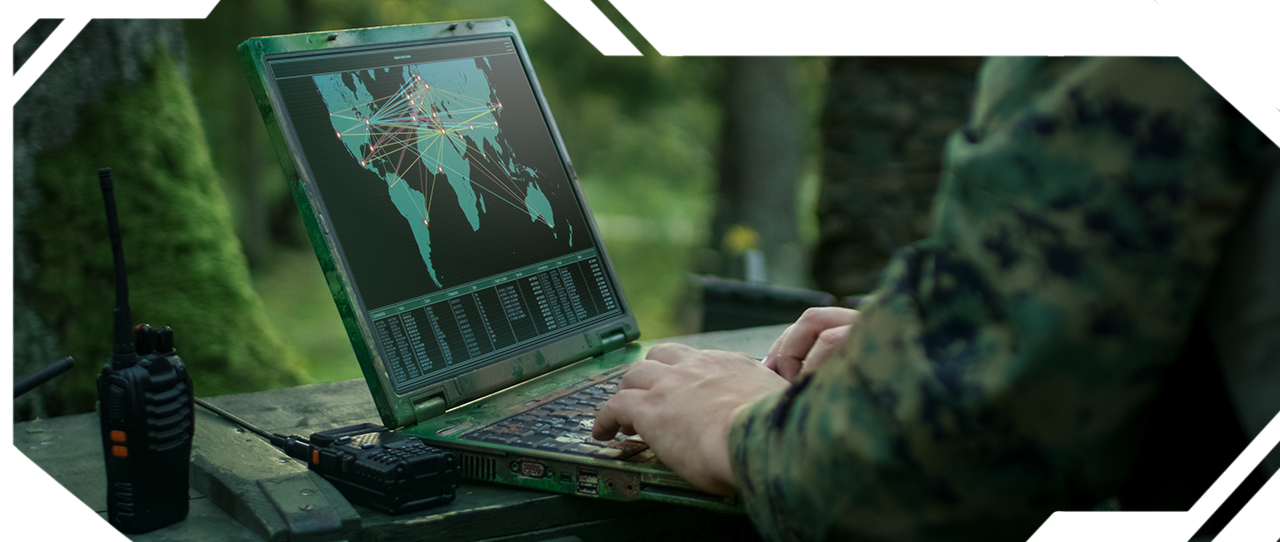
In dynamic environments, data latency can be the difference between operational success and failure. Organizations must automate data ingestion, AI-driven analytics, and predictive intelligence to provide decision-makers with instant, actionable insights.
Strategic Priorities:
✔ Deploy AI-powered analytics to predict logistics, asset readiness, and operational risk factors
✔ Integrate real-time data pipelines to provide continuous intelligence updates
✔ Leverage machine learning models to enhance data classification, pattern recognition, and anomaly detection
How we apply AI for Vulnerability and Anomaly Detection: https://www.assyst.net/OnPoint/AI-Use-Case-Security-Data-Lake-AI-Vulnerability-Detection , uncovers the potential opportunities for using AI-driven decision models to optimize logistics and force readiness based on real-time data feeds.


Architecting for Secure, Federated Data Exchange
Data must be both accessible and protected—ensuring that the right personnel can access the right information without compromising security or compliance. A Zero Trust approach to data governance ensures continuous validation, encrypted access, and multi-tiered controls for mission-critical environments.
Strategic Priorities:
✔ Adopt Zero Trust security models for end-to-end data encryption and controlled access
✔ Enable federated authentication and role-based access control (RBAC/ABAC)
✔ Ensure auditability, logging, and compliance with enterprise security mandates
Cyber Risk Advisory Services, how we bring Cybersecurity at its best - https://www.assyst.net/OnPoint/Cyber-Risk-Advisor


Unlocking Self-Service Intelligence for Mission Decision-Makers
A modern data program must empower decision-makers at all levels by enabling self-service analytics, intuitive dashboards, and AI-assisted intelligence. Users should be able to discover, create, and share data insights without needing technical expertise.
Strategic Priorities:
✔ Deploy interactive, intuitive data exploration tools for mission analysts and command personnel
✔ Ensure compliance-driven data access policies for classified and unclassified environments
✔ Enable self-service creation of mission-critical dashboards, reports, and intelligence feeds
Natural Language based Search along with GenAI and LLM-based Data Access and Discoverability to support AI Ready Workloads - https://www.assyst.net/OnPoint/AI-Cybersecurity-Security-Datalake-Healthcare


Ensuring Cloud-Native Scalability & Hybrid Deployment Readiness
Mission-critical data platforms must scale on demand while maintaining sovereignty, security, and performance across cloud, edge, and hybrid infrastructures.
Strategic Priorities:
✔ Develop cloud-native data architectures that support real-time analytics and automation
✔ Leverage hybrid and edge computing to ensure low-latency decision intelligence
✔ Implement FinOps strategies to optimize cost efficiency, resource utilization, and operational resilience
We are implementing the Green Accelerator framework for a hybrid cloud data platform to enable secure, scalable data operations across multi-data domain environments: https://assyst.net/greenaccelerator

How Agencies Can Start Ahead to Stay Ahead
A modern, mission-ready data program must provide secure, scalable, and AI-powered intelligence while supporting multi-domain interoperability, Zero Trust security, and real-time decision support. Organizations that invest in:
✅ Federated, authoritative data access models
✅ AI-driven analytics for predictive intelligence
✅ Secure, Zero Trust-enabled data architectures
✅ Scalable cloud and hybrid data ecosystems
…will be positioned to lead in intelligence-driven, real-time decision-making.


Hiring managers at state and local agencies don’t just want individuals who can list certifications or technologies—they want professionals who can solve problems, drive change, and think beyond the immediate task at hand.
As someone who on a daily basis interacts with both hiring teams and candidates, I’ve come to realize that the best interviews aren’t all about evaluation, a lot of it is about guidance. Every conversation is an opportunity to uncover talent, help see where they fit into the bigger picture, and learn about how state and local IT is evolving.
Here’s what I've been looking for and what I advise all candidates to focus on—when discussing AI, digital transformation, and service delivery in government IT interviews!