

FILTER BY

Cybersecurity today isn’t just about keeping up—it’s about staying ahead. With security teams drowning in data, overwhelmed by alerts, and managing ever-growing compliance demands, the need for smarter, AI-driven solutions has never been greater. Eugene Goldlust Sr. Account Executive at ASSYST walks through what's latest.
Read More on LinkedIn

Cloud Centers of Excellence (CoEs) have long been critical in guiding cloud adoption, governance, and operational transformation. However, organizations are shifting from traditional CoEs to integrated CloudOps and Platform Engineering models. This transition aligns with enterprise cloud strategies such as Cloud First and Cloud Smart and matches or exceeds compliance requirements, including frameworks like FedRAMP, CMMC, and Zero Trust security models. Modern CloudOps frameworks embed AI-driven automation, real-time FinOps, and security-first approaches directly into IT operations. This transition ensures that cloud governance evolves from a mere policy function into a strategy focused on execution, addressing the Agency's compliance, security, and operational efficiency requirements. Erin Slezak is exploring this topic with Sileshi Gedefaw, VP of Business Solutions at ASSYST.

Erin: Good morning, Sileshi. Thank you for taking the time to discuss the changing cloud landscape with me. Right at the top, I would like to know how cloud migration is evolving in our engagements and what role CloudOps plays.
Sileshi: Of course, Erin, and that’s a great place to start. Cloud migration strategies are no longer just about simple infrastructure shifts; they involve intelligent, mission-driven modernization. The decision-making process for selecting the right cloud environment is becoming more efficient and data-driven. Organizations now weigh Cloud Native Development versus buy fit for purpose SaS, ensure solutions are fit for purpose, and incorporate CapEx and OpEx considerations into their cloud adoption strategies.
Automation and benchmarking increasingly support these decisions, enabling faster and more effective cloud transformation. ASSYST is leading this transformation by embedding CloudOps principles into modernization efforts, ensuring cloud adoption is not just compliant but optimized for resilience, AI-driven automation, and operational efficiency. By integrating cloud governance into operations, ASSYST can enhance workload security, maintain cost-effective cloud environments, and meet FedRAMP compliance at scale.
CloudOps redefines cloud architectures by directly embedding compliance frameworks like CMMC, FedRAMP, and Zero Trust security models into cloud workflows. Organizations must decide whether to build custom cloud security and compliance models tailored to their specific needs or leverage pre-certified cloud solutions that streamline compliance efforts.
By utilizing containerization, Infrastructure as Code (IaC), and API-driven architectures, ASSYST enables organizations to enhance scalability while maintaining strong security measures. CloudOps allows for ongoing monitoring, automated policy enforcement, and real-time risk assessments, ensuring compliance is continuously upheld across cloud environments—whether through a custom-built architecture or an integrated pre-certified platform.
Erin: Very detailed and insightful, Sileshi. Your views on multi-cloud strategies are becoming more complex. How is ASSYST helping customers manage them effectively?
Sileshi: Thank you, Erin. A multi-cloud strategy is more than using multiple providers—it’s about leveraging the best of AWS, Azure, and GCP to optimize scalability, cost, and performance while mitigating vendor lock-in. ASSYST specializes in building, deploying, and scaling AI-driven workloads across multi-cloud environments, ensuring high availability and intelligent resource management.
We implement containerized architectures and serverless computing for efficient deployment and auto-scaling, while CI/CD pipelines automate model deployment, versioning, and rollback. Security remains central—IAM, encryption, and AI-driven compliance automation ensure governance, risk management, and resilience. By embedding MLOps frameworks like Kubeflow and MLflow, we enable continuous monitoring, validation, and optimization of AI models.
With automation, AI-powered orchestration, and DevSecOps-driven cloud governance, ASSYST helps organizations build scalable, secure, and future-ready multi-cloud solutions that evolve with business needs.
Erin: What role does AI play in modern CloudOps for ASSYST?
Sileshi: Our view is that AI is no longer an enhancement but the foundation of modern CloudOps. Our team is deploying AI-powered automation across workload management, cost optimization, and security enforcement, creating a self-healing, predictive, and continuously optimized cloud environment. AI-driven policy enforcement ensures ASSYST complies with evolving NIST and FedRAMP standards while enhancing operational efficiency. One of the best examples is our ComplySyncATO solution.
Erin: How is ASSYST addressing legacy technical debt within CloudOps, and what role does the ASSYST Green Accelerator play?
Sileshi: CloudOps teams are integrating re-platforming and modernization into daily operations rather than treating legacy modernization as a separate initiative. The ASSYST Green Accelerator is pivotal in this transformation by providing a structured framework for cloud adoption, AI-driven automation, and sustainability-focused IT modernization. The proof points are the number of composable solutions we have developed with Cloud Native and how they have been instrumental in modernization initiatives.
Using a hybrid cloud approach, ASSYST is leveraging microservices, serverless architectures, and edge computing to transform legacy systems incrementally while maintaining operational readiness. This approach aligns with modern enterprise architecture framework guidelines to optimize IT investments and mission-critical applications.
Erin: What defines an optimized CloudOps framework for ASSYST?
Sileshi: A few areas I foresee include AI-driven automation, which embeds predictive analytics, anomaly detection, and self-healing capabilities into cloud environments to align with enterprise cloud environment modernization goals. We will start seeing more FedRAMP-compliant architectures to ensure all cloud workloads meet FedRAMP security and risk assessment requirements. With efficiency in the spotlight, Real-time FinOps for enterprise cloud financial management will get prominence; this will be accomplished by implementing financial transparency and spending optimization tools to meet IT budget constraints. I also anticipate, Zero Trust security enforcement will be widespread as a default, Integrating automated identity management, continuous monitoring, and least-privilege access controls.
Two other areas are Integrated CloudOps and DevSecOps, which will Align cloud governance with agile software development to meet CI/CD and compliance requirements. Finally, preparing for hybrid and edge computing readiness is important, as well as supporting distributed workloads securely across cloud, on-premise, and edge environments in compliance with enterprise data policies.
Erin: A lot of good information. Thank you so much for sharing your expertise with me today, Sileshi.
Sileshi: You’re welcome, Erin. I’m happy to talk.
ASSYST Cloud Managed Services
ASSYST is a leader in implementing new cloud governance that dynamically adapts to business, security, and operational requirements. Our practice supports the evolution of Cloud Centers of Excellence into strategic CloudOps hubs, promoting intelligent automation, AI-led decision-making, and security-focused cloud strategies. We partner with agencies to reinvent cloud governance, emphasizing execution and ensuring that ASSYST can effectively manage cloud environments while driving critical business goals. The ASSYST Green Accelerator (AssystGA) is a cutting-edge, AI-optimized, cloud-based Platform as a Service (PaaS) developed, operated, and managed by ASSYST. AssystGA accelerates solution development by providing an integrated design, code generation, testing, building, deployment, and monitoring platform.



Overview
ASSYST implemented predictive analytics and risk modeling solutions for the U.S. Department of Health and Human Services (HHS) Agency’s enterprise grant management system. This initiative transformed software release management by leveraging historical defect data and machine learning to identify risks and optimize release workflows proactively. The solution empowered the agency to deliver high-quality, innovative systems with improved speed, precision, and reliability. These advancements directly supported critical healthcare initiatives, ensuring equitable access to vital programs and services.
Challenges
The HHS Agency faced critical challenges in achieving efficient, risk-free software releases:
- System Complexity: Frequent defects in UI, business logic, and database components delayed delivery timelines and impacted reliability.
- Reactive Risk Management: Existing processes depended on post-release defect detection, which limited the ability to address issues proactively and caused bottlenecks.
- Operational Inefficiencies: Manual defect resolution and risk management consumed significant resources, reducing productivity and scalability.
These constraints hindered the agency’s ability to promptly deploy innovative, high-quality solutions, affecting its ability to support critical healthcare initiatives effectively
Solution
To address these challenges, ASSYST designed and deployed a predictive analytics framework that integrated seamlessly into the agency’s existing infrastructure, optimizing its software release process.
Data Collection and Annotation
ASSYST began by analyzing historical defect data and metadata, segmenting it into three categories: UI defects, business logic errors, and database issues. This structured dataset enabled precise training of machine learning models and ensured that risk predictions targeted specific problem areas with high accuracy.
Machine Learning Model Development
The solution employed XGBoost, a high-performance machine learning algorithm, for dynamic risk prediction. Supporting tools such as Numpy and Pandas were used for efficient data preprocessing, while variables like feature complexity, resource proficiency, and release duration were incorporated into the predictive model. This approach allowed for multi-dimensional risk assessments tailored to the agency’s unique workflows.
Risk Modeling and Insights
The predictive model provided actionable insights by identifying constraints and vulnerabilities in release workflows. Teams were empowered to mitigate risks proactively using advanced visualizations created with Matplotlib and Seaborn, enabling the exploration of dynamic "what-if" scenarios. This enhanced the interpretation of risk prediction outcomes while offering deeper insights into the XGBoost predictive model. This approach facilitated data-driven decision-making and streamlined risk management.
Outcomes
The implementation of predictive analytics delivered transformative results for the HHS Agency’s software release processes:
- Increased Efficiency: Release cycles were shortened by 30%, accelerating the deployment of critical systems.
- Reduced Defects: Proactive risk identification and mitigation decreased production defects by 40%, minimizing rework and delays.
- Optimized Resource Utilization: Automated risk modeling freed up resources, allowing teams to focus on innovation and strategic tasks.
- Improved Healthcare Support: Faster, defect-free releases strengthened the agency’s ability to support healthcare initiatives, ensuring equitable access to essential programs and services.
Conclusion
ASSYST’s predictive analytics framework provided the HHS Agency with a scalable, future-ready solution for software release management. By proactively identifying risks and optimizing workflows, the solution enhanced operational efficiency, improved product quality, and reduced the time and cost associated with modernization. By seamlessly integrating with existing systems, the framework demonstrated that transformative advancements in release management can be achieved without extensive infrastructure overhauls. This approach supports high-quality software delivery and reinforces the agency’s mission to improve health outcomes for all.

ASSYST AI Services
The ASSYST AI Center of Excellence (AICoE) plays a crucial role in this project. It partners with customers and their internal business and technology teams to embed AI expertise, enhancing agility and growth as AI matures. The CoE provides AI resources, strategy, and best practices, prepares AI Ready Data, and embeds data scientists, machine learning experts, and product managers into project teams to work closely with domain experts. Clear communication channels ensure ongoing collaboration and knowledge sharing. The CoE evaluates AI use cases, prioritizing them based on impact, feasibility, and strategic alignment. These use cases include automating repetitive tasks, enhancing customer experiences, improving communication strategies by identifying user behavior patterns, and detecting fraud or anomalies in financial transactions.
We leverage the ASSYST Green Accelerator Program and solutions like Collab AI and ComplySyncAI to deliver accelerators that support these use cases. ASSYST focuses on data collection, preprocessing, and ensuring data quality and privacy. Model development leverages algorithms such as decision trees, support vector machines, and neural networks with precise training, validation, and performance assessment. The deployment process integrates models into production environments, leveraging a technology stack provided by Microsoft Azure, AWS, or other SaaS AI Tools. Continuous monitoring and maintenance ensure sustained accuracy, scalability, and reliability.
By incorporating and committing to human-centered design principles, we deliver intuitive, user-friendly, responsible, and humane AI solutions that meet end-users' needs.
Let’s discuss your AI Use Case.

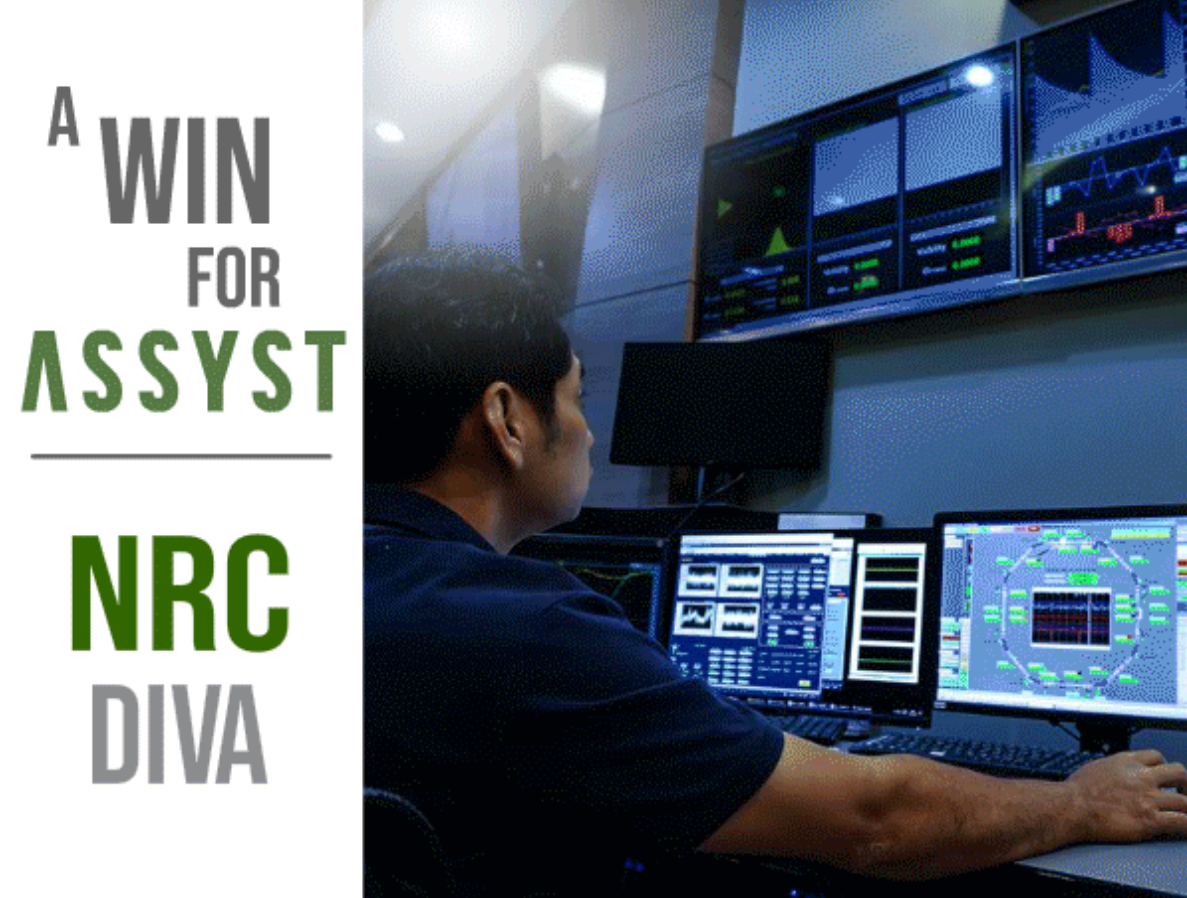
ASSYST, a leading provider of IT solutions, is pleased to announce that it has been awarded the Nuclear Regulatory Commission (NRC) Development and Integration Vehicle for Applications (DIVA) Multiaward Blanket Purchase Agreement (BPA). This multi-award BPA enables ASSYST to provide essential IT services, enhance NRC's critical mission capabilities, and support the agency’s evolving IT needs.
Under this BPA, ASSYST will offer various services focused on application development, cloud, modernization, maintenance, and integration. The contract will support NRC's full agile application lifecycle and help streamline operations, optimize data management, and improve system interoperability.
ASSYST’s extensive experience with the NRC and other regulatory and citizen services agencies, including the Securities and Exchange Commission (SEC), Centers for Medicare and Medicaid Services (CMS), Food and Drug Administration (FDA), Centers for Disease Control and Prevention (CDC), the Equal Employment Opportunity Commission (EEOC), Department of Energy (DOE), Health Resources and Services Administration (HRSA), and the Internal Revenue Service (IRS), has solidified the company as a trusted partner for mission-critical IT solutions.
“We are excited to expand our partnership with the NRC,” said Khalil Zebdi, EVP of Federal Business Development at ASSYST. “This award underscores our expertise in delivering secure, innovative IT solutions that help regulatory agencies meet their mission goals. We look forward to supporting the NRC’s IT modernization initiatives.”
ASSYST is committed to delivering secure, tailored IT solutions that support government operations' efficiency, compliance, and effectiveness. With decades of experience serving federal, state, and local government clients, ASSYST remains a trusted digital transformation and modernization partner.


At ASSYST, our dedication to giving back is more than a corporate responsibility—it’s a core value that defines who we are. In 2024, we continued to make a meaningful impact through philanthropy, focusing on supporting local communities and fostering a culture of generosity among our employees.
One of the highlights of our 2024 philanthropic efforts was our continued partnership with Northern Virginia Family Service (NVFS). Through a company-wide donation drive, we collected and contributed essential items to support children and families in need. This initiative reinforced our long-standing commitment to uplifting our community and ensuring that families facing hardship receive the assistance they deserve.

Beyond donations, our employees actively participated in volunteer activities and community engagement, demonstrating that giving back is a collective effort at ASSYST. Whether organizing drives, participating in hands-on service projects, or collaborating with local nonprofits, our team members went above and beyond to support meaningful causes.
In previous years, we have proudly contributed to organizations such as the Loudoun Abused Women’s Shelter (LAWS), which provides critical support to individuals affected by domestic violence. Our commitment to selecting causes that align with our mission ensures that our contributions continue to have a lasting and positive impact.

“At ASSYST, giving back isn’t just something we do—it’s part of who we are. In 2024, we deepened our commitment to community service, and we will continue to foster a culture of generosity and social impact in the years ahead.” — Shyama Mandal, CEO, ASSYST.
As we move into 2025, we remain dedicated to strengthening our community partnerships and expanding our philanthropic efforts. Through continued collaboration and engagement, we will keep working towards making a difference—one step and one act at a time.
#ASSYSTogether: Making an Impact, One Step and One Act at a Time

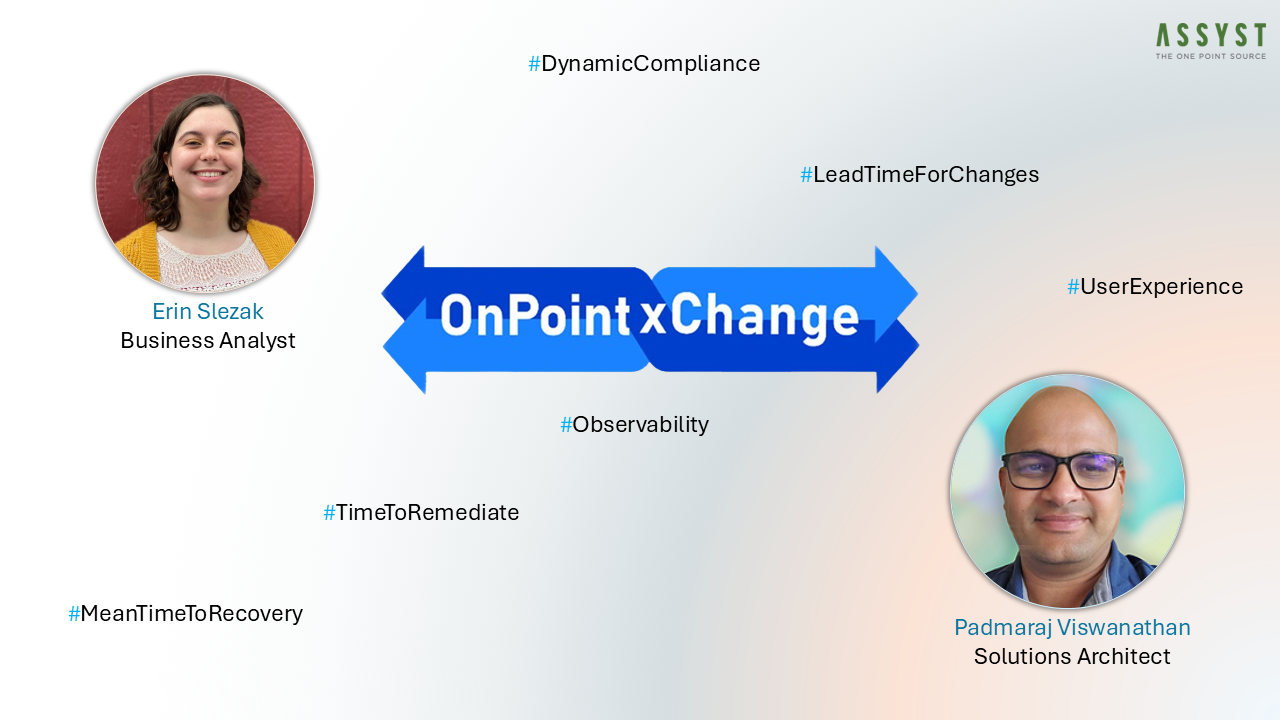
Welcome to ASSYST OnPoint xChange, where we bring insightful discussions on the technologies shaping government IT. Today, Padmaraj Viswanathan (Raj), Solutions Architect at ASSYST, joins us to discuss how to measure success in DevSecOps. Raj shares practical examples, tools, and metrics that help organizations achieve speed, security, and reliability in their workflows. He also manages ASSYST's Green Accelerator Program, which accelerates solution launches at the speed of business. Leading the conversation is Erin Slezak (Erin), Business Analyst at ASSYST, diving into the challenges and opportunities driving the next phase of DevSecOps.
Erin: Thank you for taking the time to speak with me, Raj. DevSecOps has transformed how teams deliver software, but success can be tricky to quantify. What do you think are the most meaningful metrics for measuring success?
Raj: That’s a great place to start, Erin. When I think about success in DevSecOps, it’s about balancing three things: speed, security, and reliability. Deployment frequency is a major indicator—it tells you how often teams deliver value. I worked with a team that used Tekton for CI and ArgoCD for automated deployments, moving from monthly to weekly deployments. That shift improved delivery times and built team confidence in the process.
Lead time for changes is another critical metric. For example, by optimizing their CI/CD pipelines with Tekton and introducing automated testing, the ASSYST team reduced lead time from two weeks to under three days. Automating repetitive tasks allowed them to focus on delivering features faster and with fewer errors.
Erin: Those sound like solid metrics, but what about when things go wrong? How do you measure and improve resilience?
Raj: Resilience is about how quickly you recover when something goes off track. Mean Time to Recovery (MTTR) is a key metric, and our team implemented automated rollback mechanisms using ArgoCD. For example, ArgoCD’s health checks detected deployment issues and triggered rollbacks automatically, reducing MTTR from eight hours to just over an hour.
Another useful metric is the change failure rate, which tracks how often deployments lead to issues. For one client, integrating chaos engineering tools alongside ArgoCD allowed them to test failure scenarios proactively. This helped identify weak points in their infrastructure and significantly reduced the failure rate.

Erin: Security is a cornerstone of DevSecOps. How do you measure its effectiveness without slowing teams down?
Raj: Automation plays a vital role here, and having a cohesive toolchain is essential for integrating security into every phase of the pipeline. Time to detect and remediate vulnerabilities is a crucial metric. Our team integrated static application security testing (SAST) into their Tekton CI pipeline. Vulnerabilities were flagged immediately after code commits, giving developers near-instant feedback. This not only improved security but also streamlined workflows by leveraging the toolchain's seamless integration.
Another important area is Infrastructure-as-Code (IaC) security. Using tools like OPA/Gatekeeper, Kubernetes configurations were continuously scanned for misconfigurations. For instance, before deployment, an improperly configured S3 bucket was identified in one project. The bucket had public-read permissions enabled, which could have exposed sensitive data. Gatekeeper flagged the issue during a pre-deployment scan, allowing the team to correct it without impacting production.
Similarly, OPA policies helped enforce standards for secure port configurations in Kubernetes pods. For example, open ports were automatically flagged as non-compliant, ensuring that only explicitly allowed ports were exposed. These proactive scans dramatically reduced the risk of security breaches, and metrics like "number of misconfigurations detected and resolved per pipeline" highlighted the effectiveness of these policies.
Erin: Automation sounds like a game-changer. What advice would you give to teams starting to automate or planning to scale their DevSecOps workflows?
Raj: Start small and focus on the areas with the biggest bottlenecks. We began automating the testing workflows using Tekton in one of our product development workstreams. Then, we applied it to a single application, which led to immediate results: fewer bugs in production and faster release cycles.
As confidence grew, our team expanded automation to include code scans and AI-driven anomaly detection for monitoring. For example, integrating AI tools into their Prometheus and Grafana observability stack provided actionable alerts and reduced the mean time to detect issues. The key is to build incrementally—automation should evolve naturally with your workflows.

Erin: Raj, observability is becoming a key focus in modern IT systems, and there’s growing talk about its connection to customer experience (CX). How does observability fit into DevSecOps, and is it meaningful for systems like citizen services?
Raj: Absolutely, Erin. Observability is essential for public-facing systems like citizen services, where reliability directly impacts user trust. Deploying Prometheus and Grafana in Kubernetes environments provides teams with end-to-end visibility into system health.
For instance, the ASSYST team worked with a regulatory submissions portal, where latency issues during peak hours were traced to a specific API through Prometheus metrics. With this insight, the team could prioritize and resolve the issue, ensuring users could complete transactions without disruptions. Additionally, by integrating observability with CX metrics, like transaction completion rates and feedback scores, teams shifted their focus from merely “keeping systems up” to “ensuring smooth user experiences.”
Erin: For teams managing large portfolios, how do you recommend tracking success across multiple teams and projects?
Raj: Consistency in metrics is key, but flexibility for team-specific needs is equally important. Metrics like deployment frequency and lead time for changes can be tracked across all teams, while individual teams might focus on their unique challenges, such as reducing MTTR for critical services.
Across the industry, organizations are using custom Grafana dashboards that pull data from Tekton and ArgoCD APIs. These dashboards provide leadership with a portfolio-wide view of metrics while allowing individual teams to drill down into their specific performance data. This visibility helps identify bottlenecks and promotes accountability.

Erin: Before we wrap up, what’s one piece of advice you’d give teams trying to measure and improve their DevSecOps practices?
Raj: Focus on progress, not perfection. Metrics are there to guide improvement, not to be the end goal themselves. Start by tracking key metrics, such as deployment frequency, lead time, and time to remediate vulnerabilities. Use those as a baseline and iterate incrementally. Remember, the ultimate goal is delivering secure, reliable value, not achieving perfect metrics.
Erin: Thanks, Raj. What you’re sharing has been incredibly insightful. It’s great to hear how practical metrics and real-world tools can drive meaningful improvements.
Raj: Thanks, Erin. It’s always exciting to see how teams evolve when they focus on the right things.

ASSYST Application Modernization and DevSecOps
ASSYST has consistently delivered exceptional DevSecOps capabilities across critical federal initiatives, including CMS’s Security Data Lake, EEOC’s Regulatory Application Modernization, HHS PSC Financial System Modernization, and DOE’s Application Modernization. Our approach to application modernization leverages DevSecOps to seamlessly integrate security, agility, and scalability into every phase of the application lifecycle. By embedding security practices directly into CI/CD pipelines and automating compliance checks, we ensure that modernization efforts align with evolving regulatory standards such as Zero Trust and CMMC.
This methodology enables agencies to transition from legacy systems to modern, cloud-native architectures while maintaining operational resilience and accelerating time-to-value for mission-critical applications. Through innovative tools and frameworks like the Green Accelerator, ASSYST facilitates the design, development, and deployment of secure, adaptive, and future-ready systems, empowering agencies to achieve their modernization and mission-critical goals.

ASSYST, a leader in delivering innovative IT solutions to Federal, State, and Local government agencies, is pleased to announce its award of a spot on the GSA OASIS+ Unrestricted Government-Wide Acquisition Contract (GWAC). This strategic win enables ASSYST to expand its support for federal agencies by delivering mission-critical services through a robust contract vehicle.
Building on its successful performance under previous GWACs, ASSYST is ready to deliver exceptional results under OASIS+ task orders. ASSYST’s expertise spans key domains such as enhancing agency performance, optimizing regulatory systems and infrastructure, advancing innovation in HealthIT and emerging technologies, and strengthening national security through leading-edge tools and strategies. These capabilities are complemented by ASSYST’s commitment to digital modernization, data interoperability, and cybersecurity solutions, ensuring federal agencies meet evolving mission objectives efficiently and effectively.

“Earning a place on GSA OASIS+ Unrestricted is a significant milestone for ASSYST,” said Joe Anderson, Chief Operating Officer at ASSYST. “This award reflects our commitment to delivering innovative solutions and exceptional service across the federal sector. Our GWAC Program Management Office is fully equipped to support diverse agency needs, ensuring mission success.”
ASSYST’s success is bolstered by its investments in cutting-edge technologies, including its Green Accelerator Innovation and solutions like Collab AI, ComplySyncAI, and Hephaestus. These advancements empower agencies to address complex challenges with precision and agility, reinforcing ASSYST’s reputation as a trusted partner in government transformation.
The OASIS+ Unrestricted GWAC offers federal agencies access to various professional services, including IT, engineering, scientific, and financial management solutions. ASSYST’s inclusion underscores its ability to meet the rigorous technical and operational requirements of the General Services Administration (GSA).
With a proven track record of program execution, ASSYST has delivered mission-critical solutions to agencies, including the Department of Defense (DoD), Health and Human Services (HHS), and the Army. These experiences position ASSYST to provide innovative, scalable, and impactful solutions across Citizen Services, Health Systems, Energy Infrastructure, Financial Management, and National Security domains.
Learn more about how ASSYST can support your mission at www.assyst.net/oasisplusur or contact us at TeamUp@assyst.net.
DISCOVER

ASSYST, a leading innovator in IT and professional services, has been awarded a spot on the GSA OASIS+ Total Small Business (SB) Government-Wide Acquisition Contract (GWAC). This achievement reinforces ASSYST’s reputation for delivering agile, mission-driven solutions tailored to federal agencies’ unique operational needs.

“Securing a position on GSA OASIS+ Total Small Business is a testament to ASSYST’s ability to deliver transformative outcomes for our federal customers,” said Shyama Mandal, CEO of ASSYST. “Our innovative technologies, coupled with a deep understanding of mission-critical challenges, empower federal agencies with efficient, scalable, and impactful solutions.”
As a Total Small Business awardee, ASSYST is positioned to deliver high-impact services tailored to evolving federal missions. ASSYST's expertise spans areas such as enhancing agency performance, optimizing systems and infrastructure, advancing innovation in biotechnology and emerging technologies, and strengthening national security through cutting-edge tools and strategies.
The OASIS+ Total Small Business GWAC enables federal agencies to access various professional services while promoting small business participation. With a legacy of mission-centric solutions for Cabinet Level agencies such as the Department of Defense (DoD), Army, Energy, State Department, Health and Human Services (HHS), ASSYST is well-equipped to address challenges in Citizen Services, Health Systems, Energy Infrastructure, Financial Management, and National Security.
Green Accelerator Innovations, including Collab AI, ComplySyncAI, and Hephaestus, and investments in best-in-class technologies through partnerships, drive ASSYST's success. These innovations showcase ASSYST’s commitment to advancing federal
missions through leading-edge tools and strategies. ASSYST’s adaptive, agile approach ensures federal partners can overcome emerging threats, streamline operations, and foster innovation. The company remains committed to delivering exceptional value through tailored solutions that drive mission success.
Learn More Discover how ASSYST’s small business capabilities can support your mission at www.assyst.net/oasisplussb or contact us at TeamUp@assyst.net
DISCOVER



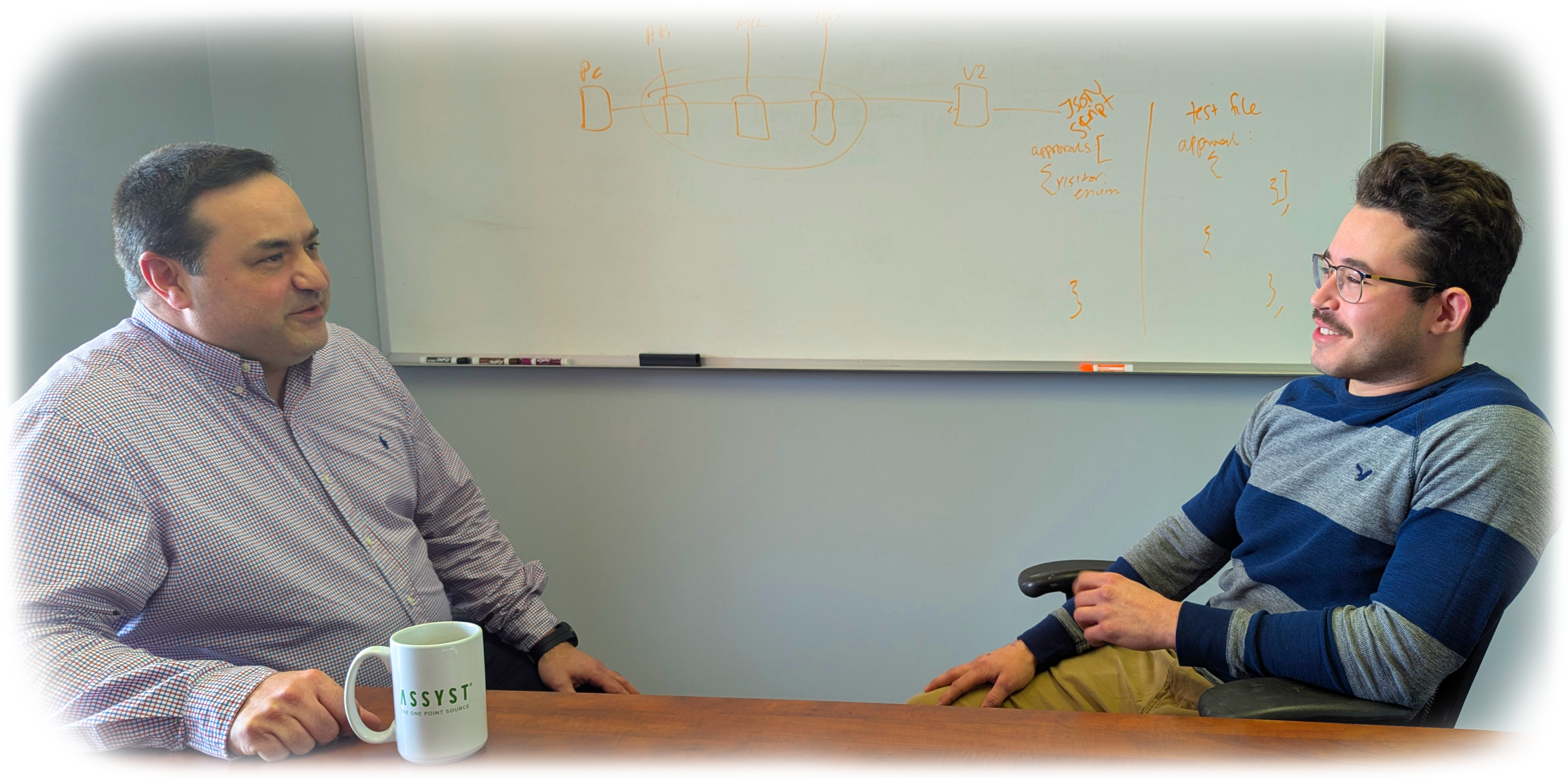
Welcome to ASSYST OnPoint xChange!
As we welcome the year 2025 Andrew Rios Account Manager at ASSYST , is discussing the convergence of IT Investments across Federal, State, and Local Governments with Ali Kalamchi Manager - Business Solutions.
.... Continue Reading - Click Here (LinkedIn)


With millions of healthcare claims filed daily, even a small percentage of undetected fraud can result in significant financial losses for agencies. Traditional fraud detection systems often fail to keep up with the scale and complexity of modern claims processing, leading to inefficiencies, delays, and missed opportunities to protect valuable resources. Compounding this challenge, adhering to FHIR® (Fast Healthcare Interoperability Resources) standards introduces technical complexities that require advanced, scalable solutions.
Overview
In a Health and Human Services environment, managing healthcare claims' growing volume and complexity requires a robust and innovative approach to fraud detection. ASSYST developed an AI anomaly detection system to automate claims analysis, assign anomaly scores to high-risk cases, and deliver actionable insights through real-time monitoring and advanced dashboards. This solution addresses fraud detection challenges and ensures compliance with FHIR® standards, providing a secure, interoperable framework for seamless claims processing.
Challenges
The Health and Human Services sector faces several critical challenges in maintaining oversight and operational efficiency. Managing millions of claims overwhelms traditional detection systems, leading to delays in identifying fraudulent patterns and consuming valuable resources. Conventional rule-based methods struggle with accuracy, often generating high false positive rates and failing to adapt to new fraud tactics.
Adding to this complexity, FHIR® standards—essential for data standardization and interoperability—demand seamless integration into analytical systems. Agencies must balance compliance with the need for scalable, efficient, and adaptive fraud detection tools, a task that cannot be effectively managed with legacy systems alone.
Solution
ASSYST implemented an AI anomaly detection system that transforms claims processing and fraud prevention. The solution begins with automated pipelines validating, cleaning, and standardizing claims data by FHIR® requirements. This ensures the data is ready for analysis by a Decision Tree Classifier, which evaluates historical patterns, provider details, and claim attributes to detect anomalies. Each claim is assigned an anomaly score, prioritizing high-risk cases for further investigation.
Real-time alerts are generated to notify investigation teams of potential fraud, providing detailed indicators such as affected fields, anomaly likelihood, and supporting evidence. These alerts allow teams to focus on critical cases, improving efficiency and reducing resource waste.
The solution also features interactive dashboards that visualize key metrics, including fraud trends, detection rates, and operational performance. These dashboards give decision-makers a comprehensive, real-time view of claims data, enabling faster, data-driven actions. Adaptive machine learning capabilities ensure the system continuously evolves to identify emerging fraud patterns and improve detection accuracy.
Outcomes
The AI-enabled anomaly detection system delivered measurable improvements, transforming claims oversight and fraud prevention:
- Fraud detection timelines were reduced by 40%, allowing faster resolution of irregular claims.
- False positives decreased by 30%, freeing investigative resources for high-priority cases.
- Compliance with FHIR® standards ensured secure, standardized data processing, enabling seamless interoperability across systems.
- Operational efficiency improved significantly, with the system effortlessly scaling to handle millions of claims while optimizing resource utilization.
These outcomes equipped investigation teams with actionable insights and empowered decision-makers with the tools to adopt a proactive approach to fraud prevention, fostering greater trust and reliability in claims processing.
Conclusion
ASSYST’s AI enabled anomaly detection solution provides Health and Human Services agencies with a powerful framework for modernizing fraud detection and claims oversight. By leveraging FHIR® standards for seamless data integration and advanced analytics for anomaly detection, the solution accelerates fraud identification, reduces false positives, and enhances operational efficiency. Scalable and adaptive, this solution equips agencies to stay ahead of emerging fraud challenges, protect valuable resources, and deliver reliable, user-centric services.

ASSYST AI/ML Services
The ASSYST AI Center of Excellence (AICoE) plays a crucial role in this project. It partners with customers and their internal business and technology teams to embed AI expertise, enhancing agility and growth as AI matures. The CoE provides AI resources, strategy, and best practices, prepares AI Ready Data, and embeds data scientists, machine learning experts, and product managers into project teams to work closely with domain experts. Clear communication channels ensure ongoing collaboration and knowledge sharing. The CoE evaluates AI use cases, prioritizing them based on impact, feasibility, and strategic alignment. These use cases include automating repetitive tasks, enhancing customer experiences, improving communication strategies by identifying user behavior patterns, and detecting fraud or anomalies in financial transactions.
We leverage the ASSYST Green Accelerator Program and solutions like Collab AI and ComplySyncAI to deliver accelerators that support these use cases. ASSYST focuses on data collection, preprocessing, and ensuring data quality and privacy. Model development leverages algorithms such as decision trees, support vector machines, and neural networks with precise training, validation, and performance assessment. The deployment process integrates models into production environments, leveraging a technology stack provided by Microsoft Azure, AWS, or other SaaS AI Tools. Continuous monitoring and maintenance ensure sustained accuracy, scalability, and reliability.
By incorporating and committing to human-centered design principles, we deliver intuitive, user-friendly, responsible, and humane AI solutions that meet end-users' needs.
Let’s discuss your AI Use Case.