

Type:
From Cloud CoE to CloudOps: Achieving Cloud Excellence
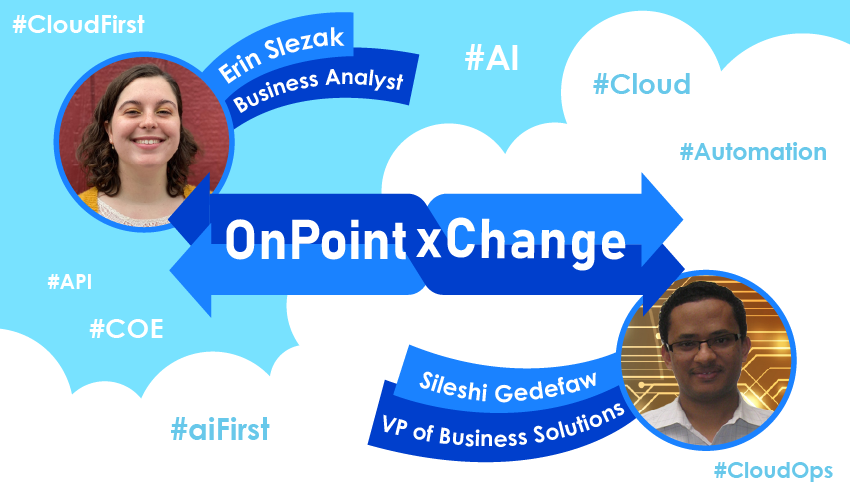
Cloud Centers of Excellence (CoEs) have long been critical in guiding cloud adoption, governance, and operational transformation. However, organizations are shifting from traditional CoEs to integrated CloudOps and Platform Engineering models. This transition aligns with enterprise cloud strategies such as Cloud First and Cloud Smart and matches or exceeds compliance requirements, including frameworks like FedRAMP, CMMC, and Zero Trust security models. Modern CloudOps frameworks embed AI-driven automation, real-time FinOps, and security-first approaches directly into IT operations. This transition ensures that cloud governance evolves from a mere policy function into a strategy focused on execution, addressing the Agency's compliance, security, and operational efficiency requirements. Erin Slezak is exploring this topic with Sileshi Gedefaw, VP of Business Solutions at ASSYST.

Erin: Good morning, Sileshi. Thank you for taking the time to discuss the changing cloud landscape with me. Right at the top, I would like to know how cloud migration is evolving in our engagements and what role CloudOps plays.
Sileshi: Of course, Erin, and that’s a great place to start. Cloud migration strategies are no longer just about simple infrastructure shifts; they involve intelligent, mission-driven modernization. The decision-making process for selecting the right cloud environment is becoming more efficient and data-driven. Organizations now weigh Cloud Native Development versus buy fit for purpose SaS, ensure solutions are fit for purpose, and incorporate CapEx and OpEx considerations into their cloud adoption strategies.
Automation and benchmarking increasingly support these decisions, enabling faster and more effective cloud transformation. ASSYST is leading this transformation by embedding CloudOps principles into modernization efforts, ensuring cloud adoption is not just compliant but optimized for resilience, AI-driven automation, and operational efficiency. By integrating cloud governance into operations, ASSYST can enhance workload security, maintain cost-effective cloud environments, and meet FedRAMP compliance at scale.
CloudOps redefines cloud architectures by directly embedding compliance frameworks like CMMC, FedRAMP, and Zero Trust security models into cloud workflows. Organizations must decide whether to build custom cloud security and compliance models tailored to their specific needs or leverage pre-certified cloud solutions that streamline compliance efforts.
By utilizing containerization, Infrastructure as Code (IaC), and API-driven architectures, ASSYST enables organizations to enhance scalability while maintaining strong security measures. CloudOps allows for ongoing monitoring, automated policy enforcement, and real-time risk assessments, ensuring compliance is continuously upheld across cloud environments—whether through a custom-built architecture or an integrated pre-certified platform.
Erin: Very detailed and insightful, Sileshi. Your views on multi-cloud strategies are becoming more complex. How is ASSYST helping customers manage them effectively?
Sileshi: Thank you, Erin. A multi-cloud strategy is more than using multiple providers—it’s about leveraging the best of AWS, Azure, and GCP to optimize scalability, cost, and performance while mitigating vendor lock-in. ASSYST specializes in building, deploying, and scaling AI-driven workloads across multi-cloud environments, ensuring high availability and intelligent resource management.
We implement containerized architectures and serverless computing for efficient deployment and auto-scaling, while CI/CD pipelines automate model deployment, versioning, and rollback. Security remains central—IAM, encryption, and AI-driven compliance automation ensure governance, risk management, and resilience. By embedding MLOps frameworks like Kubeflow and MLflow, we enable continuous monitoring, validation, and optimization of AI models.
With automation, AI-powered orchestration, and DevSecOps-driven cloud governance, ASSYST helps organizations build scalable, secure, and future-ready multi-cloud solutions that evolve with business needs.
Erin: What role does AI play in modern CloudOps for ASSYST?
Sileshi: Our view is that AI is no longer an enhancement but the foundation of modern CloudOps. Our team is deploying AI-powered automation across workload management, cost optimization, and security enforcement, creating a self-healing, predictive, and continuously optimized cloud environment. AI-driven policy enforcement ensures ASSYST complies with evolving NIST and FedRAMP standards while enhancing operational efficiency. One of the best examples is our ComplySyncATO solution.
Erin: How is ASSYST addressing legacy technical debt within CloudOps, and what role does the ASSYST Green Accelerator play?
Sileshi: CloudOps teams are integrating re-platforming and modernization into daily operations rather than treating legacy modernization as a separate initiative. The ASSYST Green Accelerator is pivotal in this transformation by providing a structured framework for cloud adoption, AI-driven automation, and sustainability-focused IT modernization. The proof points are the number of composable solutions we have developed with Cloud Native and how they have been instrumental in modernization initiatives.
Using a hybrid cloud approach, ASSYST is leveraging microservices, serverless architectures, and edge computing to transform legacy systems incrementally while maintaining operational readiness. This approach aligns with modern enterprise architecture framework guidelines to optimize IT investments and mission-critical applications.
Erin: What defines an optimized CloudOps framework for ASSYST?
Sileshi: A few areas I foresee include AI-driven automation, which embeds predictive analytics, anomaly detection, and self-healing capabilities into cloud environments to align with enterprise cloud environment modernization goals. We will start seeing more FedRAMP-compliant architectures to ensure all cloud workloads meet FedRAMP security and risk assessment requirements. With efficiency in the spotlight, Real-time FinOps for enterprise cloud financial management will get prominence; this will be accomplished by implementing financial transparency and spending optimization tools to meet IT budget constraints. I also anticipate, Zero Trust security enforcement will be widespread as a default, Integrating automated identity management, continuous monitoring, and least-privilege access controls.
Two other areas are Integrated CloudOps and DevSecOps, which will Align cloud governance with agile software development to meet CI/CD and compliance requirements. Finally, preparing for hybrid and edge computing readiness is important, as well as supporting distributed workloads securely across cloud, on-premise, and edge environments in compliance with enterprise data policies.
Erin: A lot of good information. Thank you so much for sharing your expertise with me today, Sileshi.
Sileshi: You’re welcome, Erin. I’m happy to talk.
ASSYST Cloud Managed Services
ASSYST is a leader in implementing new cloud governance that dynamically adapts to business, security, and operational requirements. Our practice supports the evolution of Cloud Centers of Excellence into strategic CloudOps hubs, promoting intelligent automation, AI-led decision-making, and security-focused cloud strategies. We partner with agencies to reinvent cloud governance, emphasizing execution and ensuring that ASSYST can effectively manage cloud environments while driving critical business goals. The ASSYST Green Accelerator (AssystGA) is a cutting-edge, AI-optimized, cloud-based Platform as a Service (PaaS) developed, operated, and managed by ASSYST. AssystGA accelerates solution development by providing an integrated design, code generation, testing, building, deployment, and monitoring platform.