

FILTER BY


STERLING, VA – October 13, 2026 – ASSYST, a leading provider of AI-powered human-centric cybersecurity solutions, today announced that it has achieved “Awardable” status through the Platform One (P1) Solutions Marketplace.
The P1 Solutions Marketplace is a digital repository of post-competition, 5-minute long readily-awardable pitch videos, which address the Government’s greatest requirements in hardware, software and service solutions.
ASSYST’s solutions are designed to serve as an AI validation engine for the NIST Risk Management Framework (RMF), automating technical evidence collection, control validation, and baseline monitoring required for continuous monitoring and rapid authorization. They are used by a wide range of mission-critical organizations, including the Department of War (DoW), the Department of Health and Human Services (HHS), the Department of Energy (DOE), and numerous state and local governments.

“Achieving ‘Awardable’ status on the P1 Solutions Marketplace validates our commitment to accelerating digital transformation and human-centric cybersecurity for the federal government,” said Vijay Narasimhan, Chief Technology Officer of ASSYST. “By feeding machine-readable security data directly into authorization frameworks, we replace manual evidence collection with real-time AI validation, resulting in faster authorization decisions, improved operational efficiency, and a better experience for cybersecurity professionals.”
ASSYST’s video, ComplySyncATO: Automating ATOs with Persona-Centric AI, accessible only by government customers on the P1 Solutions Marketplace, presents an actual use case in which the company demonstrates how its platform continuously validates security controls in the background and automatically prepares machine-readable OSCAL packages required for federal compliance. ASSYST was recognized among a competitive field of applicants to the P1 Solutions Marketplace whose solutions demonstrated innovation, scalability, and potential impact on DoD missions. Government customers interested in viewing the video solution can create a P1 Solutions Marketplace account at https://p1.dso.mil/marketplace.

About ASSYST:
ASSYST is an Agile, CMMI Level 3-appraised and ISO 9001, ISO 20000, and ISO 27001-certified technology firm that excels at simplifying complex IT and business processes by removing redundancy and delivering targeted information for faster, smarter decision-making. Founded in 1993, ASSYST brings more than 30 years of experience supporting mission-critical cybersecurity and modernization programs across the U.S. Government, providing a secure, transparent, and agile foundation for resilient mission systems and trusted digital services.
About the P1 Solutions Marketplace:
The P1 Solutions Marketplace is a digital repository of post-competition, readily awardable pitch videos that address the Department of Defense’s (DoD) most significant challenges in hardware, software and service solutions. All awardable solutions have been assessed through complex scoring rubrics and competitive procedures and are available to Government customers with a Marketplace account. Government customers can create an account at https://p1.dso.mil/marketplace.
Contact:
John Kimberl | Business Development Specialist
jkimberl@assyst.net | 703-677-1470
For more information or media requests, contact: support@p1sm-helpdesk.com.

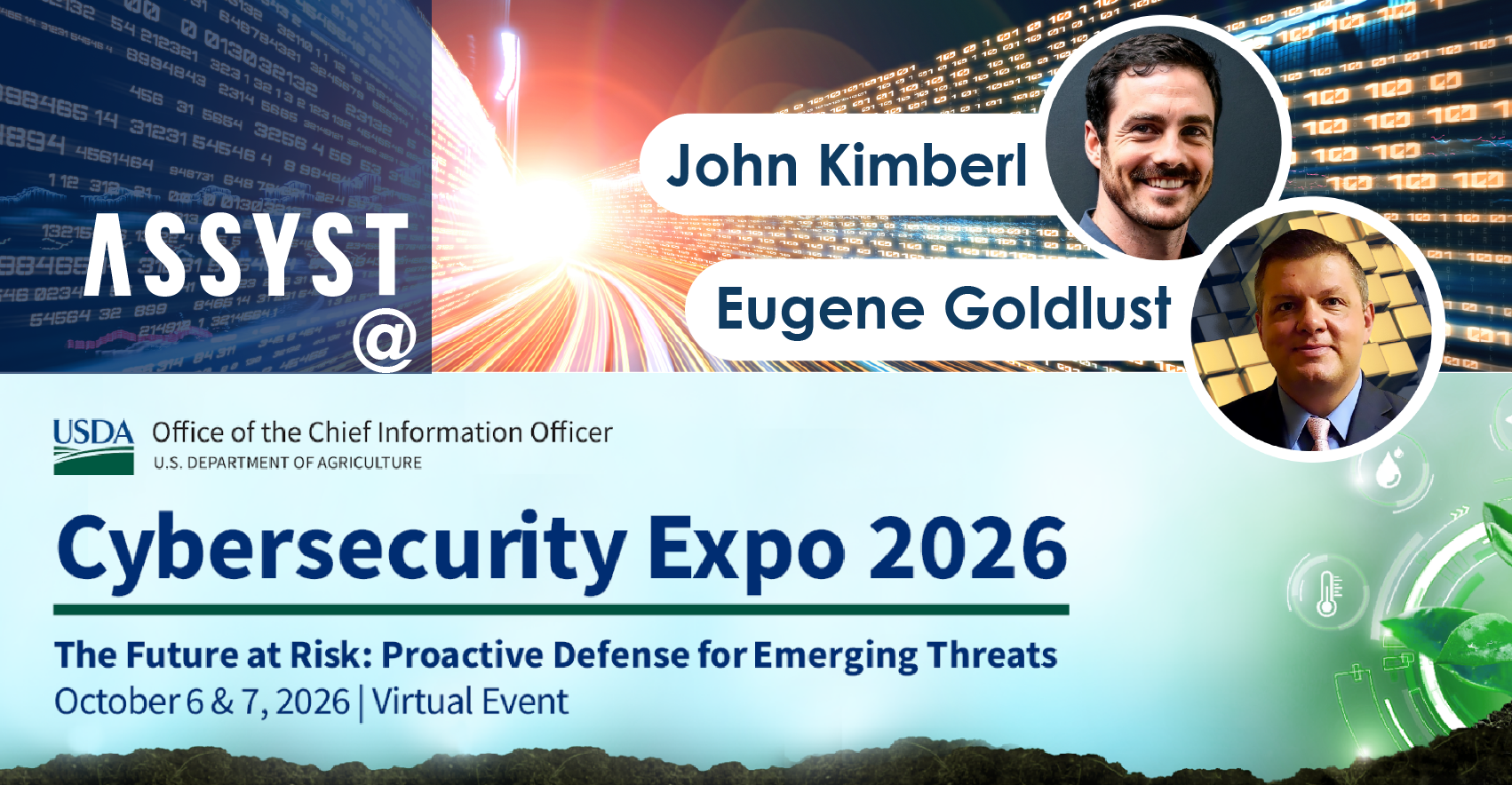
As federal agencies strengthen digital postures against increasingly complex cyber risks, robust continuous defense models remain essential to safeguarding mission-critical operations. As we kickoff Cybersecurity Awareness Month 2026, ASSYST is pleased to announce our participation in the virtual USDA Cybersecurity Expo 2026, hosted by the U.S. Department of Agriculture Office of the Chief Information Officer under the theme "The Future at Risk: Proactive Defense for Emerging Threats."
This two-day summit brings together federal technology leaders, security practitioners, and industry experts to address evolving threat landscapes and accelerate zero-trust adoption across public-sector ecosystems.
Event Details at a Glance
- Event: USDA Cybersecurity Expo 2026
- Theme: The Future at Risk: Proactive Defense for Emerging Threats
- Date: October 6 & 7, 2026
- Format: Virtual Event
- Hosted By: USDA Office of the Chief Information Officer
Key Capabilities We Bring to Federal Cybersecurity
ASSYST delivers tailored cybersecurity and risk management solutions designed to protect federal assets, maintain strict compliance, and mitigate emerging threats:
- Proactive Security Assessments: Continuous monitoring, vulnerability management, and threat hunting to neutralize risks prior to exploitation.
- Zero Trust & Compliance Frameworks: Implementation of Zero Trust Architecture aligned with federal mandates including NIST, FISMA, and FedRAMP.
- Incident Response & Resilience: Comprehensive risk management strategies ensuring business continuity across critical digital operations.
- Identity, Credential, and Access Management (ICAM): Enterprise identity lifecycle solutions protecting sensitive federal data assets.
Meet Our Team
Representing ASSYST at the summit:
- John Kimberl | Business Development Specialist | Linkedin
- Eugene Goldlust | Senior Account Executive| Linkedin
John and Eugene specialize in aligning ASSYST’s modern cybersecurity architectures with federal mission priorities. Throughout the event, they will be available to discuss customized approaches for fortifying enterprise defense systems.
Let's Connect
Whether your agency is accelerating Zero Trust implementation, enhancing threat detection, or securing multi-cloud environments, ASSYST is positioned to support your goals.
Reach out to John Kimberl (jkimberl@assyst.net) and Eugene Goldlust (egoldlust@assyst.net)

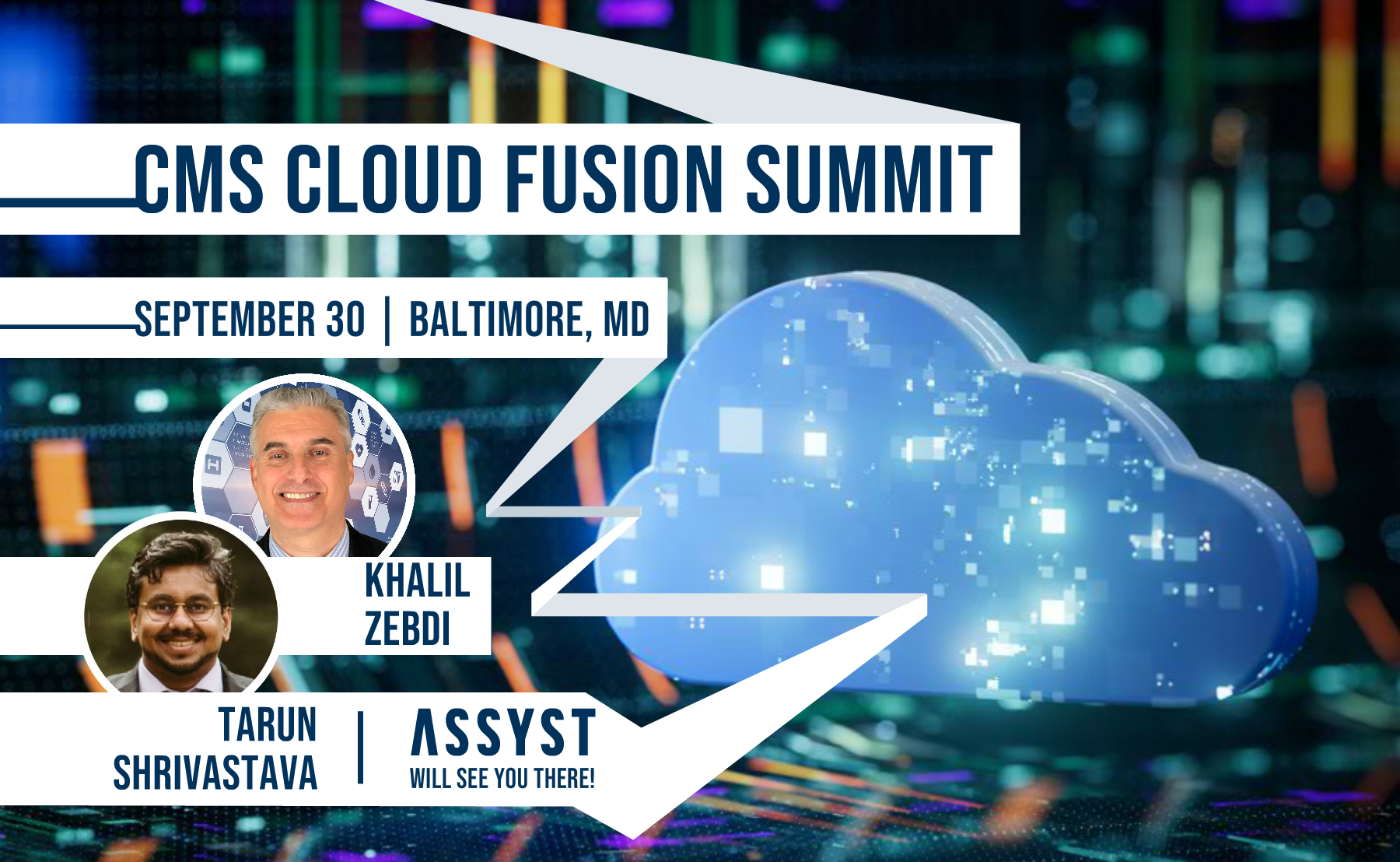
As federal agencies prioritize secure, resilient, and agile cloud environments, ASSYST is proud to participate in the upcoming CMS Cloud Fusion Summit in Baltimore, MD.
The summit brings together Centers for Medicare & Medicaid Services (CMS) leaders, cloud service providers, and technology partners to explore how multi-cloud strategy, security, and emerging technologies can accelerate enterprise modernization across public healthcare.
Event Overview
- Event: CMS Cloud Fusion Summit
- Date: Wednesday, September 30, 2026
- Location: Baltimore / Woodlawn, MD
- ASSYST Representatives: Khalil Zebdi and Tarun Shrivastava
Key Areas of Focus
At the summit, our team will engage in deep dives on key pillars essential for modernizing healthcare IT systems:
- Multi-Cloud Strategy & Optimization: Aligning multi-cloud architectures to streamline mission-critical CMS workflows.
- Enterprise Security & Compliance: Implementing proactive security and governance frameworks tailored for federal cloud environments.
- Emerging Technologies: Harnessing data analytics, FinOps, and modern infrastructure tools to drive operational efficiency.
Connect with ASSYST
Attending on behalf of ASSYST are Khalil Zebdi and Tarun Shrivastava.
Whether you want to discuss tailored cloud strategies, explore enterprise modernization, or collaborate on federal healthcare IT initiatives, Tarun and Khalil look forward to connecting.
- Learn More: Visit www.assyst.net to explore how ASSYST delivers impactful cloud innovation across government programs.

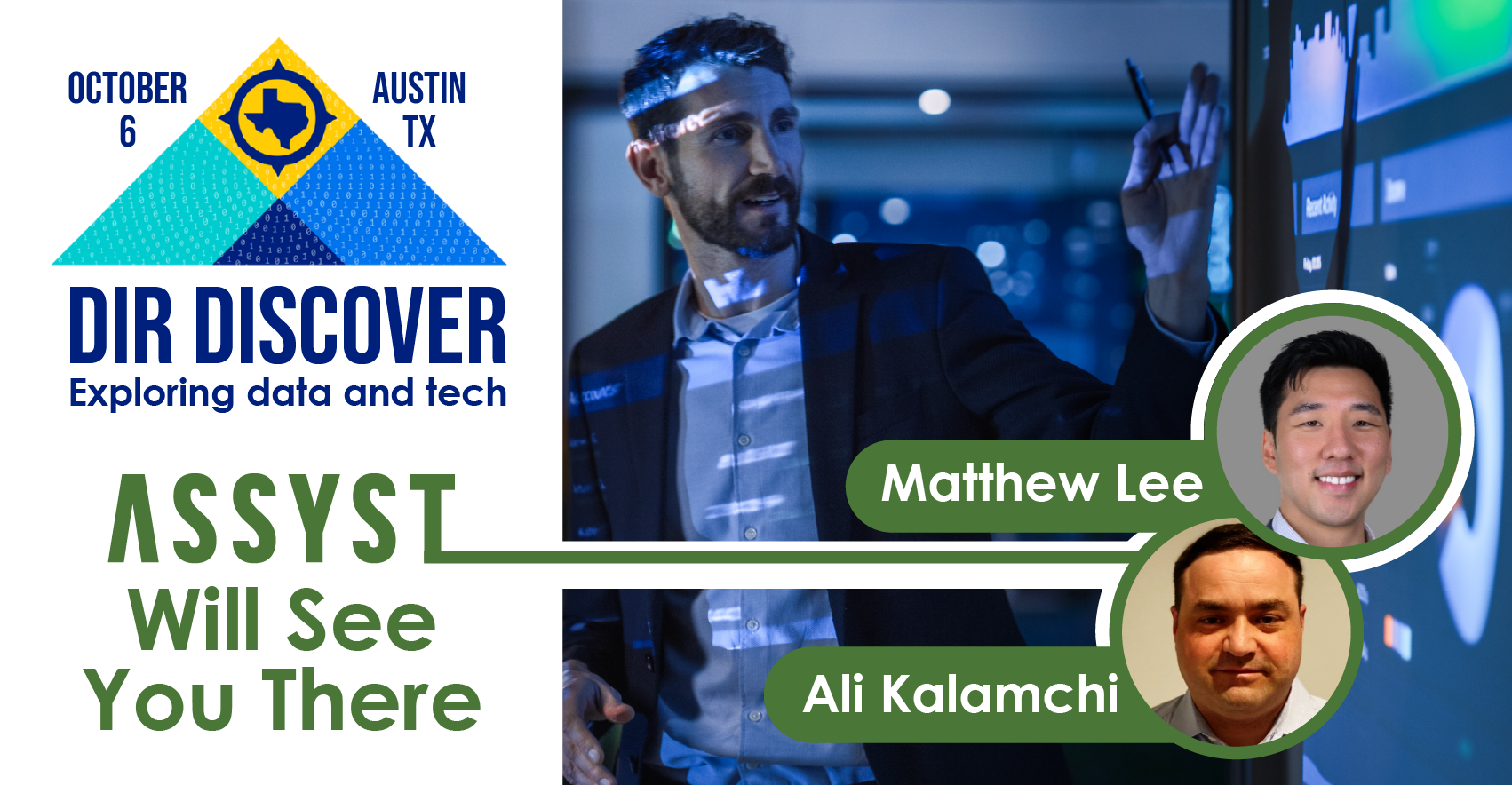
As Texas state and local agencies accelerate their digital transformation initiatives, finding experienced, reliable IT partners with streamlined procurement avenues is critical.
ASSYST is excited to announce our participation as an exhibitor at the 2026 DIR Connect Technology Expo. Hosted by the Texas Department of Information Resources (DIR), DIR Connect brings together public-sector technology leaders, procurement professionals, and industry experts to foster collaboration and explore next-generation IT solutions.
Event Details at a Glance
- Event: DIR Connect 2026
- Date: Tuesday, October 6, 2026
- Location: Palmer Events Center, Austin, TX
- ASSYST Booth: #134
- Event: DIR Connect 2026
- Date: Thursday, October 8, 2026
- Location: Palmer Events Center, Austin, TX
- ASSYST Booth: #523
- Website: https://dir.texas.gov/events/dir-connect-2026
Core Capabilities We Bring to Texas Agencies
ASSYST delivers end-to-end technology services designed to modernize infrastructure, protect assets, and improve digital public services:
- Technology Modernization & Digital Transformation: Transition legacy architectures into agile, resilient digital systems.
- Cloud & Infrastructure: Cloud strategy, deployment, and optimization across multi-cloud environments.
- Cybersecurity & Risk Management: Proactive security assessments, compliance framing, and continuous monitoring.
- Data & Analytics: Business intelligence, database administration, and predictive modeling for data-driven decisions.
- IT Staff Augmentation & Professional Services: Flexible deployment of expert personnel to extend in-house capacity.
Streamlined Procurement via Active Texas DIR Contracts
ASSYST simplifies the purchasing process for Texas state agencies, higher education institutions, and local government bodies through active DIR contract vehicles. By leveraging these cooperative contracts, agencies benefit from pre-negotiated terms and competitive pricing without the overhead of lengthy procurement cycles.
Meet Our Team in Austin
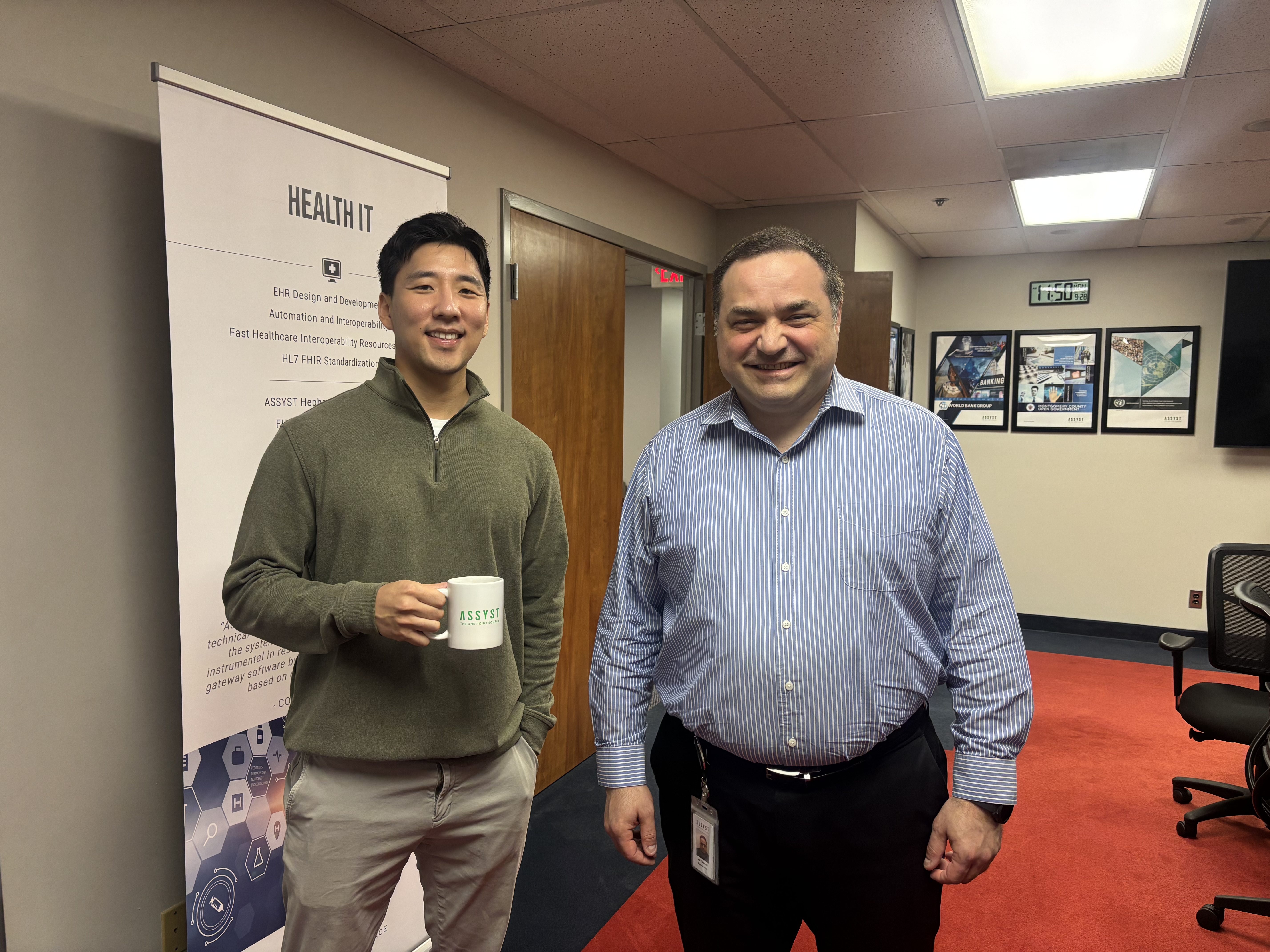
Attending DIR Connect 2026 on behalf of ASSYST's State and Local Government practice:
Ali and Matthew specialize in aligning ASSYST’s tailored technology capabilities with the operational, regulatory, and modernization priorities of Texas government entities. Whether you are planning a cloud migration, strengthening cybersecurity defenses, or sourcing specialized tech talent, our team will be at Booth 523 to discuss your agency’s roadmap.
Let's Connect!
Whether you have an upcoming IT solicitation or simply want to explore how our DIR contract vehicles can support your 2026–2027 initiatives, we look forward to meeting you.
- Visiting the Expo? Stop by Booth 523 to meet Ali Kalamchi and Matthew Lee.
- Explore Our Texas Focus: Learn more about our solutions by reviewing our State and Local Government Solutions Overview.
- Schedule a Meeting: Can't wait until the event? Contact our team at govprograms@assyst.net to start a conversation today.


ASSYST is thrilled to announce that we have been selected as an awardee on the U.S. Department of Agriculture’s (USDA) Cybersecurity and Privacy Operations Center (CPOC) Blanket Purchase Agreement (BPA) to safeguard USDA’s enterprise-wide and mission-specific operations. The BPA allows call orders over the next five years, with a cumulative not-to-exceed value of $1 billion.

“USDA is entering an important period of mission modernization, where cybersecurity, resilience, and trusted digital services are foundational to delivering for America’s producers and rural communities. This CPOC BPA award gives ASSYST an opportunity to support that mission by bringing together modern cybersecurity, Zero Trust principles, continuous monitoring, automation, and mission-focused technology delivery to strengthen the digital foundation behind USDA programs. As USDA advances, we are excited to help protect critical systems and data, reduce cyber risk, and enable secure, resilient services for USDA’s workforce, customers, and the taxpayers they serve.” — Eugene Goldlust, Senior Account Executive, ASSYST, Inc.
This contract vehicle strengthens ASSYST's leadership in federal cybersecurity delivery while expanding our capacity to provide resilient, scalable protection across USDA Mission Areas. Through this vehicle, ASSYST will support a broad range of critical functions, including FISMA compliance, vulnerability management, application and cloud security, incident response, and risk management. With flexible delivery models designed to accommodate evolving federal standards and emerging cyber threats, this BPA positions ASSYST to accelerate modern, risk-aware security posture improvements across the department.
Cybersecurity Practice
ASSYST delivers mission-focused cybersecurity solutions for federal government, healthcare, energy, and national security environments, helping agencies protect high-value systems, strengthen operational resilience, and continuously demonstrate compliance across complex regulatory landscapes. Its cyber portfolio spans RMF and FISMA compliance, continuous ATO, Zero Trust, ISSO- and Cyber Risk Advisor-as-a-Service, managed security operations, threat intelligence and SOAR, post-quantum cryptography readiness, Security Data Lake architectures, and Agentic AI-enabled cybersecurity. What differentiates ASSYST is its ability to combine cyber engineering, compliance operations, security data, and AI-driven automation into an integrated mission assurance model, including ComplySyncATO, a FedRAMP 20x Certified solution that automates compliance assessments, control validation, artifact creation, and continuous monitoring within ServiceNow GRC and CAM environments, alongside Security Data Lake and multi-agent capabilities that connect SIEM, EDR, ICAM, cloud, and GRC platforms with human oversight and end-to-end auditability.
Contract Information
https://www.assyst.net/contracts/usda-cybersecurity-bpa
To explore teaming opportunities under the USDA CPOC BPA, please connect with:
Eugene Goldlust
Sr. Account Executive, ASSYST
Email: egoldlust@assyst.net
LinkedIn: https://www.linkedin.com/in/eugenegoldlust/
Website: www.assyst.net/cyber
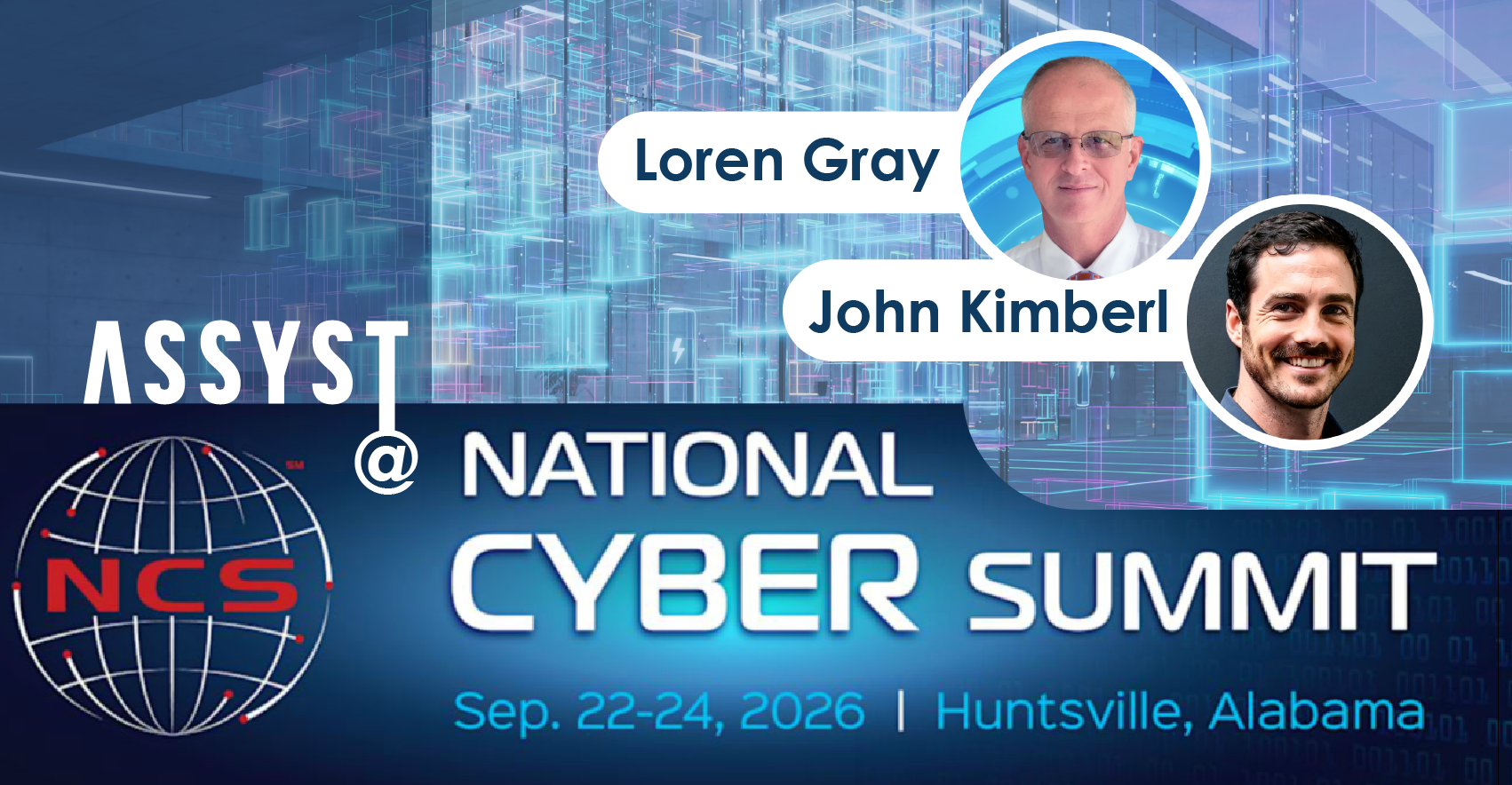
ASSYST is pleased to exhibit at the 2026 National Cyber Summit (NCS), September 22–24, at the Von Braun Center in Huntsville, Alabama, and will be represented by Loren Gray, DoW Program Manager, and John Kimberl, Business Development Specialist (Cybersecurity).
Please stop by Booth No # 202 to discover Future Ready Cybersecurity Offerings from ASSYST.
The National Cyber Summit brings together government and commercial cybersecurity leaders around three central themes: education, collaboration, and innovation. The 2026 event is expected to draw more than 2,500 attendees and feature multiple technical and management tracks, recognized cybersecurity speakers, major technology vendors, and hands-on cyber activities.
Event Details
National Cyber Summit 2026
September 22–24, 2026
Von Braun Center
700 Monroe Street
Huntsville, Alabama 35801
https://www.nationalcybersummit.com/Sponsors-Exhibitors/2026-Exhibitors
Cybersecurity Built for Continuous Change
As federal organizations modernize critical systems, adopt cloud and AI technologies, and respond to increasingly dynamic threats, cybersecurity can no longer operate as a periodic compliance exercise.
At the National Cyber Summit, ASSYST will engage attendees around approaches that bring together continuous risk visibility, security automation, modernization, Zero Trust principles, and continuous authorization.
A particular focus will be ComplySyncATO, ASSYST’s Agentic AI-enabled continuous authorization platform designed to help organizations move from static, document-intensive compliance to an always-authorized state.
Conversations with the ASSYST team can include:
- AI-enabled Continuous Authorization and RMF modernization
- Continuous Controls Monitoring and automated evidence collection
- OSCAL-driven security and compliance automation
- DevSecOps and shift-left security
- Zero Trust and continuous risk visibility
- Cloud and application security modernization
- Cybersecurity automation for federal mission environments
- Operationalizing security data into measurable risk reduction
Connect with the ASSYST team
Loren Gray - lgray@assyst.net | 334-379-6432 | https://www.linkedin.com/in/loren-gray-32502162/
John Kimberl- jkimberl@assyst.net | 703-677-1470 | https://www.linkedin.com/in/johnkimberl/
In an era of heavily fragmented cybersecurity tools, from SIEMs and SOCs to GRC platforms, organizations often struggle to maintain accurate, real-time context across their entire defense ecosystem. In this article, Vinay Shirke, CIO at ASSYST, explores how an emerging service layer, the Managed Security Data Fabric, serves as a vital operating foundation underneath traditional security operations. By continuously normalizing data, reconciling asset context, and mapping machine-readable relationships across complex environments, a Security Data Fabric creates the trusted information layer that agentic AI and autonomous cybersecurity systems need to observe, reason, and act effectively.
Continue Reading


Conversation with Khalil Zebdi, Executive Vice President of Federal Business Development, and Hannah Khan, Business Analyst.
Hannah Khan (HK): Khalil, earlier this year you described healthcare cybersecurity as entering an “autonomy era,” where interoperability, continuous authorization, machine-readable evidence, and security telemetry converge to navigate the evolving cybersecurity landscape. Has that idea evolved further, or has the conversation shifted?
Khalil Zebdi (KZ): It’s the same trajectory, just more in-depth.
Previously, we talked about how cybersecurity functions in a continuously changing environment. You made a great point: it cannot remain periodic; it must become continuous. Evidence must be system-adjacent, authorization must reflect the current state, and security must be driven by telemetry, provenance, and machine-verifiable signals, but once that evidence is accepted, a larger architectural question emerges: Why is cybersecurity the only discipline engineered for continuous change?
Healthcare is modernizing everything at once… the cloud, APIs, FHIR, identity, observability, pipelines… if each evolves independently, we don’t prevent isolation; we multiply it.
The real problem is composition under continuous change.
From Cloud Migration to Platform Architecture
HK: Cloud adoption is now widespread. What actually distinguishes “being in the cloud” from being cloud-anchored?
KZ: The difference is in the way the architecture operates, not just where it's hosted, AKA capability versus location. Running workloads in cloud infrastructure does not, by itself, change architecture. In many cases, it simply relocates legacy systems into a new environment without altering their structural behavior. A cloud-anchored enterprise abstracts shared capabilities into a platform layer that is consumed consistently across the organization. This includes identity, compute orchestration, secrets management, API gateways, observability, configuration management, security policy enforcement, deployment automation, data services, and compliance telemetry.
At ASSYST, this model is implemented through the Green Accelerator, our Application Platform as a Service (aPaaS), which standardizes these capabilities into a governed platform layer designed for reuse and consistency.
This architectural shift is significant; infrastructure becomes code-focused rather than manually configured, environments become reproducible rather than uniquely constructed, configuration drift becomes detectable rather than implicit, artifacts become traceable across their lifecycle, and policy enforcement moves earlier into the build, deployment, and runtime process rather than being applied only after deployment.
In this model, cloud maturity is not measured by migration percentage; it is measured by how effectively shared capabilities are consumed across the enterprise.

Modernization as a Continuous System
HK: How does modernization continue to evolve beyond cloud adoption?
KZ: Traditional modernization assumes systems are static targets that can be incrementally replaced. That assumption breaks down in healthcare because the environment surrounding those systems is also continuously evolving; regulations, clinical workflows, integration requirements, and security expectations all change in parallel.
ASSYST’s modernization platform PhoenixGA treats modernization as a continuous engineering pipeline rather than a discrete project lifecycle. Systems are continuously analyzed for dependencies, decomposed into services where appropriate, reconstructed using API-first principles, embedded with security controls, and refactored as part of an ongoing delivery process. In this model, modernization is no longer a one-time transformation effort; it becomes a runtime capability embedded into the engineering system itself.

Interoperability as a Contract System
HK: Interoperability has been a long-standing goal. What has changed during the push to achieve it?
KZ: The most important change is the level of abstraction at which interoperability is defined. In the past, interoperability was treated as point-to-point data exchange, which led to interface proliferation and weak integration patterns. Modern interoperability is increasingly API-driven, identity-aware, and event-oriented, with FHIR serving as a foundational but still insufficient standard. True interoperability requires more than structural compliance. It requires consistent resource versioning, well-defined terminology binding, reliable identity efforts, enforceable consent mechanisms, traceable provenance, and clearly defined event semantics.
The objective is what we refer to as data liquidity; the ability for authorized data to move across systems without requiring repeated integration work. This aligns with federal direction from the Office of the National Coordinator for Health Information IT (ONC) and the Centers for Medicare & Medicaid Services (CMS), where interoperability is increasingly defined as operational behavior rather than static connectivity. In this context, ASSYST supports ONC eRx and Real-Time Prescription Benefit (RTPB) conformance testing, ensuring systems behave consistently under real-world transaction conditions rather than simply conforming to specifications in isolation.
Therefore, interoperability is not validated by implementation alone; it is validated by behavior under operational conditions.
The Architecture of Seven Contracts
HK: If we look beyond the basic transport of data, what else is required for true interoperability?
KZ: Interoperability only becomes meaningful when it is expressed as a system of explicit contracts rather than implicit assumptions embedded in code. These seven contracts are transport, semantic meaning, identity resolution, authorization rules, provenance tracking, data quality expectations, and operational behavior such as latency, availability, and versioning. When these contracts are clearly defined and consistently enforced, integration stops being a collection of custom implementations; it becomes infrastructure that can be reused, governed, and evolved systematically.
Data Products as a Reusable Asset
HK: How do data products change the model?
KZ: Data products shift the focus from storage-centric to meaning-centric architecture. Instead of treating data as raw material stored in centralized systems, a data product defines ownership, semantics, quality expectations, freshness guarantees, lineage, and access policies as part of its design.
Without this structure, every consuming team must reinterpret the same data independently, leading to duplicated logic and inconsistent outcomes.
With data products, the enterprise begins to reuse meaning itself rather than repeatedly reconstructing it through separate pipelines.
Composability and the Cost of Change
HK: Is composability more important than modernization?
KZ: In healthcare, composability is increasingly more important than traditional modernization because the system is never in a finished state. The primary objective is not architectural elegance in isolation, but reducing the cost of change over time.
Composable systems achieve this by enforcing loose coupling between components, supporting versioned interfaces, enabling observability across services, allowing components to be replaced without systemic disruption, and isolating policy enforcement from application logic. In this context, the value of architecture is not measured by the number of systems deployed, but by how easily those systems can evolve without destabilizing the broader environment.

Cybersecurity as a Runtime Property
HK: How does cybersecurity fit into this model?
KZ: We need to stop treating cybersecurity as a periodic audit and start treating it as a live, runtime feature of the system. Instead of relying on periodic assessments, the system should continuously emit evidence about its own state, including configuration integrity, identity posture, vulnerability exposure, dependency health, runtime behavior, and access patterns. The core risk in modern environments is not change itself, but the separation between documented state and actual state. This is why continuous validation has become central to emerging frameworks, such as FedRAMP 20x, which emphasizes machine-readable evidence and ongoing verification rather than static authorization artifacts.
Within this model, ASSYST’s ComplySyncATO platform connects CI/CD pipelines, vulnerability scanning, control mapping, POA&M workflows, and OSCAL-aligned artifacts into a continuous authorization system. The objective is not just to automate compliance processes, but to reduce the latency between technical change and risk understanding.
Drift: The Hidden System Failure
HK: Why is drift so important?
KZ: Drift represents the divergence between intended system state and actual system state, and it is one of the most significant failure modes in complex environments. It occurs across infrastructure, identity systems, APIs, data schemas, configuration layers, security controls, and dependencies. The risk is not that systems change, but that they change without being detected or reconciled against their expected state. In mature architectures, drift is treated as a first-class metric because it directly reflects system integrity over time.
Observability Beyond Monitoring
HK: Where does observability fit into the picture?
KZ: Observability extends beyond traditional monitoring by focusing not just on system status, but on system behavior. In healthcare environments, this requires correlating metrics, logs, traces, events, data quality signals, and security telemetry into a unified understanding of system performance. A system may appear operational from an infrastructure perspective while simultaneously failing at the level of clinical or operational outcomes. Observability is what allows those discrepancies to be detected and understood.
Continuous Assurance as a System Property
HK: Is continuous assurance a cybersecurity concept?
KZ: Continuous assurance is broader than cybersecurity. It’s a system-level property that ensures confidence in security, data integrity, service reliability, configuration correctness, and software trustworthiness at the same time. It sits at the intersection of engineering, operations, and governance, and depends on continuously correlating technical state with risk and compliance expectations.

Evidence as a By-Product of Engineering
HK: What is the most important design principle?
KZ: That evidence should be produced as a natural by-product of engineering activity rather than reconstructed after the fact. Modern systems already generate the necessary signals, code changes, build outputs, deployment records, test results, runtime behavior, access logs, and configuration states. The architectural requirement is to preserve, correlate, and make this information usable for assurance without requiring manual reconstruction.
From Modernization to Mission Capacity
HK: How do you measure success?
KZ: Success should be measured in terms of mission capacity rather than technology deployment. The key question is not how many systems have been modernized, but how effectively the organization can deliver outcomes. This includes improvements in delivery speed, integration efficiency, authorization timelines, system reuse, and responsiveness to change. In government healthcare environments, these improvements directly translate into faster policy execution and reduced operational overhead.
Overall Perspective
HK: Do you have any final thoughts?
KZ: Healthcare transformation is no longer about modernization programs. It’s about building systems that can evolve continuously without losing control, visibility, or trust. Cloud makes infrastructure programmable, platform engineering makes capabilities reusable, interoperability makes exchange composable, data products make meaning reusable, observability makes system behavior visible, cybersecurity makes change governable, and continuous assurance makes trust continuous.
At ASSYST, these ideas converge across Green Accelerator, PhoenixGA, and ComplySyncATO, each addressing a different layer of the same challenge: operating healthcare systems under continuous change.
Modernization is no longer a transformation event; it is a system property.


ASSYST's Eugene Goldlust will attend the upcoming TechNet Orlando 2026, which brings together leaders from government, the military, industry, and academia to explore how artificial intelligence, cyber capabilities, data, and immersive technologies are transforming military training and readiness. The event will highlight the partnerships and innovations driving the next generation of training, simulation, and mission rehearsal capabilities across the defense enterprise.
TECHNET ORLANDO
Date: September 17, 2026 | Orlando, Florida
Location: UCF, 12809 Science Dr, Orlando, FL 32826, Room 106
Event Website: https://www.federaltrainingpartnership.com/technet-orlando

Eugene Goldlust, Sr. Account Executive
egoldlust@assyst.net
https://www.linkedin.com/in/eugenegoldlust/

I’ll be attending the PAE Maneuver Air Industry Days, August 24–26, 2026, at Fort Rucker, Alabama.
https://rucker.armymwr.com/happenings/pae-maneuver-air-industry-days
I’m looking forward to connecting with Army Aviation leaders, industry partners, and others working to advance aviation capabilities and mission outcomes. The event will be a valuable opportunity to exchange perspectives, learn more about emerging priorities, and explore potential areas for collaboration.
If you’ll be attending, I’d welcome the opportunity to connect.