

FILTER BY




ASSYST's Loren Gray and Sneha Belur, MSIST, CSM, CSPO discuss going from Low/No Code to AI Code, and how Delivery is Now a Team Sport.
Continue reading on LinkedIn

On Sunday, February 8, the ASSYST team gathered to serve lunch at SOME (So Others Might Eat) at the Father John Adams Resource Center in Washington, D.C.

The day started early, but the energy was unmistakable. Instead of spending the weekend at home or catching up on personal plans, our team chose to show up for others, standing shoulder to shoulder in a fast-moving kitchen and dining space, helping prepare and serve lunch to individuals and families in need.
At SOME, every meal is more than food. It’s dignity. It’s care. It’s a reminder that someone still sees you.
As our volunteers moved through the lunch service, setting up the tables, serving food, and supporting the SOME staff, something powerful happened: the day became less about volunteering and more about connection. Beyond the satisfaction of contributing to the community, our team gained an even deeper respect for the SOME staff. Witnessing their dedication firsthand was a powerful reminder of the care required for the mission every day.
ASSYST Together is about carrying our shared momentum into something that matters. Seeing our team serve with such kindness and teamwork reminded me that our culture is strongest when it’s lived, not just celebrated. This was a beautiful way to start the year.
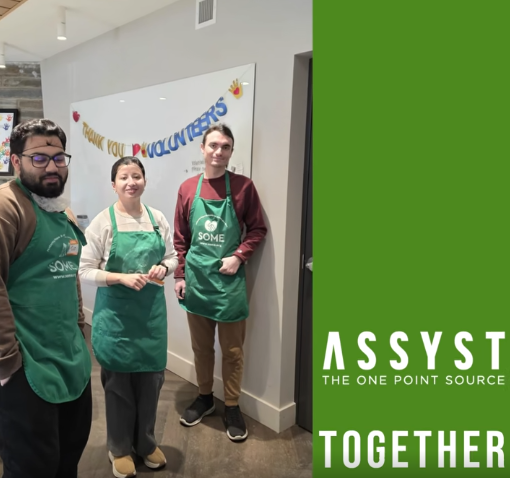
To everyone who participated, thank you for representing ASSYST with compassion, humility, and purpose.
This was just the first step in what we hope will be a year of continued service, connection, and community impact.


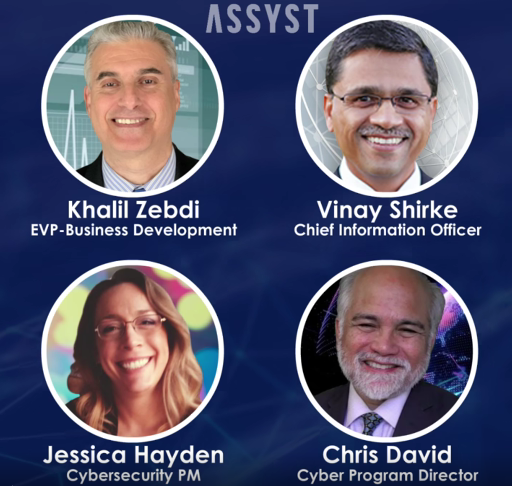
ASSYST's Khalil Zebdi, Vinay Shirke, Jessica Hayden, and Christopher T. David will attend the CMS Industry Forum on February 19th, 2026.
Make sure to stop by and meet us!
For more details
https://www.fbcinc.com/e/CMSIF/agenda.aspx


ASSYST is pleased to announce it was awarded a contract/s for the Missile Defense Agency Scalable Homeland Innovative Enterprise Layered Defense (SHIELD) indefinite-delivery/indefinite-quantity (IDIQ) contract with a ceiling of $151B. This contract encompasses a broad range of work areas that enable rapid delivery of innovative capabilities to the warfighter, with increased speed and agility. cyber resilience, data exploitation, secure cloud engineering, continuous modernization, and intelligence-driven capabilities.
ASSYST MDA SHIELD Contract Vehicle: https://www.assyst.net/contracts/mda-shield-idiq
ASSYST #DefenseTech Capabilities: Click Here
Contact: Eugene Goldlust | egoldlust@assyst.net | LinkedIn
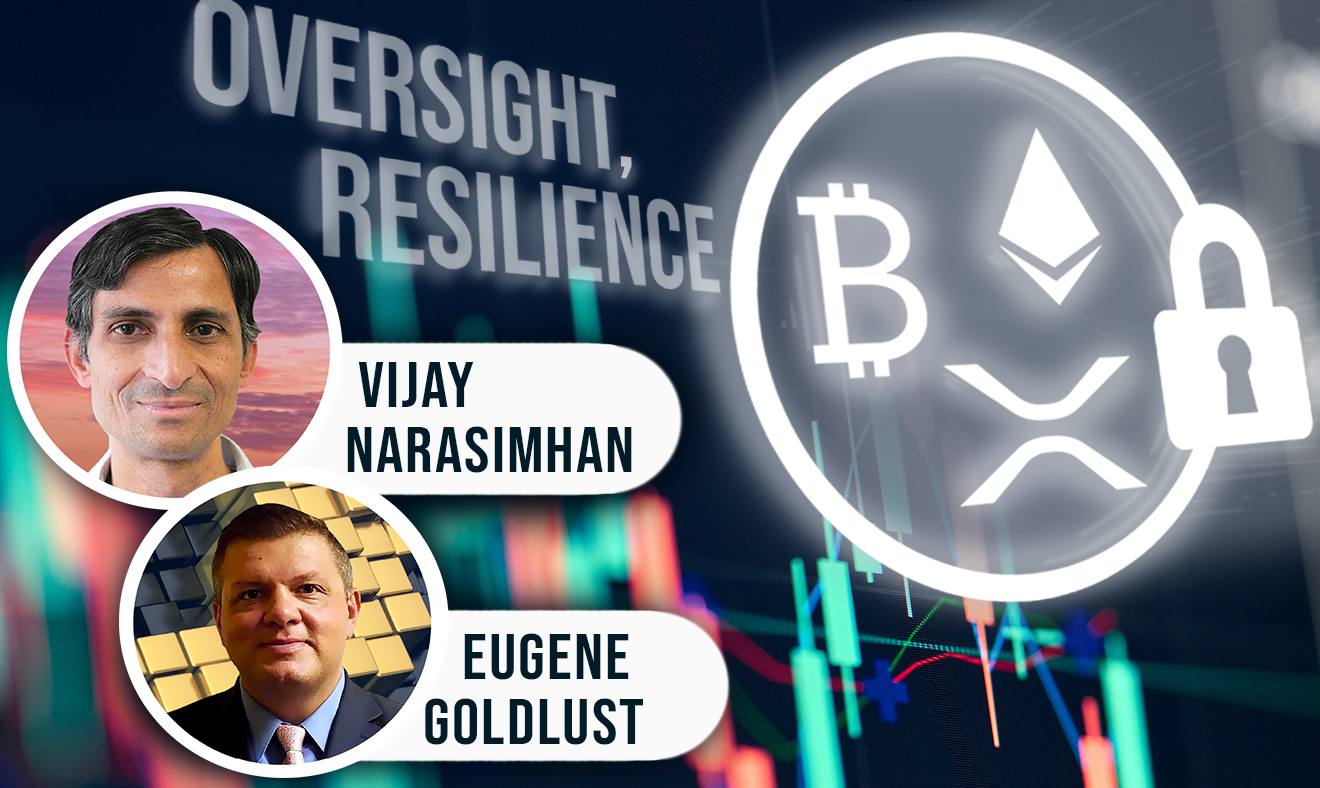
As part of our Post-Quantum Cryptography (PQC) thought leadership series, we continue the conversation with Vijay Narasimhan, CTO of ASSYST, to explore how PQC is moving from future planning into present-day authorization. Over the next several weeks, we will cover broad areas, including Agile Infrastructure & Platforms, Quantum-Safe Compute and the Software Supply Chain, Quantum Resilient Identity, Access & Trust, Post-Quantum Data Protection and Cryptographic Resilience, and PQC Governance, Risk & Continuous Authorization.
With new legislation like the GENIUS Act shaping external crypto oversight and CISA and NIST defining quantum-safe standards, agencies now face a dual mandate: govern digital assets with confidence while modernizing their own cryptographic foundations. In this segment, we examine how PQC is becoming an enforceable control within the Risk Management Framework (RMF), turning quantum-safe encryption into a pass/fail requirement for every Authority to Operate (ATO) and every cybersecurity role across the federal enterprise.
Eugene: Vijay, in our last conversation, we discussed crypto governance from regulatory and market trust perspectives. Let’s bring this inside the federal enterprise. With CISA’s new Post-Quantum Cryptography product guidance and NIST finalizing standards, how does PQC actually show up in day-to-day RMF and ATO decisions?
Vijay Narasimhan: This is where things become very real. PQC stops being an abstract “future risk” and becomes an authorization requirement. RMF is the machinery agencies already trust; it’s how they categorize systems, select controls, assess risk, and grant Authority to Operate. What PQC does is insert a new, non-negotiable cryptographic checkpoint into that machinery.
In simple terms: if your system uses encryption, identity, digital signatures, VPNs, or key management, then the CISO will soon have to ask, “Is this quantum-safe, or at least on a defined migration path?” If the answer is no, that becomes an ATO risk finding, just like missing MFA or logging.
Eugene: So PQC becomes a pass/fail gate, not just a roadmap slide?
Vijay: Exactly. Think of it like TLS in the early 2000s. At first, it was “nice to have.” Then it became “recommended.” Eventually, it became “no TLS, no production.” PQC will follow the same arc, but faster, because the threat model is already known: harvest-now, decrypt-later.
CISA’s product category guidance is important because it first specifies its scope: cloud services, network security, identity systems, HSMs, PKI, and secure communications. These are the same components that RMF already treats as foundational controls. Now they also have to be crypto-agile and PQC-ready.
Eugene: Walk us through how this lands in the RMF lifecycle.
Vijay: During Prepare and Categorize, we are still operating squarely within the Risk Management Framework that agencies have used for decades, not a newly coined construct. RMF already requires agencies to identify mission systems, data sensitivity, and threat exposure. What changes with PQC is the lens: agencies must now classify which systems rely on quantum-vulnerable cryptography and which protect long-lived data, financial records, health data, and mission telemetry that must remain confidential for decades. These become the first candidates for PQC prioritization and migration planning.
During Select and Implement, instead of simply stating “use approved encryption,” the control language will evolve to say “use NIST-approved post-quantum or hybrid algorithms, or document an approved transition plan.” Procurement will reference CISA’s PQC-ready product categories the same way it references FedRAMP today.
During Assess, auditors won’t just test whether encryption exists. They’ll test what algorithms, what key sizes, what libraries, what hardware roots of trust, and whether the cryptographic bill of materials includes quantum-vulnerable components.
During Authorize, the Authorizing Official will be making a risk decision that explicitly includes quantum exposure. A system may be fully compliant with today’s controls, yet still receive conditions or a limited ATO if it cannot demonstrate crypto-agility.

Eugene: That’s a big shift in mindset for ISSOs and program managers.
Vijay: It is. That’s why we say PQC is not a science project; it’s a governance transformation. ISSOs become cryptographic assurance officers. Program managers have to plan PQC transitions as funded milestones. Enterprise architects must design for algorithm swap-ability the same way they design for cloud portability.
This is where platforms like ComplySyncATO and Athena Agentic AI come into play. Standards-ready compliance automation means that when NIST or CISA updates cryptographic requirements, those controls can be ingested, mapped to RMF, and continuously evaluated, rather than waiting for the next three-year ATO cycle.
Eugene: How does this play out in continuous authorization and monitoring?
Vijay: Some agencies have already matured enough to implement Continuous Authorization for select systems, particularly High-Value Assets (HVAs). Many others are actively striving toward this model. This is where the final Monitor step becomes critical. PQC readiness must be baked into continuous assessment reporting, tracking algorithm usage, certificate lifecycles, crypto modules, and migration progress as living risk indicators. In this future state, systems are not only Zero Trust by design, but quantum-aware by design, with cryptographic posture continuously measured and attested.
Eugene: And where should agencies start from a technology standpoint?
Vijay: As CISA highlighted this week, the transition to PQC can begin with widely adopted layers such as Cloud Platform-as-a-Service (PaaS) and Infrastructure-as-a-Service (IaaS), where encryption, identity, and key management are centralized. At the same time, agencies still operating on-premises datacenters should view cloud migration and PQC transition as converging imperatives. There is no time to waste; quantum readiness must now be evaluated across on-prem, hybrid, and cloud environments at every RMF step.
Eugene: So the message for agencies is: PQC is not a parallel effort, it’s an RMF evolution.
Vijay: Exactly. You don’t “do PQC” separately. You embed it into how you authorize, operate, and modernize systems. RMF is the process. PQC is now part of the required math inside that process. And the strategic point is this: If the GENIUS Act tells us cryptography is now a matter of national economic trust, then PQC + RMF tells us cryptography is also a matter of operational mission trust. Every ATO, every cloud migration, every Zero Trust rollout, every identity system refresh must now be quantum-aware by design.
Eugene: What’s the forward look for this series?
Vijay: The next frontier is people. Technology and policy can move only as fast as the workforce that operates them. We’ll explore how agencies must upskill ISSOs, architects, program managers, and auditors to become crypto-agile, ready to validate PQC, govern cryptographic risk, and sustain quantum-safe operations. Workforce readiness will be the final pillar of true cryptographic resilience.


Advancing the next generation of Continuous Authorization
ASSYST, Inc., a leading provider of cybersecurity, cloud, and compliance automation solutions for the U.S. Federal Government, today announced its selection as an official participant in the FedRAMP® 20x Phase 2 Pilot, managed by the US General Services Administration (GSA). The pilot is designed to modernize the Federal Risk and Authorization Management Program by validating automated security assessment methods and machine-readable authorization packages.
Watch Video
As a member of Cohort 2, ASSYST is among a select group of 13 cloud service providers chosen to help pioneer a faster, more transparent, and automation-driven path to federal cloud authorization. ASSYST is participating with its ComplySyncATO (https://www.assyst.net/ComplySyncAI) platform, an AI-enabled Governance, Risk, and Compliance (GRC) automation solution purpose-built to support continuous authorization and persistent assessment. The Phase 2 pilot focuses on three key modernization areas:
- Automated Validation – Demonstrating compliance against at least 70% of FedRAMP Key Security Indicators (KSIs) using machine-readable evidence and policy-as-code.
- Persistent Assessment – Shifting from static, point-in-time ATOs to continuous, telemetry-driven security monitoring.
- Modernized Authorization – Streamlining reuse and reciprocity for Moderate-impact cloud services across agencies.
“Selection for the FedRAMP 20x Phase 2 Pilot validates ASSYST’s long-standing investment in Cybersecurity and AI-driven compliance automation and continuous risk management,” said Vijay Narasimhan, CTO, ASSYST. “With ComplySyncATO, we are helping agencies move beyond document-centric compliance, point-in-time compliance to a real-time, automated and machine-verifiable toward real-time, machine-verifiable security assurance.” he added.
The Phase 2 pilot will conclude around March 31, 2026, informing the broader rollout of the FedRAMP 20x operating model in Phase 3 and accelerating adoption of automated authorization and continuous monitoring across the federal cloud ecosystem.
Read more on GSA FedRAMP.Gov - https://www.fedramp.gov/20x/phase-two/participate/
About ASSYST
ASSYST is the One Point Source for mission-grade cybersecurity and digital solutions, delivering CMMI Level 3 and ISO 27001/20000/9001 certified excellence across National Security, Defense Technology, Healthcare IT, Regulatory, and State and Local Government domains. Through offerings such as ISSO-as-a-Service, Cyber Risk Assessment (CRA)-as-a-Service, and the AI-powered ComplySyncATO platform, ASSYST automates compliance, enables continuous Authorization to Operate (cATO), and provides real-time, data-driven risk visibility. Powered by the Security Data Lake (SDL) and Security Data Fabric (SDF), ASSYST integrates and analyzes enterprise security telemetry to support persistent monitoring, Zero Trust, and resilient cyber operations—demonstrating an unwavering commitment to protecting our nation’s most critical systems and data. For more details - www.assyst.net/cyber


State health agencies are under increasing pressure to adopt AI quickly. The real risk is not moving too slowly; it is building AI on foundations that were never designed for trust, scale, or accountability. Across states, promising pilots stall because data is fragmented, governance exists outside the system, and interoperability is treated as a one-off integration exercise rather than an architectural discipline. AI does not hide these gaps; it exposes them.
The agencies that succeed with AI will do so not by chasing tools, but by modernizing the data and interoperability layers that make AI viable in the first place.
FHIR® and TEFCA Signal a Structural Shift
FHIR® and TEFCA are often framed as regulatory milestones. In practice, they represent a structural change in how health data is expected to move across ecosystems.
FHIR® establishes shared semantics for structured, versioned, and meaningful data across clinical, administrative, and population health contexts. TEFCA adds the trust framework, defining how organizations exchange data at scale, under consistent rules, with accountability built in.
ASSYST’s work supporting national interoperability initiatives, including ONC’s Interoperability Standards Advisory and conformance testing for electronic prescribing and Real-Time Prescription Benefit, demonstrates how these standards operate in real environments. These platforms enable providers, payers, pharmacies, and Health IT vendors to exchange data reliably and in real time, strengthening the foundation for nationwide interoperability.
For AI, this matters. Models cannot reason across systems if meaning, provenance, and access rules change at every boundary. AI does not replace interoperability; it depends on it.
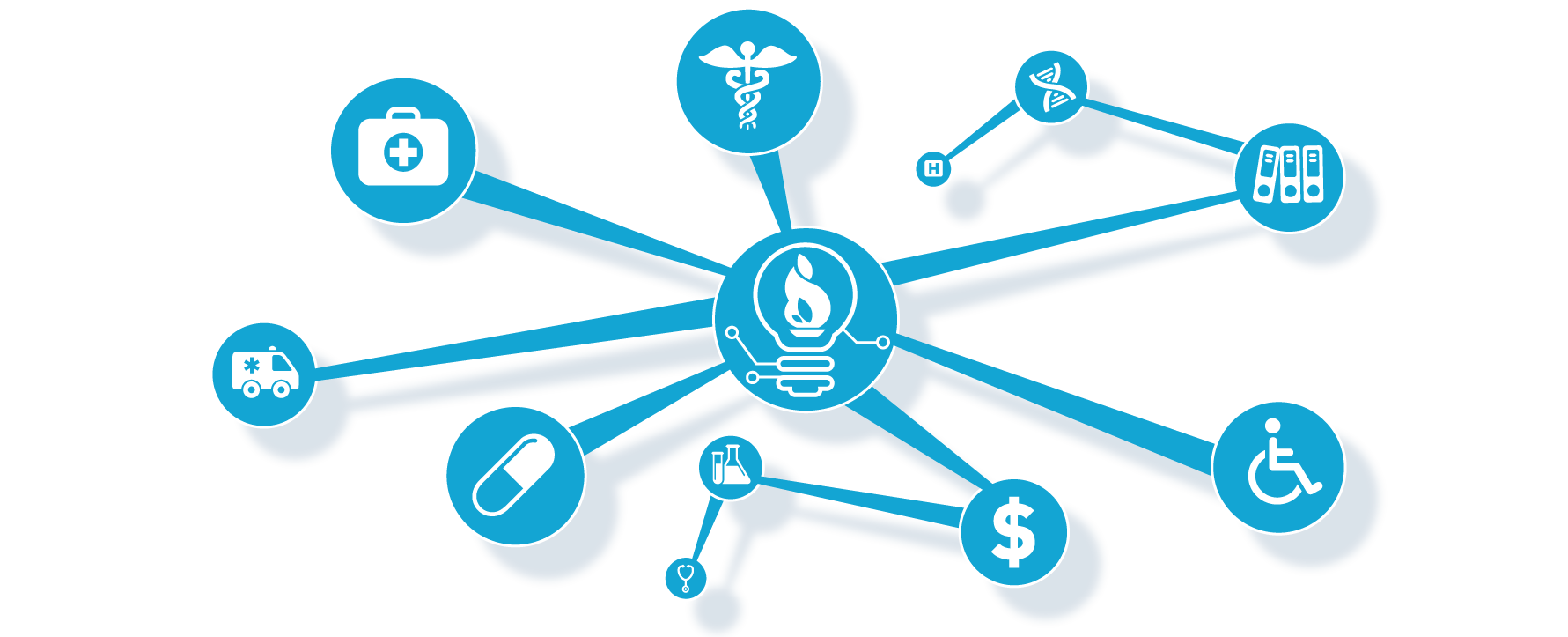
Architecture Is the Real AI Strategy
AI forces a new architecture conversation. Modernization is no longer about replacing systems one by one; it is about designing platforms where data, policy, analytics, and operations are aligned from the start.
- Next-generation health architectures share common traits
- FHIR®-native data layers instead of downstream normalization
- Embedded governance, lineage, and consent enforcement
- Reusable data products shared across programs
- Analytics and AI operate on the same governed foundation.
ASSYST’s Hephaestus platform reflects this architectural approach. Informed by interoperability and regulatory programs, Hephaestus treats interoperability, governance, and analytics as first-class capabilities. Rather than adding AI on top of brittle integrations, it enables AI to operate on trusted, standardized data that already meets policy and compliance expectations.
AI Is Changing Interoperability and Data Dissemination
AI is reshaping how health data is consumed. Leaders increasingly expect natural-language access to governed data, contextual insights delivered inside workflows, predictive and prescriptive signals rather than static reports, and transparency into how conclusions are reached.
This raises the bar for data dissemination. Governance cannot live solely in documentation or review boards; it must be enforced at runtime. Data quality, access controls, lineage, and auditability become operational requirements as AI begins to influence decisions across care delivery, public health surveillance, and program integrity.
ASSYST’s experience integrating AI into interoperability, cybersecurity, and data platforms across CMS, FDA, CDC, and HRSA demonstrates how this can be done responsibly, with AI augmenting human judgment while remaining explainable and defensible.

Why ASSYST’s Federal Experience Matters to States
Federal health programs operate at a national scale, under continuous oversight, and in accordance with evolving standards. Systems supporting Medicare, Medicaid, public health surveillance, regulatory submissions, and prescription services must function across organizations, withstand audits, and adapt as policy changes.
ASSYST’s decades of experience in these environments provide state health agencies with something increasingly valuable: proven architectural patterns under real scrutiny. From FHIR®-based interoperability and TEFCA aligned exchange to electronic prescribing, Real-Time Prescription Benefit enablement, and AI-driven data operations, this experience helps states move faster with confidence and less risk.
It also helps Health IT leaders ask the right questions early, before AI investments become costly to unwind.
Build the Rails First
AI will transform state health programs, but only if it is built on data that is interoperable, governed, and trusted by design. The winning strategy is not faster experimentation; it is intentional architecture.
Build the rails, align to standards, embed governance. Then let AI move fast, responsibly, transparently, and in service of better outcomes.
ASSYST Healthcare IT
ASSYST is a trusted Health IT Systems Integrator with over 30 years of experience advancing public health and regulatory missions. We deliver secure cloud modernization, AI-infused automation, and interoperable data platforms that enhance care delivery and operational resilience. Our solutions apply AI and analytics to prevent fraud, waste, and abuse, ensuring integrity, efficiency, and trust across the nation’s healthcare ecosystem.
ASSYST Hephaestus is a FHIR-native Application Platform as a Service (aPaaS) evolved from the Green Accelerator Program, enabling healthcare organizations to modernize legacy data into the latest HL7® FHIR® standards. It delivers an end-to-end, microservices-based interoperability stack—FHIRSpy, FHIRBricks, FHIRProof, FHIRWire, FHIRBI, and FHIRBreak—to automate data ingestion, mapping, validation, exchange, and analytics across the healthcare ecosystem.



How Developer Experience Has Changed and Why Phoenix Redefines It
Over the course of my career, I’ve built platforms across very different eras of enterprise software, from early data collection systems, to large-scale financial analytics platforms, to modern mission applications operating under strict security and compliance constraints.
Each generation solved critical problems of its time.
Every generation revealed a persistent truth that never truly changed.
Developer experience was never designed as a system.
Today, AI-enabled software engineering finally gives us the opportunity to change that.

When Platforms Worked, but Engineering Paid the Price
Early enterprise systems prioritized correctness, throughput, and reliability. Architecture was designed manually. Requirements were interpreted by hand. Code patterns were reused informally. Security and compliance were validated later in the lifecycle.
Those systems worked, but they were fragile.
Productivity depended on individual expertise. Knowledge was tribal. Technical debt accumulated quietly and later surfaced as operational risk.
Planning tools like Jira existed, but they were largely administrative. Requirements lived in Jira. Architecture lived in documents. Code lived in repositories. Compliance lived somewhere else entirely.
This separation was manageable on a small scale. At enterprise scale, it became a primary source of delivery friction.
Automation Improved Speed but Not Engineering Flow
DevOps, CI/CD, and infrastructure automation dramatically improved deployment speed and operational reliability. AIOps later helped organizations manage runtime complexity through telemetry and prediction.
Yet engineering flow remained fragmented.
Developers still manually translate Jira stories into architecture. Security findings still appeared late. Compliance evidence still had to be reconstructed. Teams spent more time coordinating than building.
The issue wasn’t tooling.
The issue was that intent was never directly connected to execution.

AI Changes the Unit of Engineering Work
AI-enabled software engineering changes the unit of work from isolated tasks to end-to-end intent realization.
AI should not operate as a standalone code generator. It must participate in planning, design, implementation, security, and governance.
Requirements become structured inputs.
Architecture becomes a generated artifact.
Code, tests, documentation, and compliance evidence are produced together.
But this shift only matters if AI is embedded where work actually begins.
That’s why Jira integration is not optional, it’s foundational.
Jira Is the Inflection Point
Jira is where enterprise work starts. Epics, features, user stories, acceptance criteria, and priorities live there.
Historically, Jira tracked work. It didn’t drive engineering outcomes.
Phoenix changes that.
By integrating directly with Jira, Phoenix transforms requirements into executable engineering intent. User stories generate architecture, code scaffolding, tests, and documentation. Traceability is automatically preserved from the backlog through deployment.
This closes a decades old gap between planning and delivery.
Jira becomes a living system of record for engineering intent, not just a reporting tool.
Enterprise “Vibe Coding” Requires Structure
The idea of developers working fluidly with AI, often called vibe coding, resonates because flow matters. Context switching is expensive.
But in enterprise and mission systems, unstructured flow creates risk.
Phoenix enables structured flow.
Developers remain productive while the platform automates and enforces architecture, security, policy enforcement, and compliance. Speed increases not because rigor is removed but because rigor is encoded.
This is enterprise grade AI assisted development done correctly.
Phoenix, Powered by the ASSYST Green Accelerator
Phoenix is powered by the ASSYST Green Accelerator, which captures reusable patterns, automation frameworks, and AI-enabled workflows proven across real programs.
What worked in time boxed innovation settings is made repeatable, governable, and scalable for enterprise delivery.
Architecture generation, code production, security enforcement, compliance evidence, and telemetry are no longer ad hoc activities; they are system capabilities.
How Phoenix Redefines Developer Experience
From a developer’s perspective, Phoenix removes friction across the lifecycle.
Architecture no longer starts from a blank page.
Security and compliance are continuous, not interruptions.
Tests and documentation are generated during development, not after.
Traceability is automatic. Explainability is preserved. Human oversight remains intact.
Developer experience becomes predictable, supportive, and scalable.
From Projects to a Software Factory Model
AI-enabled software engineering only matters if outcomes improve.
With Phoenix, organizations see faster delivery with greater predictability, fewer upstream vulnerabilities introduced, reduced technical debt over time, and greater audit confidence without relying on heroics or tribal knowledge.
AIOps helped organizations manage complexity after deployment.
Phoenix enables them to engineer complexity out of systems before they exist.
If your teams are already using AI to operate systems more effectively, the next step is to use AI to build systems more effectively.
Phoenix integrates AI directly into planning, engineering, and governance, starting where work begins and delivering outcomes that scale with mission demands.
If you would like to learn more about how Phoenix can reimagine developer experience (DevX), please reach out to us.


Every long-running modernization program eventually reaches a point where its tools no longer keep pace with the complexity of its mission. For ASSYST, that realization emerged through years of testing support across major HHS digital programs, where functional validation was reliable, yet the most impactful defects remained invisible to traditional toolchains. Slight misalignments, subtle layout instabilities, broken icons, awkward phrasing, inconsistent labels, and accessibility barriers, issues that undermine user experience, escaped even the most structured regression cycles. These were not failures of discipline or process; they were failures of perception, the kind that arise when human nuance intersects with rapid delivery pipelines. As applications grew in scale and sophistication, the surface experience became equally critical as the underlying business logic, revealing that quality required a new vocabulary rooted in context, cognition, and intelligent interpretation.
When Digital Complexity Requires Human Like Perception
The challenge was not that testers lacked capability; it was that the digital systems they supported had expanded beyond the scope of traditional testing methodologies to efficiently validate. With releases now shaped by microservices, evolving UI frameworks, responsive design, and multi-device usage patterns, the number of variables has exploded. Developers were spending more time chasing visual and textual inconsistencies than building new value. It became clear that the future of quality engineering would depend on systems that could interpret interfaces the way humans do: recognizing meaning, structure, and intent—not just verifying steps in a script. This insight catalyzed a shift in our engineering approach, pushing us to explore machine learning models for visual detection, OCR, and NLP pipelines for content accuracy, and image processing to quantify layout integrity. What emerged was a new mode of perception, blending human sensitivity with machine precision.
AI-Enabled Assurance as a Turning Point
Embedding AI into the testing lifecycle transformed everything. By training object-detection models to recognize defects and inconsistencies, leveraging OCR to extract text from dynamic interfaces, and applying NLP to analyze grammar and clarity, we began to identify quality gaps that manual testers and legacy tools routinely missed. Suddenly, visual defects became quantifiable, textual clarity became measurable, and accessibility gaps became traceable in real time. The solution delivered dramatic improvements, significant reductions in manual effort, major decreases in production defects, and a newfound ability for developers to focus on engineering rather than defect hunting. More importantly, it introduced a new paradigm: quality assurance could now be anticipatory rather than reactive. Testing could adapt to changing interfaces, learn continuously, and evolve with the product itself.
Accessibility Deadlines and Public Trust
This evolution could not be more relevant to the present moment. State and Local governments across the country now face imminent ADA Title II deadlines: April 2026 for large public entities and April 2027 for smaller jurisdictions, mandating WCAG 2.1 AA compliance for all public-facing websites and mobile applications. For many agencies, the scope is daunting: thousands of pages, years of accumulated content, diverse authors, and frequent design updates. Manual accessibility audits simply do not scale to the size and complexity of modern digital government. The smallest inconsistency in contrast, labeling, semantics, keyboard operability, or screen-reader navigation can put an agency out of compliance—and erode citizen trust. Our work at the federal level showed that the only workable path forward is continuous, AI-driven accessibility assurance integrated directly into the software delivery lifecycle. These deadlines are not far away, and the agencies that succeed will be those that modernize their testing philosophy, not just their tools.
From Lessons Learned to a New Assurance Ecosystem
As we refined our AI-driven testing approach at HHS, we discovered that the same challenges appeared across nearly every mission-driven program, regardless of size or domain. This realization helped shape a broader assurance strategy within ASSYST, one grounded in the belief that quality, accessibility, and experience cannot be separated. Over time, these capabilities were consolidated into Argus, our AI-powered assurance platform that unifies visual validation, content intelligence, accessibility monitoring, and DevSecOps integration into a single system. Yet Argus is not a product of the ADA rulemaking cycle or a response to compliance pressure; it is the natural evolution of everything we learned while supporting large-scale, high-stakes digital systems. It reflects a future where assurance is woven into the development process itself, continuously improving as systems evolve.
A Future Where Quality and Accessibility Converge
Looking ahead, the next generation of public digital services will not be defined merely by modernization initiatives or cloud migrations, but by the confidence they inspire and the inclusivity they guarantee. AI-assisted assurance will become a foundational capability for State, Local, and Federal agencies striving to deliver resilient, accessible, and equitable digital experiences. As deadlines approach, the real differentiator will not be who meets WCAG 2.1 AA on time, but who builds systems that remain compliant long after the mandates take effect. The agencies that embrace intelligence-driven quality engineering will deliver services that are not only functional and fast but also respectful, intuitive, and accessible to all. In that future, quality and accessibility are inseparable, and AI is the key to ensuring both.