

FILTER BY

The Defense Language and National Security Education Office (DLNSEO) in the Defense Human Resource Activity (DHRA) within the US Department of Defense (DoD) provides guidance and support for language, regional expertise, and culture for the Military Departments, Defense Agencies, and Combatant Commands. They also manage programs that offer language support to the Department.
Under the contract, ASSYST will provide managed cloud hosting, maintenance, and support of a comprehensive data file intake system responsible for monitoring student progress through institutional academic programs, ensuring that scholarship and fellowship recipients fulfill federal service requirements, and reporting performance requirements of institutional award recipients. ASSYST will also maintain and ensure cybersecurity compliance with DoD Directives of multiple applications, databases, information exchange, and grant management systems.
“We are proud to support DHRA DLNSEO's unique mission,and its participants including armed forces, government agencies, nonprofit organizational partners, and educational institutions qualified pool of U.S. citizens with foreign language and international skills dramatically reducing staff workload through automation,” noted Eugene Goldlust, Senior Account Executive at ASSYST. He also added that ASSYST’s capabilities and commitment to digital transformation will enable us to deliver innovation and modernization to NSEP during the 5-year performance period of the contract.
Contact:
Eugene Goldlust - https://www.linkedin.com/in/eugenegoldlust/

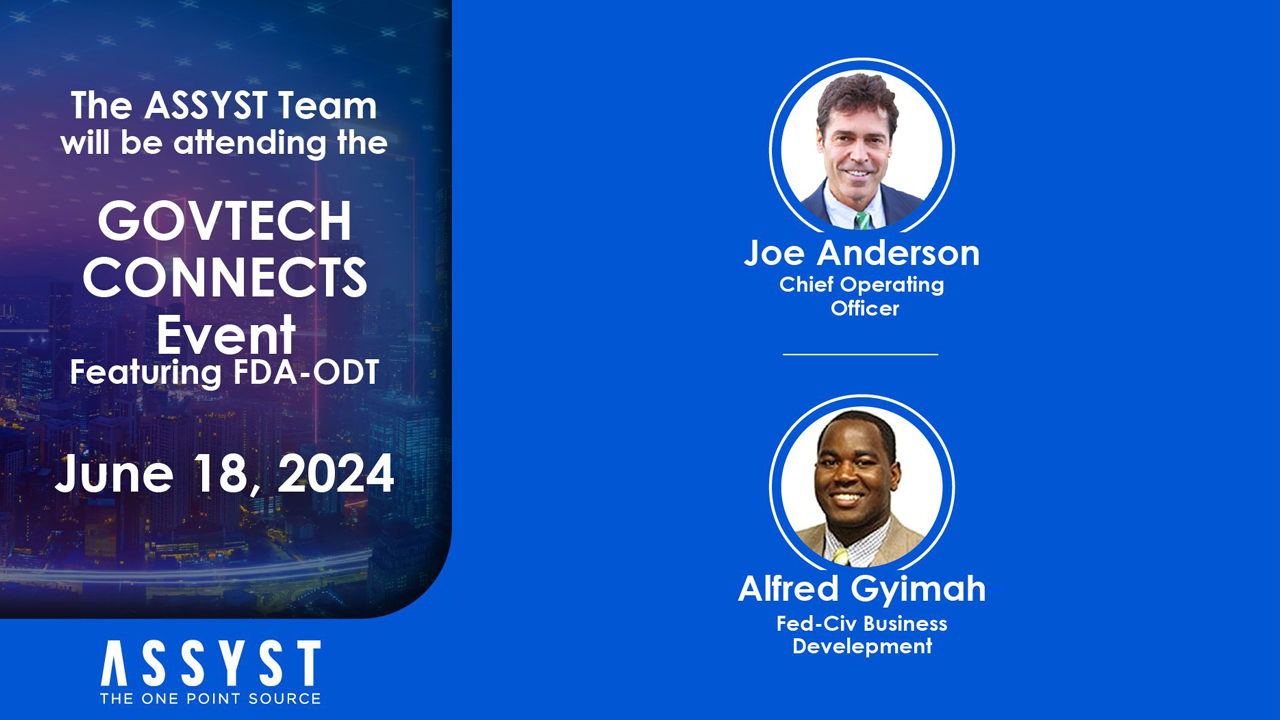
ASSYST sponsors the GOVTECH CONNECTS FedFocus Event, featuring FDA-ODT on Tue, June 18!
The event featured the HHS Food and Drug Administration (FDA)'s Office of Digital Transformation (ODT) discussing the New Acquisition Strategy and Opportunity Roadmap for FY24 and FY25.
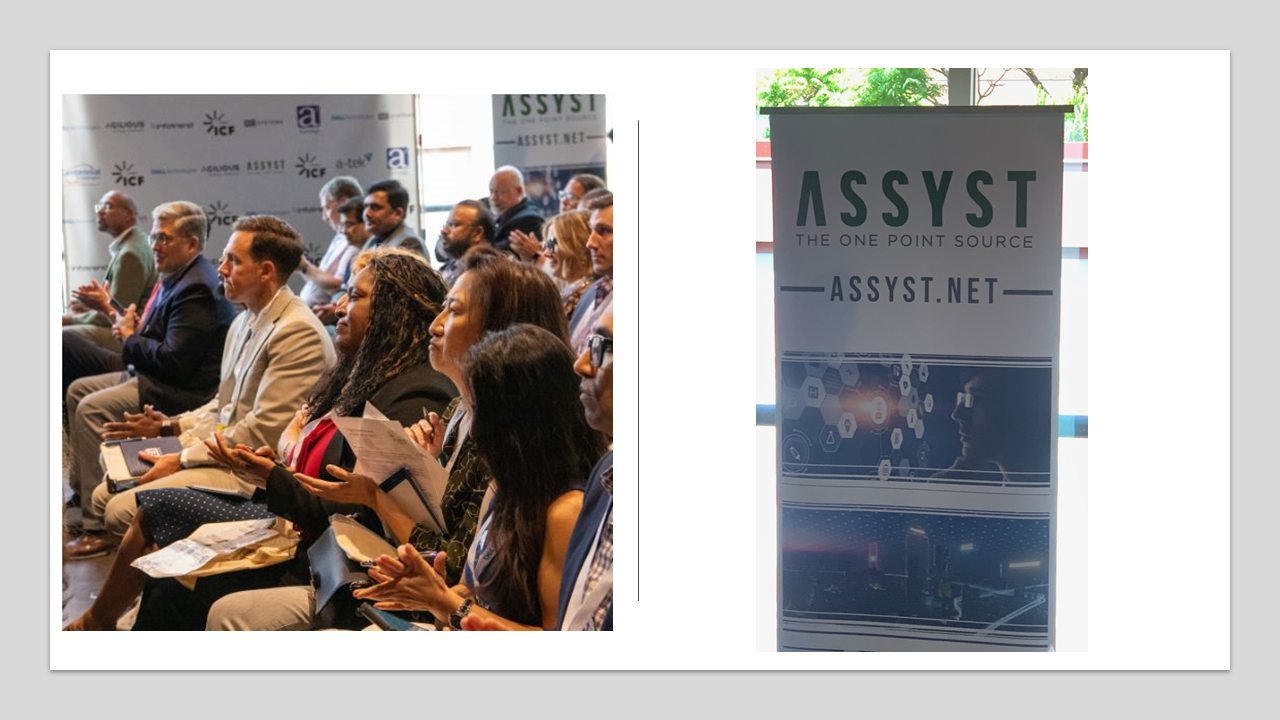
FedFocus'24 - The FDA specifically provided insights into the opportunities and challenges facing Federal IT Modernization and Digital Transformation Efforts at the FDA.
About ASSYST's Health IT Services
ASSYST helps US government health and human services agencies, research, and nonprofit organizations to deliver high-quality health and wellness services. Our customers include the Centers for Medicare and Medicaid Services (CMS), Food and Drug Administration (FDA), Health Research and Services Administration (HRSA), Office of the National Coordinator for Health Information Technology (ONC), Program Support Center (PSC), and many State and Local Government agencies.
ASSYST has been strong commitment to data interoperability, trusted data exchange, compliance, metadata, taxonomy, open data, and dissemination initiatives. In addition to HL7® FHIR®, ASSYST delivers solutions complying with data exchange standards, including XML, GJXDM, NIEM, XBRL, EDI, X12, and SDMX. ASSYST is an HL7® Gold Level member organization.
ASSYST offers Testing as a Service (TaaS), enabling our customers to scale their testing capacity for enterprise applications. We understand that in today's rapidly evolving, automation-driven digital landscape, characterized by multi-cloud and multi-vendor environments, ensuring reliability, quality, and deploying software at the speed of business is crucial for the enterprise's success.
Our Center of Excellence (CoE) model is central to this offering, designed to assist customers in seamlessly integrating Testing as a Service (TaaS) within their business, systems, and infrastructure. Through TaaS, ASSYST provides a comprehensive suite of testing methodologies, including unit, integration, system, functional, regression, performance, load, and stress testing. We incorporate industry-standard approaches such as Behavior Driven Development (BDD) and Test Driven Development (TDD) into these methodologies to ensure better code quality, improved product quality, and, most importantly, an enhanced user experience.
Our CoE enables customers to refine their testing strategies through collaborative partnerships and custom solutions, delivering exceptional results. With TaaS supported by our CoE model, ASSYST can help customers navigate the complexities of modern software development.

- Extend Test Coverage: Ensures that all critical aspects of the software are thoroughly tested, reducing the likelihood of undiscovered defects.
- Expand Test Spectrum: Adopt diverse testing methodologies, ensuring comprehensive validation of the software's functionality, performance, and security.
- Enhance Efficiency through Automation: Streamlines testing processes, reduces manual effort, and accelerates the feedback loop, enabling faster time-to-market.
- Drive Quality through Innovation: Foster a culture of continuous improvement by adopting technological advancements such as Artificial Intelligence and Machine Learning (AI/ML), leading to innovative testing techniques and technologies for enhanced quality and faster time to market.
- Increase Awareness using Visualization: Provides stakeholders with actionable insights into testing activities, facilitating informed decision-making and driving team alignment.
Center of Excellence (CoE)
The Center of Excellence (CoE) is a strategic hub for driving testing excellence across various organizational domains. At ASSYST, we firmly believe that "if you can't measure it, you can't improve it." Therefore, in alignment with our strategic direction, the CoE focuses on defining and testing Key Performance Indicators (KPIs) to ensure that testing efforts effectively measure and contribute to overall business objectives.

Additionally, within the technology domain, the CoE will develop, maintain, and monitor an automation strategy to enhance efficiency and effectiveness in testing processes. This involves integrating innovative approaches such as AI-driven testing and leveraging machine learning algorithms into Continuous Integration/Continuous Deployment (CI/CD) pipelines to ensure that Testing is seamlessly embedded throughout the development lifecycle. These initiatives aim to improve the usability, accessibility, and reliability of products and services. The CoE will monitor performance metrics such as defect density, test coverage, automation coverage, cost of quality, and, most importantly, customer satisfaction to gauge the effectiveness of these strategies in achieving testing objectives.
Testing as a Service Offerings

Testing as a Service (TaaS) offers a comprehensive suite of testing solutions designed to meet the diverse needs of modern day software development. With TaaS, organizations gain access to functional testing experts who ensure each feature meets specified requirements. In addition to functional Testing, automated Testing accelerates the testing process and improves efficiency. Leveraging data-driven Testing enhances test coverage, reusability, and the velocity needed for rapid software deployment. Performance testing ensures application scalability and an optimal user experience. TaaS provides a seamless and scalable approach to Testing, enabling organizations to detect and address issues early in the development cycle, reduce costs, and deliver high-quality software products.
Test Automation Platform
The Test Automation Platform is powered by ASSYST's Green Accelerator program. The automation platform provides unified capabilities to various stakeholders and partners, including business users, end users, application developers, and information security teams. The platform delivers the following benefits:
Scalability and Flexibility: Quickly scale resources up or down based on testing needs, aligning with cloud strategies and ensuring efficient resource utilization.
Parallel Testing: Execute tests concurrently across multiple environments to reduce overall test execution time and enhance coverage.
Environment Management: Rapidly create isolated, production-like environments for thorough Testing without impacting live systems.
Integration Testing: Seamlessly integrate with APIs and microservices, ensuring robust validation and compatibility with enterprise systems.
Role Based Security Testing: Ensure that the software enforces role-based access control (RBAC). RBAC assigns permissions based on authorized user groups, ensuring that application users can access only the information and actions relevant to their roles.
Accessibility Testing: Automated and manual accessibility testing ensures application compliance with Web Content Accessibility Guidelines (WCAG).
Performance Testing: Simulate high user loads to identify performance bottlenecks and ensure the application can handle expected traffic.
Central Repository of Automation Test Scripts: Maintain a reusable central repository for automation test scripts to enhance efficiency.
Visual Execution: Facilitate visual execution of test scripts for better understanding and validation.
Support for Development Frameworks: Support Data Driven and Behavior Driven Development frameworks for comprehensive Testing.
Generative AI in Testing: Use AI to generate test cases and synthetic data sets, reducing manual effort and improving test coverage.
UI Testing: Expedite UI testing using visualization tools driven by AI/ML.
The automation platform establishes a centralized repository of test assets, including automated test scripts, test data, and test configurations, which helps Agile/SAFe portfolio-level teams collaborate effectively, share resources, and avoid redundancy and duplication of effort.
The TaaS Center of Excellence (CoE) emphasizes secure coding and privacy principles by incorporating Static Application Security Testing (SAST), Dynamic Application Security Testing (DAST), and privacy-focused testing techniques into its solutions. This approach ensures that security vulnerabilities are identified and addressed early in the development process, promoting secure coding practices and mitigating risks. By integrating these testing methodologies into TaaS solutions, the CoE helps organizations build secure, resilient, and privacy-aware applications, aligning with industry standards and compliance requirements.
Another benefit is that the platform integrates with AI-based code generation tools and ensures code quality and accuracy by validating functionality, performance, and adherence to coding standards. This integration also enhances security measures by identifying and addressing potential vulnerabilities.
Impact and Outcome
Testing as a Service (TaaS) offers a transformative solution for organizations seeking to optimize their testing processes and achieve superior outcomes. By embracing TaaS, agencies can unlock myriad benefits, including increased efficiency, enhanced test coverage, improved customer experience, and lower cost of ownership.
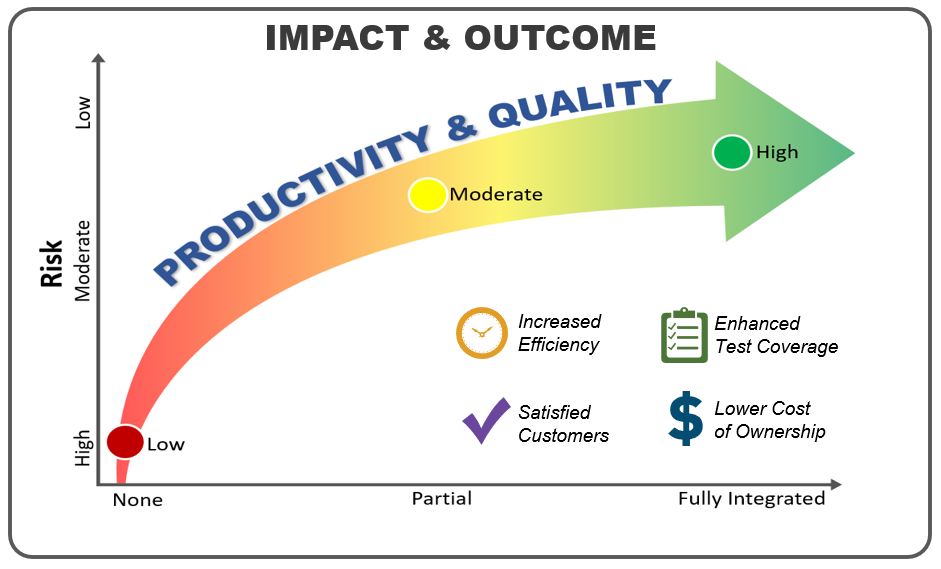
Through TaaS, organizations can streamline their testing operations and become better service product owners. They can leverage specialized expertise and modern technologies to execute testing activities with unprecedented efficiency by meeting customer experience goals. This enables faster product deployment and service launch while maintaining uncompromising quality standards and customer expectations.
Moreover, TaaS facilitates broader test coverage, ensuring that all critical functionalities and use cases are thoroughly validated. This comprehensive approach to Testing enhances product reliability and resilience, mitigating the risk of defects and ensuring a seamless user experience. TaaS empowers organizations to optimize their testing investments, delivering significant cost savings compared to traditional testing models.
About ASSYST
ASSYST is a trusted provider of Testing, Independent Verification, and Validation solutions tailored to government agencies. Our unparalleled expertise in serving Federal, State, and Local governments underscores our commitment to delivering testing services that meet the public sector's unique needs and rigorous standards. At ASSYST, we offer a comprehensive suite of testing capabilities, ranging from unit and regression testing to API and security testing, all aimed at ensuring the seamless functioning of government systems and applications. With a focus on innovation and efficiency, we stand ready to support government agencies in navigating the complexities of modern technology landscapes while delivering frictionless service experiences to citizens and stakeholders alike.

The Office of the National Coordinator for Health Information Technology (ONC) Health IT Certification Program (Program) maintains an electronic prescribing certification program outlining conformance requirements for Health IT modules. Electronic prescribing (eRx) and Real-Time Prescription Benefits (RTPB) are pivotal for improved efficiency, cost management, patient safety, and overall care quality.
Under the new contract, ASSYST will be responsible for modernizing the Testing System. This will involve migrating the tool to the ONC Cloud environment, providing Subject Matter Expertise to update use cases, and building the RTPB Tool. Once fully ready, the unified tool will support testing the eRx functionality of all major Health IT Product Vendors.
About ASSYST Health IT Capabilities and Solutions
ASSYST, a Health IT Systems Integrator and Platform Solutions provider, brings a wealth of experience in the healthcare industry. For over 25 years, we have assisted US government health and human services agencies, research, and nonprofit organizations in delivering high-quality health and wellness services. Our customers include the Centers for Medicare and Medicaid Services (CMS), Food and Drug Administration (FDA), Health Research and Services Administration (HRSA), Program Support Center (PSC), and many State and Local Government HHS agencies.
ASSYST's commitment to Health Data Interoperability programs is more than a recent development. It is a long-standing commitment that we have upheld over the years. Our Hephaestus platform is a testament to this commitment and actively promotes the adoption of Fast Healthcare Interoperability Resources (FHIR®).
ASSYST has provided solutions for data interoperability, exchange, compliance, metadata, taxonomy, open data, and dissemination initiatives. In addition to HL7® FHIR®, ASSYST delivers solutions complying with data exchange standards, including XML, GJXDM, NIEM, XBRL, EDI, X12, and SDMX. ASSYST is an HL7 Gold Level member organization.
Connect with Alfred Gyimah - LinkedIn
ASSYST will be responsible for modernizing and upgrading the ASC’s digital communications infrastructure. Over the past years, ASSYST has successfully completed numerous similar projects in collaboration with our esteemed strategic partners, demonstrating our expertise and commitment to excellence to DoD and Army customers including Defense Microelectronics Activity(DMEA), Army National Guard (ARNG), United States Military Entrance Processing Command (USMEPCOM), and US Army Combat Readiness Center (USACRC), The United States Army Tank-automotive and Armaments Command (TACOM) and the United States Army Training and Doctrine Command (TRADOC).
“We are honored to be entrusted with the task of modernizing digital and telecommunications capabilities that provide globally responsive strategic logistics capabilities and material readiness to the customer,” said Loren Gray, Army Program Manager at ASSYST.
About Army CHESS ITES-3S IDIQ
ITES-3S offers decentralized ordering with no contract access fee charged to agencies awarding against it. The base ordering period of performance is from September 25, 2018, to September 24, 2023, with 5 option years. This contract is managed by the US Army’s Computer Hardware, Enterprise Software and Solutions (CHESS) program and Army Contracting Command, Rock Island (ACC-RI). Service Areas include Cybersecurity Services, Information Technology Services, Enterprise Design, Integration, and Consolidation, Network/Systems Operation and Maintenance, Telecommunications/Systems Operation and Maintenance, Business Process Reengineering (BPR), IT Supply Chain Management, IT Education and Training.
ASSYST ITES-3S IDIQ Program Contacts:
Loren Gray | LinkedIn
Eugene Goldlust | LinkedIn
Tel: 703-230-3100
Email: ites3s@assyst.net
Web: https://assyst.net/contracts/Army-ITES3S-IDIQ
The U.S. African Development Foundation (USADF) is an independent U.S. government agency established by Congress to invest directly in African grassroots enterprises and social entrepreneurs. USADF’s investments increase incomes, revenues, and jobs by promoting self-reliance and market-based solutions to poverty. USADF creates pathways to prosperity for marginalized populations and underserved communities in the Sahel, Great Lakes, and the Horn of Africa. USADF engaged ASSYST to reimagine and redesign the primary external communication platform, the agency website. This project was undertaken against the backdrop of the 21st Century Integrated Digital Experience Act (IDEA), which was signed into law in 2018, requiring all federal agencies to make sure their websites are user-friendly and support digital forms.
Discovering with the Content Consumers
ASSYST understands every consumer seeking online services is presented with several options. Considering the unique mission of USADF, our approach was to identify the audience, discover problems, and down-select the right problems that need a solution.
With this in mind, ASSYST created a research brief and associated objectives. Our inquiry centered around empathizing with user personas, such as whom are we building or redesigning this site? The generative research process involved creating a roster of users, including Agency Leadership, Communications, Program, Grant Management, and Information Technology. Most importantly, we considered the international audience seeking grants representing Small and Medium Enterprises, Entrepreneurs, and Community Organizations.
What stood out in the discovery process was the participants' observations about USADF's long history and focused commitment to providing pathways to prosperity for underserved communities in Africa. However, these could have been more effectively communicated on its public-facing site. The wealth and breadth of USADF's archives contained information about its programs, data, results, and success stories over 40 years. USADF stakeholders sought ways to bring those stories to the forefront by highlighting their relevance to the audience.
We conducted interviews and contextual inquiries and then created research-based personas and user journey maps. The inquiry landscape tried to address "How Might We" (HMW) questions.
- How Might We deliver value to USADF's current and future audiences?
- How can we improve the discovery of USADF information online and help people follow appropriate pathways?
Qualitative outputs from Interviews and Working Groups allowed us to document user behaviors, thoughts, and emotions over time to understand the USADF audience journey. In addition, candid reactions from users when accomplishing tasks and their pain points were visualized and sketched to build optimal Journey Maps.
Designing for harmonious Communication and Storytelling
Our design studio developed several prototypes that empowered the site audience by engaging and taking a role in their interaction with the USADF site. The creative team wanted to deliver compelling Visual narration and Storytelling. This was accomplished by presenting the site visitors with video and using brilliantly large photos that conveyed the impact stories.
The audience often looked up briefing sheets in the "Where We Work" section. We realized that the map area presented an excellent opportunity to showcase USADF projects and project funding by country. Therefore, we conceived the map section on the landing page to employ parallax scrolling for enhanced user engagement. The ASSYST Creative Team chose the Parallax scrolling approach for the front end, which created a sense of depth for the USADF's mission, vision, and messaging. This powerful approach was chosen since it is engaging and helps progressively raise and elevate the user's interest in the content and feel inspired.
Since parallax uses multiple layers that are scrolled over, having the first layer as static and the subsequent layers employ 3D effects in a sequence not only brings an element of surprise and engagement but also allows the site audience to take an active role in their interaction when project data for the respective countries are presented.
Furthermore, to serve visitors’ intent, the site deserves a consistent experience across all parts of the site on any device. Our design used a mobile-first approach and a color palette that provides smooth transitions between pages. This approach helped to demonstrate USADF's clear purpose and enhance the user experience. Through parallax scrolling, we showcased a range of content elements for each theme in a way that makes an impact. In addition, the design enabled the flow of animation to provide a frictionless browsing experience.
With every sprint walk-through, we continuously tested the site’s functionality for usability with the user community. A balance of moderated and non-moderated efforts contributes to the design iterations. The Usability Testing feedback results were added to the Product Backlog for progressive refinements with each release. Thus, the usability testing directly contributed to prioritizing the backlog that results from formative research.
HCD Impact and Outcomes
The Human-Centered Design approach established and communicated a shared mission and vision across a diverse set of USADF stakeholders. This further helped to conceptualize, prototype, and test new ideas rapidly. The project presented an opportunity to adopt agile methods and tools for increased collaboration and creative problem solving. In addition, the iterative design process generated many qualitative and quantitative data to support shared decision-making and pave the way for future refinements.
Explore - https://usadf.gov/
ASSYST Digital Transformation Services
ASSYST is a strategic partner for customers across the industry spectrum, including DoD, Federal, State, and Local Governments, Non-Profit organizations, and International Agencies. We implement user-centric platform solutions for websites, knowledge management systems, mobile apps, search-based portals, interactive toolkits, open data catalogs, data visualizations, and Chatbots.
ASSYST is delighted to announce a Prime Contract award under Pool 2 in the USDA STRATUS BOA (Multi-Award Basic Ordering Agreement) for the small business category. Cloud spending under STRATUS is projected to grow to $1.2 billion annually in the next 10 years; the BOA performance period extends through April 2034.
The USDA has chosen STRATUS as its cloud acquisition vehicle, which underscores its alignment with the agency’s IT governance model, emerging cloud operating models, and vision for a true USDA Digital Enterprise.
Under Pool 2, USDA STRATUS broadly covers functional areas that include Governance, Cloud Strategy, Cloud and Platform Architecture, Cloud Migration, Cloud Security, Platform Operations and Engineering, CI/CD Pipeline Engineering, Identity and Access Management (IAM)/User Management, Change Management, Applications Development and Integration, Discovery, Framing, and Design, Training, Operations & Maintenance (O&M), Sustainment and Digital Product Management, FedRamp Authorization and 3PAO Assessor Services, Security Assessment, and Authorization (A&A) Services.
“ We are honored to support the USDA's mission to serve all Americans by delivering effective, innovative, and targeted cloud solutions. Through our expertise in highly optimized utilization and pricing models and best-in-class contracts, we are committed to providing equitable and climate-smart opportunities that help USDA thrive in agriculture, food and nutrition, natural resource protection, rural development, and related programs." Joe Anderson, COO at ASSYST.
ASSYST USDA Stratus Contract
https://assyst.net/contracts/USDA-STRATUS-BOA
ASSYST Cloud Services
https://assyst.net/capabilities/cloud-managed-services
Connect with ASSYST
https://assyst.net/connect

ASSYST has been awarded the CMS Security & Privacy Officer Support Services (CSPOSS) contract to provide cyber security Subject Matter Experts (SME) supporting the CMS Chief Information Security Officer (CISO) and Chief Information Officer (CIO) in their objectives for maintaining and managing secure and compliant FISMA Systems. This involves delivering Cyber Risk Advisors (CRAs) as a Service, Information Systems Security Officers (ISSOs) as a Service, and ISSO Advocacy and Support Programs.
Our program delivery will support CMS Business Owners, CISOs, and executive leadership with seasoned cyber expertise to log FedRAMP ATO documentation, implement NIST RMF accurately, utilize risk data to guide decision-making, strategize POA&Ms, facilitate Zero-Trust frameworks, oversee the successful implementation of procedures, ensure the effectiveness and documentation of CMS and Security controls, manage activity for information systems and data usage to remain compliant with FISMA standards and adhere to policy and practices with CMS and NIST guidelines. ASSYST services will help CMS achieve its cybersecurity objectives by providing expert support in managing cybersecurity efforts and developing the necessary skills and knowledge among CMS cybersecurity personnel.
Vinay Shirke, the CIO at ASSYST, expressed his delight about the contract award. He said establishing Cyber Security Service Delivery Models will significantly reduce the burden for Business Owners and CISOs. These models will help identify and foster qualified cyber talent to manage FISMA systems effectively. They will also help in implementing and overseeing NIST controls, envisioning strategic roadmaps, leveraging risk data to make informed decisions regarding policy and procedure, and maintaining required documentation for obtaining and maintaining an ATO.
Cybersecurity Services
ASSYST provides cyber support services that help customers with portfolios of FISMA Systems to manage risks effectively and comply with regulations. Our services include risk management, policy and compliance, vulnerabilities, knowledge management, data management, project management, and talent management for CISOs and business leaders. Our Security Data Lake Solution harmonizes data and improves holistic threat intelligence through actionable insights. Our unique ISSO-as-a-Service (ISSOaaS) and SOC-as-a-Service (SOCaaS) connect you with adaptable security professionals who follow industry best practices to support your organization's Cyber Mission Assurance. ASSYST’s ComplySync solution applies AI/ML and collaborative document intelligence to help agencies acquire Continous Authority to Operate (cATO) capabilities.
Our seasoned cyber security experts adhere to industry standards and best practices such as NIST CSF/RMF, PMBOK, ISO 27001/9001, HS2P2 guidelines, and Zero-Trust frameworks. We offer a Cyber Resilience Program with various engagement, education, and training initiatives for customer cyber experts, business owners, and cyber leadership. These initiatives help them discuss evolving trends, share their best practices based on experience, and grow their knowledge base through certifications.
ASSYST is thrilled to announce that the HHS Centers for Medicare and Medicaid Services (CMS) has awarded us a Cyber Risk Management Program contract. This new contract will allow us to expand the boundaries of CMS's existing cybersecurity initiative and develop Security Data Lake to enhance robust reporting mechanisms that contribute significantly to informed decision-making.
Our job under this contract is to help CMS integrate programs sponsored by various Intergovernmental Agencies and data feeds from the Continuous Diagnostic and Mitigation (CDM) program. By consolidating and standardizing diverse cyber risk data, we will enable CMS to effectively report on threats, vulnerabilities, and risks and promote transparency into the security posture of their IT systems and data enterprise-wide.
In addition, we will continue to provide operation and maintenance support for enterprise Governance Risk Compliance tools. These tools are necessary for maintaining the required FISMA and FedRAMP documentation, POA&M management, necessary controls, cyber policy management, audit management, and real-time reporting through dashboards.
Mr. Vijay Narasimhan, the CTO at ASSYST, shared his remarks on this win. He continued to say that expanding the boundaries of the Security Data Lake can have several benefits. It can improve visibility into systems and data security across the enterprise, speed up threat response times, enhance risk preparedness, and guide cyber strategy for Government Agencies. This can help ensure that high-value assets remain secure, improve decision-making, and comply with federal mandates.
Cybersecurity Services
ASSYST offers CISOs and business leaders a range of services covering risk management, policy and compliance, expert audit support, vulnerabilities, knowledge management, data management, project management, and data quality management. Our Security Data Lake Solution is designed to harmonize data, which helps improve holistic threat intelligence by providing actionable insights.
We provide unique ISSO-as-a-Service (ISSOaaS) and SOC-as-a-Service (SOCaaS) solutions that offer access to adaptable security professionals who are well-versed in industry best practices and can support your organization's Cyber Mission Assurance. Our seasoned cyber security experts follow industry standards and best practices, including NIST CSF/RMF, FIPS-199, PMBOK, ISO 27001/9001, HS2P2 guidelines, and Zero-Trust frameworks. ASSYST’s ComplySync solution applies AI/ML and collaborative document intelligence to help agencies acquire Continuous Authority to Operate (cATO) capabilities.
Welcome to a new edition of ASSYST's OnPoint xChange. We present an insightful conversation between Vijay Narasimhan, who recently assumed the role of ASSYST's Chief Technology Officer (CTO), and Eugene Goldlust, a Senior Account Executive focusing on Cybersecurity. They share perspectives and ideas on the emerging requirements for Cybersecurity programs to build capacity to support adopting AI/ML solutions.
Read more on LinkedIn