
FILTER BY


ASSYST serves the U.S. Equal Employment Opportunity Commission (EEOC) and Office of Information Technology (OIT) in its mission to combat employment discrimination. These services include fully leveraging modern technologies, transforming legacy systems, enhancing websites and digital services, and bolstering information security and privacy.
Central to our approach is the transition of legacy systems to secure, scalable Microsoft Azure cloud solutions. By utilizing Azure's comprehensive suite of services—including Azure Kubernetes Service (AKS) for containerized microservices, Azure Functions for serverless computing, and Azure DevOps for continuous integration and delivery (CI/CD)—we drive efficient and seamless modernization. This is complemented by adopting Agile methodologies, DevOps practices, and continuous monitoring, ensuring streamlined operations and reliable service delivery.
ASSYST's modernization strategy includes implementing a microservices architecture that breaks down monolithic applications into smaller, interconnected services. This approach enhances system agility, scalability, and resilience, allowing EEOC's technology stack to quickly adapt to evolving needs while optimizing resource utilization and overall system performance.
We integrate low-code platforms like Microsoft Power Apps to amplify EEOC's digital transformation further. This empowers the agency to rapidly develop and deploy custom applications that enhance operational efficiency and respond to specific business needs. These low-code solutions facilitate quick iterations and user-centric design, improving the overall user experience for employees and stakeholders.
Aligned with the EEOC's commitment to improving public service delivery, ASSYST ensures transparency and accessibility in online charge complaints and appeal processes. Our expertise in optimizing business processes significantly enhances service delivery across diverse stakeholders, including individuals, state and local partners, federal agencies, and commercial entities. This transformation drives productivity by providing secure, real-time access to tools, data, and documents.
ASSYST collaborates with the EEOC to maximize outcomes from the Technology Modernization Fund (TMF) and accelerate the adoption of these innovations. It ensures sustainable, long-term benefits for all stakeholders, positioning the EEOC as a leader in public service delivery through advanced technology adoption.
About ASSYST
ASSYST is a trusted partner in technology modernization for government agencies regulating and overseeing sectors such as Banking, Financial Markets, Healthcare, Pharmaceuticals, Revenue, Tax Collection, and Nuclear Energy. Our clientele includes regulatory agencies and commissions like the Securities and Exchange Commission (SEC), Centers for Medicare and Medicaid Services (CMS), Food and Drug Administration (FDA), Health Resources and Services Administration (HRSA), Internal Revenue Service (IRS), and the Nuclear Regulatory Commission (NRC). Our solutions leverage leading-edge technology to innovate and automate regulatory processes, driving efficiency and effectiveness across diverse sectors.

ASSYST has been awarded the Maryland Judiciary (MJUD) Master Contract for Staff Augmentation and Professional Consulting Services across six functional areas. This achievement is a testament to our enduring partnership with the Maryland Judiciary, which spans over two decades and continues to grow stronger.
During this time, we have consistently delivered high-quality solutions in Judicial Information Systems, the ACT SAFE (eCitation) system, the Enterprise Case Management System (ECMS), the Electronic Bar Application System (eBAR), the Foster Care Court Improvement Program (FCCIP), the Mediation and Conflict Resolution Office (MACRO) system, and Infrastructure Management, reinforcing our commitment to the Government.
Khalil Zebdi, EVP of Business Development, remarked on our shared commitment to excellence: "Our long-standing collaboration with the Maryland Judiciary is a testament to our dedication to delivering innovative and reliable solutions for public services. We look forward to continuing our work together, driving impactful outcomes for the judiciary and the communities it serves."
More Details: contracts

We are thrilled to announce that our talented team at ASSYST received FIRST PLACE WINNER recognition at the recent GSA Federal AI Hackathon to optimize federal websites and data for AI while enhancing human usability.

-
GSA's Administrator, Robin Carnahan, is presenting the Award

GSA Blog - GSA AI-themed hackathon reimagines user experience for federal websites
-
Message from ASSYST CIO Vinay Shirke and ASSYST CTO Vijay Narasimhan
Celebrating Our Team's Triumph at the GSA Federal AI Hackathon!
Congratulations to the incredible team on their outstanding achievement and reiterating ASSYST commitment to creating innovative AI solutions for shaping the future of government services.

LinkedIn Article - Celebrating Our Team's Triumph
-
In the Media
Hackathon imagines federal agency websites enhanced by artificial intelligence
Media News - Government Executive
-
About ASSYST AI Capabilities and Solutions
ASSYST AI/ML Center of Excellence (CoE) provides rapidly accessible accelerators, and platform solutions to government agencies, embedding AI expertise into various facets of customers’ business and operations. We embed researchers, data scientists, machine learning experts, and product managers directly within project teams, fostering close collaboration with domain experts to tackle specific business and data challenges. AI is not a standalone discipline; our teams work closely with colleagues in Human-Centered Design (HCD) and User Experience (UX) to ensure that our AI solutions are intuitive and accessible across a multi-generational audience. Our Green Accelerator Program innovations include Collab AI, which uses Intelligent Automation for Team Collaboration, and ComplySync AI, which Accelerates the adoption of Security and Governance Controls to Manage Cyber Risks using Generative AI.
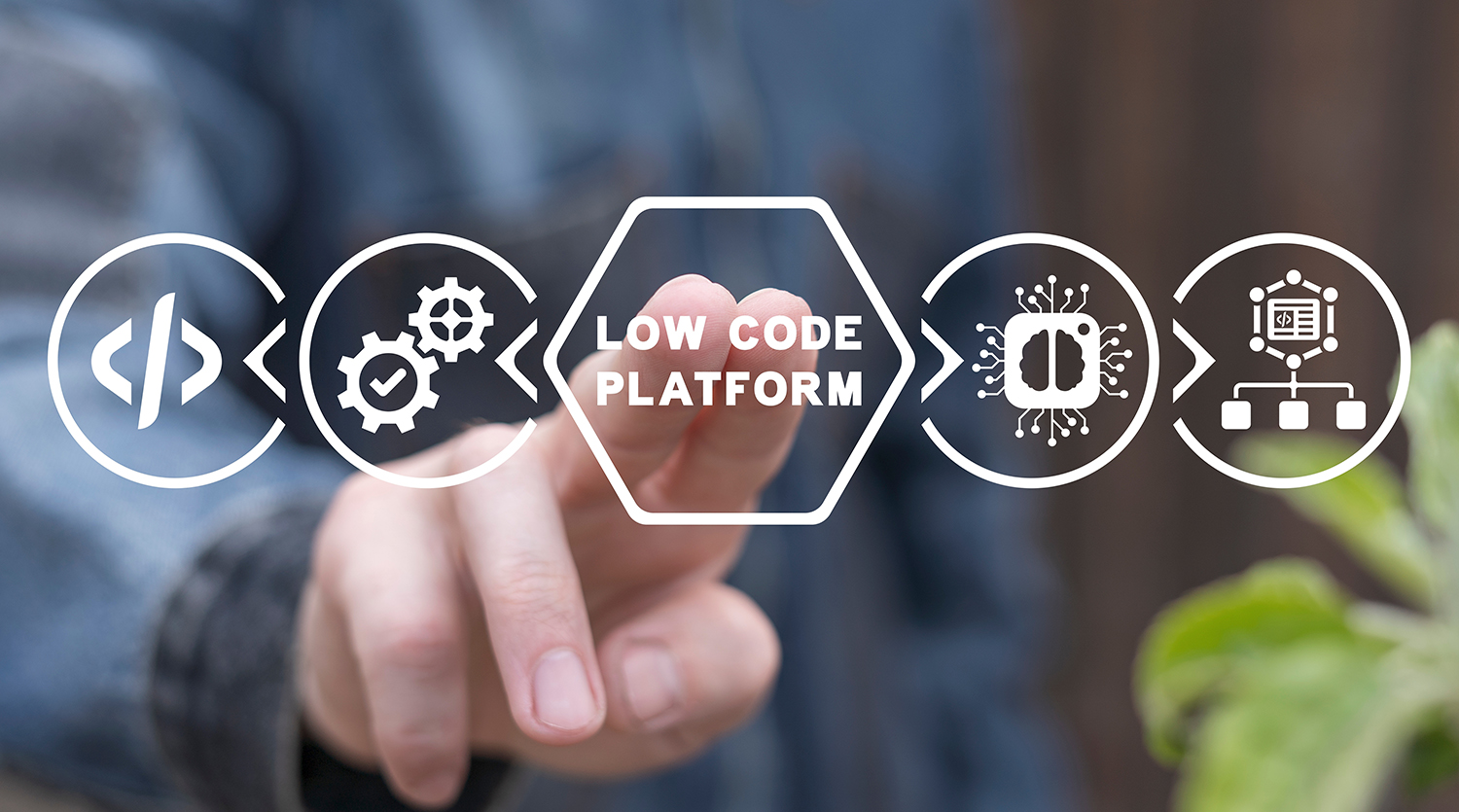
As government agencies increasingly adopt a diverse range of low-code platforms—such as Appian, Axway, Power Apps, Salesforce, ServiceNow, and Pega—for applications, including grant management, case management, and regulatory submissions, ASSYST’s Center of Excellence (CoE) excels in optimizing these tools alongside comprehensive Cloud integration. Our CoE and Green Accelerator ensure clients leverage the full spectrum of low-code environments and Cloud capabilities to achieve strategic outcomes. Through our structured framework, we enhance the impact of these tools and services, integrating key success metrics to measure effectiveness.
Strategic Decision Framework for Tool and Cloud Selection
ASSYST’s CoE employs a strategic framework for selecting and deploying low-code tools and Cloud services, evaluating project complexity, customization needs, integration capabilities, and alignment with existing technologies. We also assess each platform’s potential for AI integration and adaptability to emerging technologies. This approach prioritizes tools and solutions tailored for various needs—whether advanced workflow automation for grant management or scalable Cloud infrastructure for application modernization. Success is measured through project completion times, user satisfaction, and integration efficiency.
Defining Optimal Use Cases
We ensure each low-code tool and Cloud service is utilized where it excels:
- Grant Management: Streamline processes with platforms offering advanced automation and tracking capabilities, focusing on reduced processing times and improved accuracy.
- Case Management: Use tools with robust data management features, measuring case resolution times and user satisfaction.
- Regulatory Submissions: Enhance efficiency with platforms providing comprehensive tracking and compliance features, focusing on submission accuracy and processing speed.
- Application Modernization: Support modernization with tools that integrate seamlessly with legacy systems and Cloud infrastructure, aiming for reduced downtime and faster modernization.
- Monitoring and Evaluation: Employ tools with advanced analytics and Cloud solutions for improved program monitoring, focusing on evaluation accuracy and performance.
- Resource Allocation: Optimize use with resource management tools and Cloud solutions, tracking utilization rates and cost reductions.
Innovative Tools Governance and Bridging Team Silos
Our CoE implements a unified governance framework to manage and govern diverse low-code tools and Cloud services. This approach standardizes tool usage and fosters cross-functional collaboration through centralized repositories, standardized templates, and common development practices. Success metrics include improvements in inter-departmental collaboration, tool usage consistency, and project delivery timelines.
Measuring Success with Key Metrics
ASSYST’s CoE tracks essential metrics to measure the success of low-code and Cloud services:
- User Adoption Rates: Assess how widely and effectively tools are used.
- Time to Deployment: Evaluate the speed of application development and release.
- Cost Savings: Confirm reductions in development and operational expenses.
- User Satisfaction: Gather feedback to ensure platforms meet user needs.
- Developer Productivity: Measure efficiency gains and reduction in manual coding.
- Technical Debt Reduction: Ensure cleaner, maintainable code.
- License Utilization: Optimize license use and costs.
- Application Performance: Track reliability and performance.
- Security and Compliance: Ensure adherence to standards.
- Integration and Interoperability: Evaluate seamless integration with existing systems and between platforms.
- User Engagement and Support: Monitor engagement levels and support quality.
ASSYST Low-Code Capabilities
What distinguishes ASSYST is our precision-engineered approach to leveraging low-code solutions tailored to complex, sector-specific needs. For the US Food and Drug Administration (FDA), we deploy Axway's low-code Managed File Transfer (MFT) solutions, enabling secure, automated, and scalable file exchanges across heterogeneous environments. By integrating Axway tools, we ensure seamless data orchestration, enforce stringent compliance with regulatory standards, and deliver robust, enterprise-grade solutions that handle critical data transfer requirements with high availability and fault tolerance.
In parallel, we utilize Appian’s workflow automation capabilities to architect and streamline intricate business processes. Leveraging Appian’s powerful BPM features, we design solutions that automate complex workflows, enabling real-time process optimization, enhanced data synchronization, and improved process governance, all while maintaining strict adherence to compliance frameworks and operational protocols.
We leverage Power Apps and the Power Platform for the US Department of Energy (DOE) to execute full-scale modernization of legacy systems. Our implementation strategy focuses on creating dynamic, scalable applications for critical functions such as facility access tracking and budgeting. By integrating Office 365 Government Community Cloud (GCC), SharePoint, and Power Apps with existing data ecosystems and employing advanced connectors, we ensure seamless updates, API-driven integrations, and the elimination of manual workflows. This improves data integrity and operational efficiency and enhances decision-making through real-time analytics and predictive insights powered by AI and machine learning models.
ASSYST’s approach ensures that each client’s unique operational and regulatory requirements are met. By fully exploiting the capabilities of low-code platforms and Cloud services, we deliver customized solutions that drive strategic objectives, optimize resource utilization, and enable rapid adaptation to evolving business landscapes.
Product names mentioned are for informational purposes only


Within ASSYST, Collab AI has fundamentally transformed our approach to daily tasks by integrating advanced capabilities that enhance operational efficiency and decision-making. This strategic implementation has infused intelligence into our workflows, automating routine document analysis and classification and deriving actionable insights from real-time data. Collab AI's capabilities empower us to manage digital assets efficiently and ensure critical information is readily accessible, setting a new standard for operational excellence and innovation at ASSYST. This article explores various use cases where Collab AI can be effectively applied.
Exploring Collab AI's Transformative Capabilities
In today's complex business environment, Collab AI emerges as a powerful capability designed to enhance efficiency and decision-making through advanced AI technology. Let's explore how Collab AI can revolutionize operations across various domains, from optimizing content creation to facilitating evidence-based policymaking, efficient case management, and streamlined knowledge management. These scenarios illustrate how Collab AI can streamline processes, automate data analysis, and enhance information retrieval, making it a vital tool for organizations looking to leverage AI's full potential to achieve their operational objectives and adapt to industry demands.

Empowering Efficiency and Collaboration with AI Capabilities
In envisioning a future where content creation and optimization demands are met with unprecedented efficiency, Collab AI offers an innovative solution poised to streamline the document drafting process. By harnessing the capabilities of Generative AI, Collab AI aims to significantly reduce the manual effort required to produce detailed reports, RFPs, proposals, and legal documents. This advanced capability expedites document production and enhances content quality by intelligently optimizing drafts to meet specific objectives, effectively engage target audiences, and incorporate valuable feedback. Collab AI also envisions seamless integration with widely used office productivity tools like Office 365 and Google Suite, facilitating a smooth transition into existing operational workflows. This integration promises to empower teams to shift their focus from time-consuming document preparation to strategic analysis and decision-making. Ultimately, Collab AI seeks to enhance workflow efficiency, ensuring the delivery of high-quality content that resonates with its audience and aligns closely with organizational objectives, all while leveraging familiar digital tools essential for business operations.
Facilitating Informed Decision-Making through AI Insights
Collab AI can be envisioned as a tool to enhance evidence-based decision-making by automating data collection, analysis, and application in policy development. Its advanced AI algorithms integrate and clean data from various sources, providing policymakers with high-quality, relevant information. Predictive analytics and machine learning models offer deep insights into complex datasets, empowering decision-makers to make informed choices based on empirical evidence. Collab AI's real-time data processing capabilities ensure agile, effective policymaking that responds dynamically to changing circumstances, enhancing governance and organizational effectiveness.

Transforms Case Management Operations into Efficient Case Resolutions
Collab AI can streamline these processes by automating document ingestion, classification, and analysis, significantly reducing manual data entry and human error while ensuring alignment with regulatory compliance standards. Through advanced analytics, Collab AI empowers caseworkers and decision-makers to collaboratively derive actionable insights from case data, fostering knowledge sharing and enabling timely policy adjustments or program improvements. Its capability to generate comprehensive reports and maintain compliance documentation further enhances organizational efficiency and effectiveness, highlighting Collab AI's role as a transformative tool for public sector innovation.
Effective Knowledge Management and Institutional Memory Retention
As organizations expand, managing institutional knowledge becomes increasingly complex. Collab AI could simplify this challenge by utilizing advanced Retrieval-Augmented Generation technology to organize, classify, and facilitate swift retrieval of extensive information repositories, transforming them into manageable, accessible knowledge bases. This capability would reduce the time employees spend searching for information—thereby boosting productivity—and enhance innovation by making it easier to access and leverage organizational insights. Whether applied to research, development, or customer support, Collab AI’s potential integration into knowledge management processes promises quicker responses, more informed decisions, and a culture that effectively harnesses collective intelligence, all tailored to meet the diverse needs of growing organizations.

Discover the Potential of Collab AI
Collab AI is a versatile capability designed to integrate seamlessly into organizational workflows, enhancing productivity and decision-making across various domains. Whether optimizing content creation, facilitating evidence-based policymaking, streamlining case management, or enhancing knowledge management, Collab AI empowers organizations to effectively leverage AI's capabilities to achieve their operational goals.
Explore how Collab AI can transform your organization's capabilities.
Learn more about Collab AI - https://assyst.net/collab-AI/
Data as a product has evolved significantly, both in terms of quantity and how it is designed, presented, and disseminated. The consumption of data-driven content and stories is on the rise worldwide, across various platforms. However, the usefulness of data hinges greatly on how well it is presented. Effective data visualization facilitates accessing information and supports monitoring, evaluation, advocacy initiatives, and statistical data presentation. Maintaining industry leadership, enhancing website content quality, and fostering data-driven collaborations and team analytics is crucial. Adopting a Human-Centered Design (HCD) approach, ASSYST ensured the tool meets the needs of diverse stakeholders, from global policymakers to research.
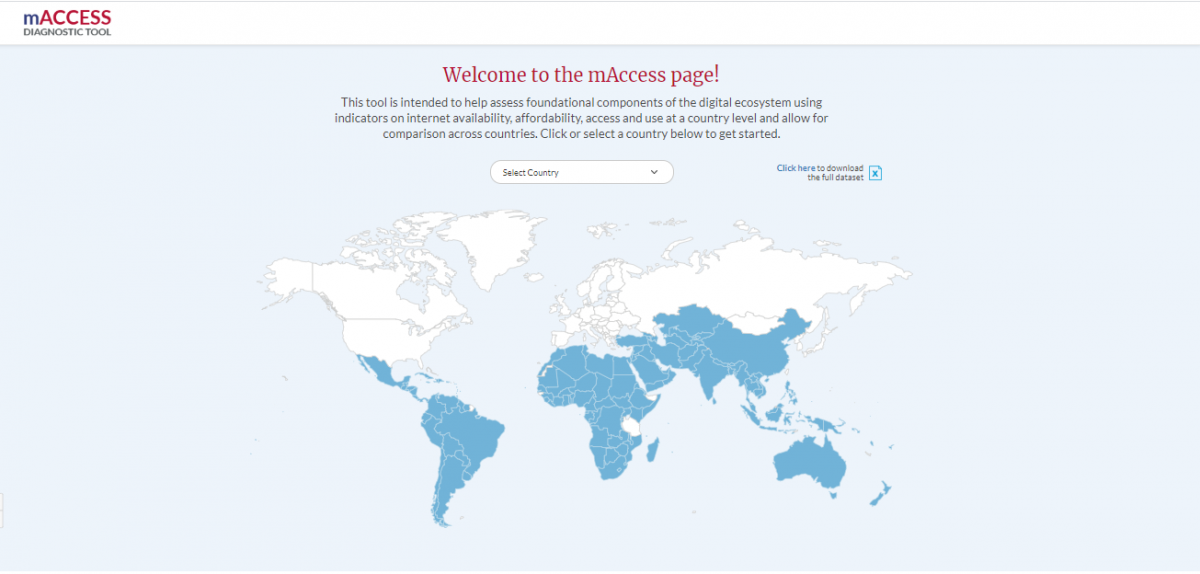
ASSYST collaborated with DAI to redesign the mAccess Diagnostic Tool for the United States Agency for International Development (USAID) as part of the Digital Frontiers Program. This tool, housed within USAID’s Center for Digital Development , allows users to assess digital ecosystem facts at a country level and compare data across nations.
The objective was to enhance the tool’s usability and value within USAID, supporting program implementation globally. The redesigned solution provides a sustainable digital approach that is crucial for analyzing internet availability, connectivity costs, and user demographics across more than 100 countries.
ASSYST’s approach to data visualization centered on key principles:
- Objectivity and Simplicity: Choosing appropriate visualization models and offering responsive interfaces for accessing country-specific data.
- Effective Communication: Prioritizing essential indicators and utilizing icons and charts to present information clearly.
The Right Chart for the Right Data: Ensure visualizations are aligned with the data being presented, effectively using axes and scales for comparative analysis.
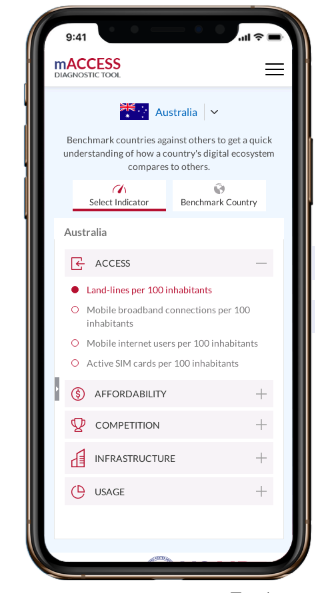
The design process was inherently user-centric, focusing on intuitive navigation and mobile accessibility. By minimizing clicks and optimizing content flow, ASSYST ensured the platform’s ease of use across devices. Accessibility testing and interactive prototypes further refined the user experience.
The revitalized mAccess tool now features a user-friendly landing page and inner pages adhering to USAID’s digital standards. It provides detailed country snapshots, allows users to select specific indicators, and facilitates benchmarking against other countries. This enhanced capability empowers governments and stakeholders to identify digital ecosystem challenges quickly, enabling better planning and decision-making.
The mAccess data visualization tool supports USAID’s development objectives and enables robust quantitative and qualitative analysis. The tool contributes significantly to refining development strategies and achieving sustainable outcomes by improving digital programs and measuring their impact.
Follow this link to explore the tool - http://maccess.digitaldevelopment.org/
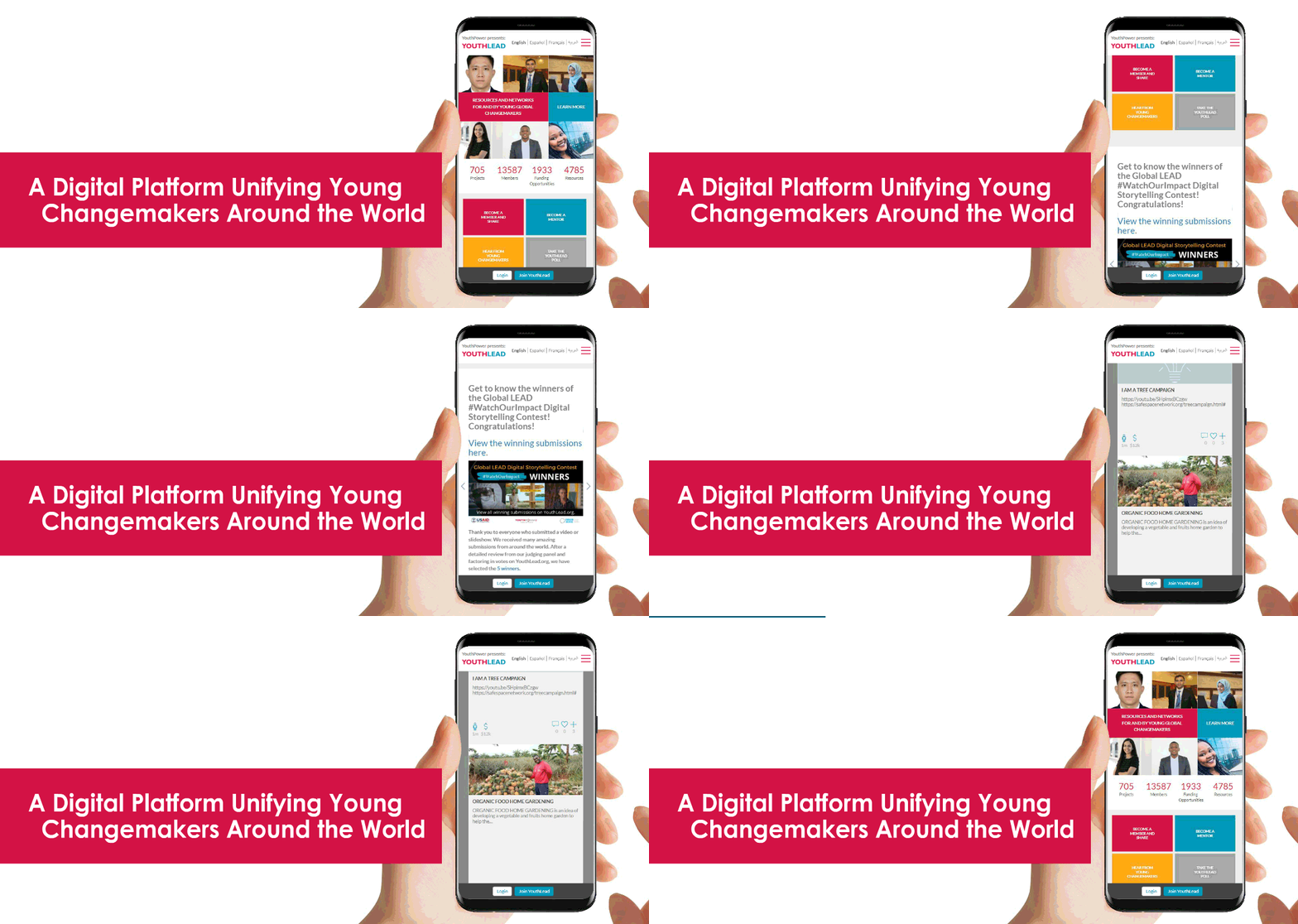
With 1.2 billion youth worldwide, meaningful engagement is crucial for fostering positive social change. Positive Youth Development (PYD) is a widely accepted approach that empowers youth to reach their full potential by building skills, fostering relationships, strengthening environments, and transforming systems. In 2015, the United States Agency for International Development (USAID) funded the YouthPower Learning project to expand the evidence base for PYD and build the capacity of youth development practitioners and stakeholders. Building on that success, the USAID-funded YouthPower2: Learning and Evaluation (YP2LE) initiative further integrates PYD evidence and best practices into youth programming, ensuring sustainable change. These efforts included the creation of YouthLead.org, a platform designed for young changemakers worldwide.
YouthLead.org: A Digital Hub for Global Changemakers
Launched in 2018 under the USAID-funded YouthPower Learning project and now managed by YP2LE, YouthLead.org is a digital community for young individuals dedicated to making a positive impact through service, activism, advocacy, education, and entrepreneurship. The platform connects people, ideas, and resources to tackle critical issues affecting youth globally. YouthLead.org enables young changemakers to connect with peers, access valuable information, discover resources, and create learning opportunities in multiple languages, including English, Spanish, and French, with Google Translate available on every page.

Discovering Key Touchpoints Through Human-Centered Design
ASSYST began the project with a Human-Centered Design (HCD) approach, starting with a discovery sprint to identify the core business and human needs. We worked closely with key stakeholders, employing techniques such as “How Might We” questions to frame challenges and opportunities. Our research included interviews, surveys, and focus groups with youth, mentors, and other stakeholders to gather deep insights. We developed personas representing diverse user groups and mapped out user journeys to understand their interactions, pain points, and needs throughout their engagement with the platform.
Designing for a Global Audience
ASSYST crafted an intuitive front-end interface compatible with both desktop and mobile devices, catering to diverse user categories. Our design process included creating wireframes and prototypes tested with real users to ensure usability and accessibility. We focused on showcasing the value of joining the YouthLead community and encouraging active participation. The platform features rich user interface effects like carousels, tabs, accordions, and lightboxes, using reusable or custom-built patterns across the site.
Architecting for Scalability and Performance with AWS Cloud Services
The platform is designed to handle content from multiple sources and support simultaneous updates. It features a responsive design architecture that enhances efficiency, usability, and accessibility across all standard browsers. The navigation approach ensures users understand their site location and next steps. An interactive dashboard allows administrators to manage content, users, and system settings efficiently. Multiple levels of roles and permissions ensure a robust content creation, review, and publishing process.
The platform employs an Open Source framework and utilizes various AWS Cloud Services, including:
- Amazon EC2 for scalable compute capacity.
- Amazon S3 for secure, scalable storage.
- Amazon RDS for a managed relational database service.
- AWS CloudFront for content delivery.
- AWS Lambda for serverless computing to handle backend processes.
- AWS IAM for secure identity and access management.
- AWS CloudWatch for monitoring and logging.
These services ensure high performance, reliability, and security, supporting the platform's need to scale globally and handle dynamic content and user interactions.
Showcasing Innovations and Encouraging Participation
Young changemakers can learn from other youth projects through advanced search, filter, and refine functions. Every member profile highlights the human behind the username, with social sign-in and a point-based activity system. Badges like Networker, Innovator, and Community inspire members and recognize accomplishments. Notifications keep members updated on content and community activity.

Facilitating Value Communications and Interactions
Group administrators moderate user communication within the platform, with discussion groups categorized as Open or Closed. Both types can host their own events, discussions, and resources. Members can post resources, projects, events, blogs, and participate in forum competitions, and rank resources and expert profiles. The multilingual platform offers global networking opportunities, featuring an interactive map, online status indicators, and instant messaging for real-time communication. Future plans include mentorship programs, allowing members to sign up as mentors and engage with mentees through structured email notifications.
Looking Ahead
With numerous social media platforms and communities available, ASSYST collaborates with the YP2LE team to continuously review community engagement, enhance the user experience, and brainstorm new features. We regularly revisit our user personas and journeys to adapt the platform to evolving needs and expectations.
Impact and Success Stories
Since its launch, YouthLead.org has empowered countless young individuals to drive change in their communities. Success stories and case studies highlight the real-world impact of the platform, showcasing how young changemakers have leveraged YouthLead.org to achieve their goals.
ASSYST Digital Transformation Services
ASSYST Digital Services partners with a wide range of clients, including DoD, Federal, State, and Local Governments, Non-Profit Organizations, and International Agencies. We employ human-centered design (HCD) and agile principles to implement solutions for websites, knowledge management systems, mobile apps, search-based portals, interactive toolkits, open data catalogs, data visualizations, and chatbots.

ASSYST is thrilled to announce we are a member of a winning team on the US Department of Justice (DOJ), Federal Bureau of Investigation (FBI) requirement for IT Supplies and Support Services (ITSSS-2). The prime awardee is Innovative Management & Technology Services, LLC (IMTS), a premier provider of innovative solutions as technical advisors to the National Security and Law Enforcement community, and Integrated Computer Solutions, Inc. (ICS), a leading provider of enterprise IT solutions.
Press Release:
https://www.prnewswire.com/news-releases/integrated-computer-solutions-inc-ics-and-innovative-management--technology-services-llc-imts-join-forces-to-win-major-fbi-it-services-contract-302194803
For more details contact:
Eugene Goldlust, Sr. Account Executive, ASSYST, Inc.

Over the past few years, ASSYST has closely monitored the accelerating pace of digital transformation across government operations. Recognizing artificial intelligence's pivotal role in shaping public services' future, we developed Collab AI, which uses the ASSYST Green Accelerator at the Core.
Collab AI is envisioned as an adaptable framework to tailor and suit emerging AI use cases within the public sector. This platform integrates sophisticated AI capabilities with user-centric design to democratize data intelligence and foster collaboration and innovation.
AI-Driven Insights for Strategic Decision-Making
Collab AI is powered by a custom Large Language Model (LLM) and advanced AI/ML algorithms, transforming data into a strategic decision-making tool for operational efficiency. This effort reflects our commitment to innovation, allowing users to easily navigate data complexities, unlock the full potential of their information assets, and push the boundaries of what's possible in their fields. Our platform significantly improves government operations and public service delivery through technology.
Collab AI optimizes enterprise knowledge for strategic decision-making. This platform seamlessly integrates AI into organizational private content and workflows, cultivating a synergistic relationship between technology and expertise. By simplifying the journey from data to decisions, our platform helps organizations maximize their information assets, enhancing decision-making and driving innovative solutions that boost program effectiveness and efficiency.

Enhancing Data Interaction
Collab AI allows organizations to interact with their data, enhancing accessibility, manageability, and insightfulness. Our platform leverages advanced data sciences and artificial intelligence to transform data into a catalyst for strategic decision-making, boosting competitive advantage and operational efficiency. By automating routine tasks and enhancing data analysis, Collab AI enables users to concentrate on high-value activities, pushing the boundaries of what's possible in their respective fields.
Streamlined Automation
At its core, Collab AI helps organizations achieve more with their documents and data. Automating the labor-intensive document analysis and classification process allows teams to focus on strategic tasks that drive value and success. This focus is especially crucial for government agencies, where efficiency, security, and compliance are paramount. Collab AI streamlines the management of digital assets and ensures that these assets are utilized to align with organizational goals and regulatory requirements.

Transformative Impact
Collab AI represents a significant advancement in content and document analysis, emphasizing AI’s profound impact on streamlining organizational workflows. This platform combines intuitive usability with advanced AI technologies, positioning itself as a strategic partner in the journey toward digital transformation. Our innovative approach revolutionizes content and document analysis, enhancing workflow efficiency and providing strategic insights.
- Collab AI integrates state-of-the-art Large Language Models (LLMs) out-of-the-box, simplifying the adoption of generative AI capabilities for organizations without requiring complex customizations. This feature empowers users across any organization to harness enterprise knowledge and content more effectively, gaining deep insights that drive informed decisions and strategic initiatives.
- Utilizing AI/ML technologies, Collab AI transforms intricate data landscapes into actionable insights. By intelligently analyzing extensive datasets, Collab AI identifies patterns, trends, and anomalies, providing users with clear, data-driven directives that enhance operational efficiency and decision-making precision.
- Built on open-source, distributed cloud infrastructure, Collab AI prioritizes transparency and adaptability. This foundation supports continuous innovation and customization, allowing organizations to tailor Collab AI to meet specific operational needs seamlessly.

Discover Collab AI
Collab AI offers a transformative solution for organizations looking to optimize data interactions and achieve superior outcomes. Embracing Collab AI enables agencies to streamline operations and realize substantial cost savings compared to traditional models. Discover how Collab AI can enhance your organization's data management and operational efficiency by visiting;