

FILTER BY

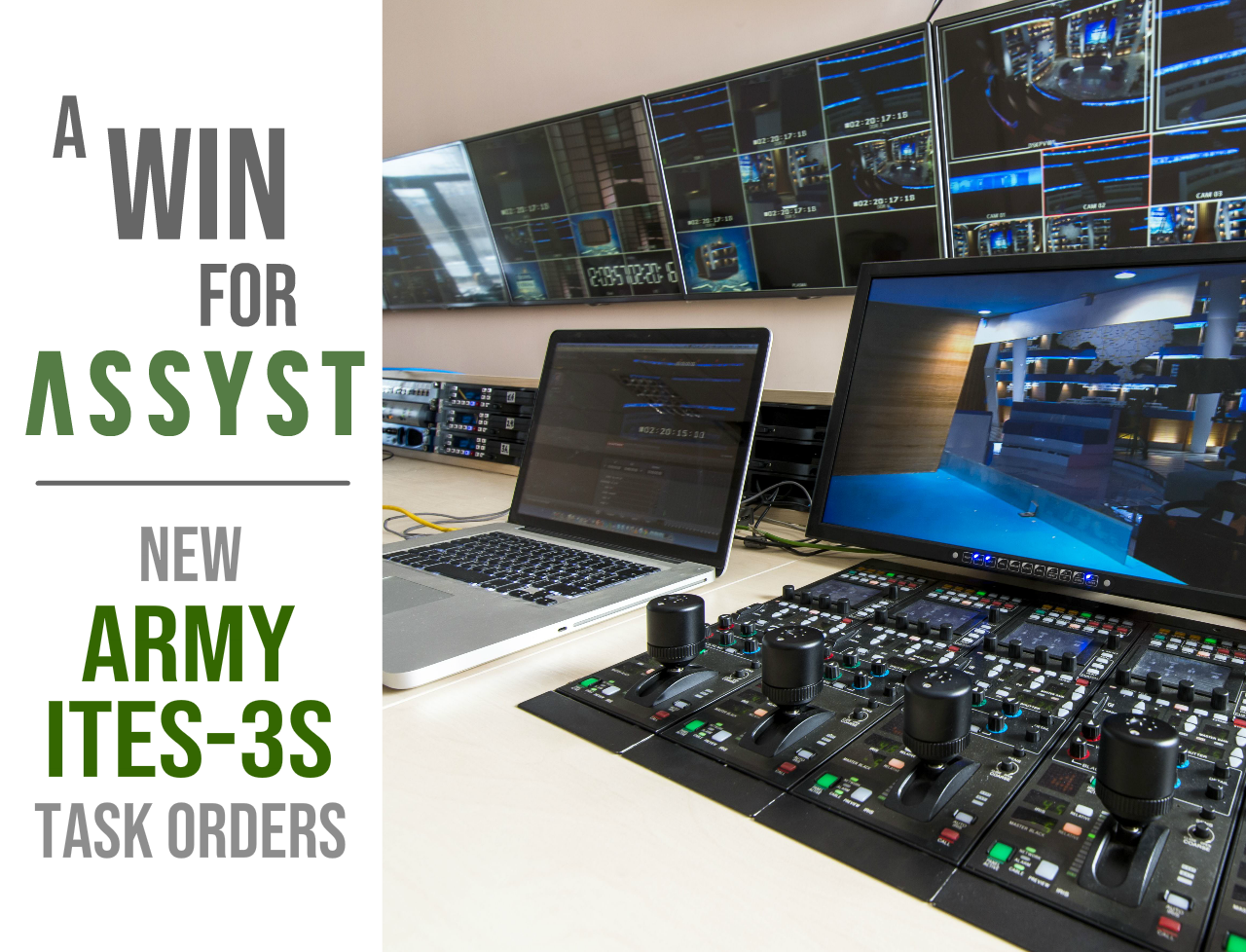
ASSYST is pleased to announce that we have won two new task orders under the Army ITES-3S IDIQ from Picatinny Arsenal, NJ, Fort Dix, New Jersey, and the Program Executive Office (PEO) Aviation, Redstone Arsenal, Alabama.
Under these contracts, ASSYST and its partners will provide systems and infrastructure support for video, teleconferencing, printing, real-time digital communication, and collaboration solutions.
“ As the prime contractor for ITES-3S, we are dedicated to delivering top-value solutions and leading-edge technology to support our service members “, remarked Loren Gray, Army Program Manager, ASSYST.
About Army CHESS ITES-3S IDIQ
ITES-3S offers decentralized ordering with no contract access fee charged to agencies awarding against it. The base ordering period of performance is from September 25, 2018, to September 24, 2023, with five option years. This contract is managed by the US Army’s Computer Hardware, Enterprise Software and Solutions (CHESS) program and Army Contracting Command, Rock Island (ACC-RI). Service Areas include Cybersecurity Services, Information Technology Services, Enterprise Design, Integration, Consolidation, Network/Systems Operation and Maintenance, Telecommunications/Systems Operation and Maintenance, Business Process Reengineering (BPR), IT Supply Chain Management, IT Education and Training.
ASSYST ITES-3S IDIQ Program Contacts:
Eugene Goldlust | LinkedIn
Loren Gray | LinkedIn
Tel: 703-230-3100
Email: ites3s@assyst.net
ITES-3S Web Page : https://assyst.net/contracts/Army-ITES3S-IDIQ


Overview
The Health and Human Services (HHS) agency manages billions of dollars in health insurance programs, generating extensive security-related data crucial for its internal operations. To improve data accessibility within the Security Data Lake ecosystem, ASSYST introduced an advanced chatbot powered by a Large Language Model (LLM) using Generative AI. This chatbot serves key internal stakeholders, including CISOs, SOC teams, Application Development Teams, DevSecOps, and Compliance Teams, by providing precise and immediate access to metadata and security data descriptions. This enhancement supports smarter, faster decision-making and opens new avenues for analytics and AI use cases. Let's delve into the Strategic Transformation in Data Accessibility and Management.
Challenges
The agency required assistance in managing and accessing large volumes of security-related data. Internal teams needed an intuitive and efficient solution to quickly retrieve relevant information without requiring extensive technical expertise. Simplifying data retrieval while enhancing security and compliance operations was crucial. Moreover, the need to support advanced analytics and AI-driven insights added another layer of complexity.
Solution
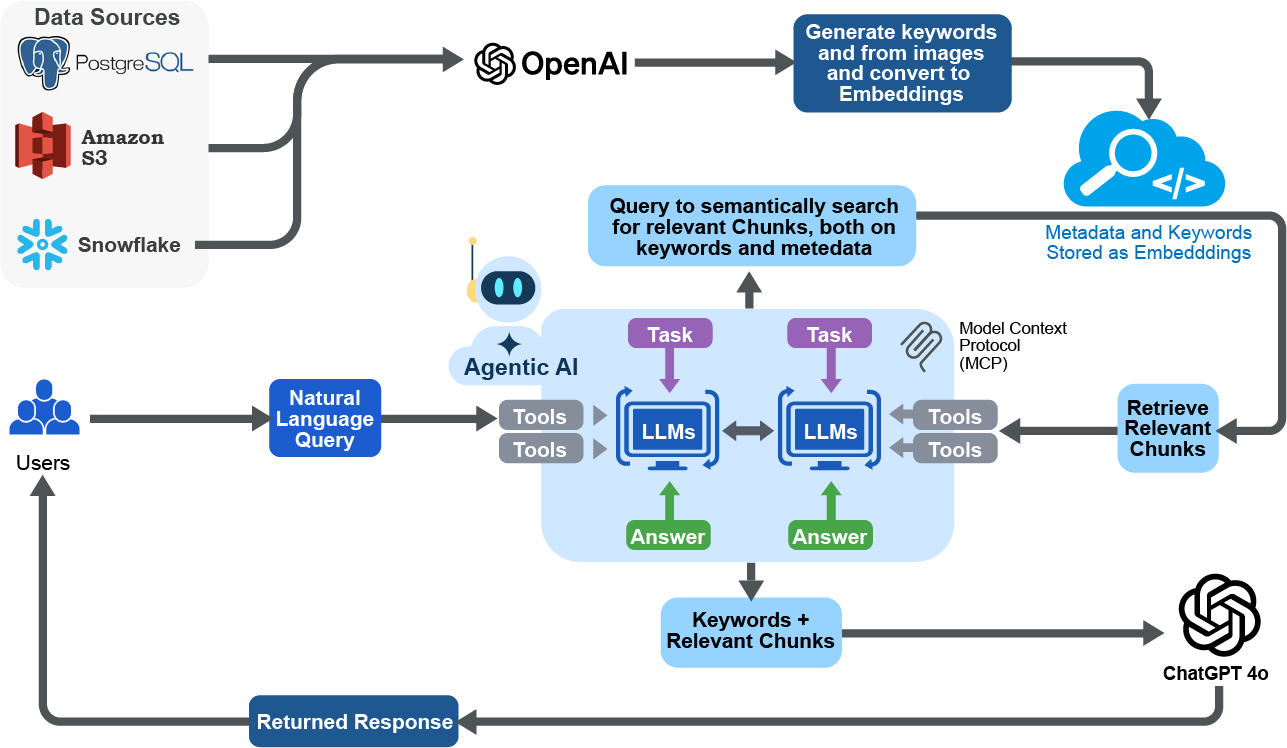
ASSYST has developed a sophisticated LLM-powered chatbot uniquely tailored to the specific needs of internal teams. This chatbot stands out because it can access metadata from the primary documentation database within Snowflake and locate appropriate public views under the public schema, which can be queried using SQL. Users interact with the chatbot to query data directly from the backend, with the system ensuring that sensitive security measures are preserved. The chatbot efficiently retrieves relevant metadata and descriptions from the data catalog, providing users with the information they need while maintaining the integrity and security of the data.
Solution Architecture
To push the boundaries of contextual reasoning, ASSYST’s use of Agentic AI and the Model Context Protocol (MCP) allows the AI to intelligently retain, manage, and apply relevant context over time. This means the chatbot not only responds accurately in the moment but also improves its understanding of user needs with each interaction. By reducing unnecessary processing and surfacing only what’s most relevant, the chatbot delivers faster, smarter, and more contextual responses, empowering teams to make better informed decisions.
The deployment strategy involves hosting the LLM on an EC2 instance, with an API facilitating access to the documentation database table or view. Scheduled data runs on Snowflake store information locally on the EC2 instance, reducing network requests. The front end features a Chatbot-style interface built with ReactJS, accessible on the intranet workspace and via a dedicated webpage. It leverages Nginx and Kubernetes for robust performance.
Users interact with the chatbot interface, which is designed to be intuitive and user-friendly, to request and receive information about the data. The chatbot clarifies data location and relevance, while the LLM performs sophisticated query operations, parsing and interpreting structured metadata from Snowflake's database. Advanced in-memory data processing techniques ensure contextually accurate and detailed responses. The solution supports future enhancements, including advanced NLP and integration with AI-driven tools for enhanced data insights.
Metrics and Outcomes
The chatbot has significantly empowered our internal teams, allowing them to quickly locate and interpret complex security data with minimal specialized skills. It has accelerated response times, enabling SOC and DevSecOps teams to make faster, informed decisions through natural language queries. High adoption rates across security, compliance, and development teams reflect the chatbot’s effectiveness. Streamlined workflows and reduced navigation time through complex data systems have led to considerable gains in operational efficiency.
Realized Benefits
ASSYST’s AI-powered chatbot has transformed data accessibility within the HHS agency’s Security Data Lake. By addressing the specific needs of internal teams and leveraging advanced AI technology, the chatbot enhances decision-making and boosts operational performance while maintaining robust security protocols. This enhancement instills confidence in the user experience. It paves the way for advancements in advanced analytics, AI-driven insights, and future innovations, ensuring continued success in managing and utilizing critical security data.

ASSYST AI Services
The ASSYST AI Center of Excellence (CoE) partners with customers and their internal business and technology teams to embed AI expertise, enhancing agility and growth as AI matures. The CoE provides AI resources, training, and best practices, embedding data scientists, machine learning experts, and product managers into project teams to work closely with domain experts. Clear communication channels ensure ongoing collaboration and knowledge sharing. The CoE evaluates Agentic AI use cases, prioritizing them based on impact, feasibility, and strategic alignment. These use cases may include automating repetitive tasks, enhancing customer experiences, improving communication strategies by identifying user behavior patterns, and detecting fraud or anomalies in financial transactions. For instance, AI can be used to automate the identification and flagging of potential security threats, thereby enhancing the efficiency of Security Operations Center (SOC) teams.
We leverage the ASSYST Green Accelerator Program and solutions like Collab AI and ComplySyncAI to deliver accelerators that support these use cases. We focus on data collection, preprocessing, and ensuring data quality and privacy. Model development leverages algorithms such as decision trees, support vector machines, and neural networks with precise training, validation, and performance assessment. By incorporating and committing to human-centered design principles, we deliver intuitive, user-friendly, responsible, and humane AI solutions that meet end-users' needs.
Let’s discuss your AI Use Case.



The regulatory landscape is evolving rapidly, with an increasing focus on health data interoperability, adopting industry standards, and using real-world data. In this context, the FDA’s Electronic Submissions Gateway (ESG) stands as a vital platform, handling over 10 million transactions annually and processing files ranging from 100GB to 1TB. ASSYST is critical in supporting the FDA’s mission to process data from the major Trading Partners, including AERS, CDER, CBER, CDRH, CVM, OC, CTP, ACA, GDUFA, CFSAN, and Health Canada. ESG Handles Large File Processing and supports Multiple Data and File Formats, including HL7, FHIR, and XML.
As regulatory requirements grow more complex, the demand for seamless data exchange and integration across systems is becoming increasingly important. The shift towards health data interoperability reflects broader industry trends, emphasizing the need for consistency and accuracy in data handling. Moreover, the increasing reliance on real-world data enhances regulatory decision-making and public health outcomes.
ASSYST’s initiatives within ESG align with these industry trends, providing a scalable and secure platform that meets current regulatory needs while adapting to future demands for data interoperability and evidence-based insights. By integrating emerging standards and leveraging real-world data, ASSYST ensures the ESG remains central in navigating the complex and dynamic regulatory environment.
A Vision of Seamless Integration and Security
ASSYST’s work with the FDA extends beyond support, involving key Bureaus like CDER, CBER, CDRH, OC, and Health Canada. Our vision was to create an ESG that meets and exceeds expectations in scalability and security. Leveraging AWS services, including a multi-AZ strategy and Amazon Elastic Kubernetes Service (EKS), we developed a resilient and adaptable infrastructure that ensures peak performance, even during partner onboarding and with massive data loads.
Security is a top priority. Through DevSecOps, we integrated security throughout every development phase, employing automated security scans, compliance checks, and continuous monitoring. This approach meets stringent federal standards such as FISMA and FedRAMP, protecting the system from threats while ensuring compliance.

Streamlining Operations with Automation
Efficiency is central to our strategy, and we leverage a robust suite of AWS services to enhance the FDA’s Electronic Submissions Gateway. We utilize CI/CD pipelines with CodeCommit, CodeBuild, and CodeDeploy, transforming code deployment and management, reducing errors, and accelerating updates. Amazon Elastic Container Service (ECS) and Elastic Container Registry (ECR) streamline the deployment of containerized applications, while Elastic Load Balancer (ELB) and Auto Scaling Groups (ASG) ensure optimal performance and scalability.
Security is reinforced with Security Groups (SG) for network protection, and continuous monitoring is maintained through CloudWatch and CloudTrail, providing operational insights and compliance tracking. The infrastructure is further supported by RDS for Oracle, PostgreSQL, and MySQL and managed within a secure VPC environment. CloudFormation orchestrates the deployment and management of these resources, ensuring consistency and efficiency throughout the ESG system.
Enhancing User Experience with Human-Centered Design
Our commitment to the FDA also includes a focus on user experience. By applying Human-Centered Design (HCD) principles, we redesigned the ESG interface to be more intuitive and responsive. Using tools like React.js, we created a modern, user-friendly experience that simplifies the submission process, improves accuracy, and reduces operational overhead. ASSYST also provides end-to-end facilitation for FDA Partner support through self-service tools and a Help Desk.
A Commitment to Excellence
ASSYST’s enhancements to the ESG were particularly crucial during the COVID-19 pandemic, ensuring the system’s high availability when needed most. Our work in scaling the infrastructure, automating processes, and enhancing the user experience has led to smoother and more efficient regulatory submissions, benefitting public health and safety on a broad scale. One of the innovation initiatives, ASSYST, developed a proof of concept for FDA ESG to help end users find answers to their questions easily and quickly using an AI-powered chatbot that operates 24/7 and can be handed over to live agents during business hours. The purpose of the prototype solution was to improve help desk support and reduce costs. This initiative and our commitment to excellence have demonstrated our ability to deliver impactful solutions, even in challenging circumstances.

Impact Delivered
ASSYST’s transformation of the FDA’s ESG has resulted in significant improvements across the regulatory submission process. By enhancing time efficiency, we’ve enabled same-day submissions that were previously unattainable. Reducing reliance on paper-based processes has minimized administrative overhead and cut down on shipping costs. Our system optimizations have facilitated seamless electronic acknowledgments, ensuring timely confirmations of successful transmissions. This comprehensive approach has aligned regulatory processes with modern digital practices and significantly enhanced overall efficiency and effectiveness in safeguarding public health, leaving a lasting impression on the industry.

About ASSYST
ASSYST is a key partner in technology modernization for government agencies across important sectors. Serving clients like the CMS, CDC, PSC, ONC, HRSA, IRS, EEOC, and NRC, we use our Green Accelerator program to support multi-cloud adoption, streamline processes, and cut technology overhead. Our extensive experience and expertise in technology modernization instill confidence that government systems are in good hands, ready for today’s demands and future success.


🌟 Wrapping Up the ASSYST Smart Start Internship Program - 2024! 🌟
Thank you to our amazing interns for your hard work and fresh ideas. We’re proud to have been part of your journey. Here’s to your bright future!
Read More...on LinkedIn
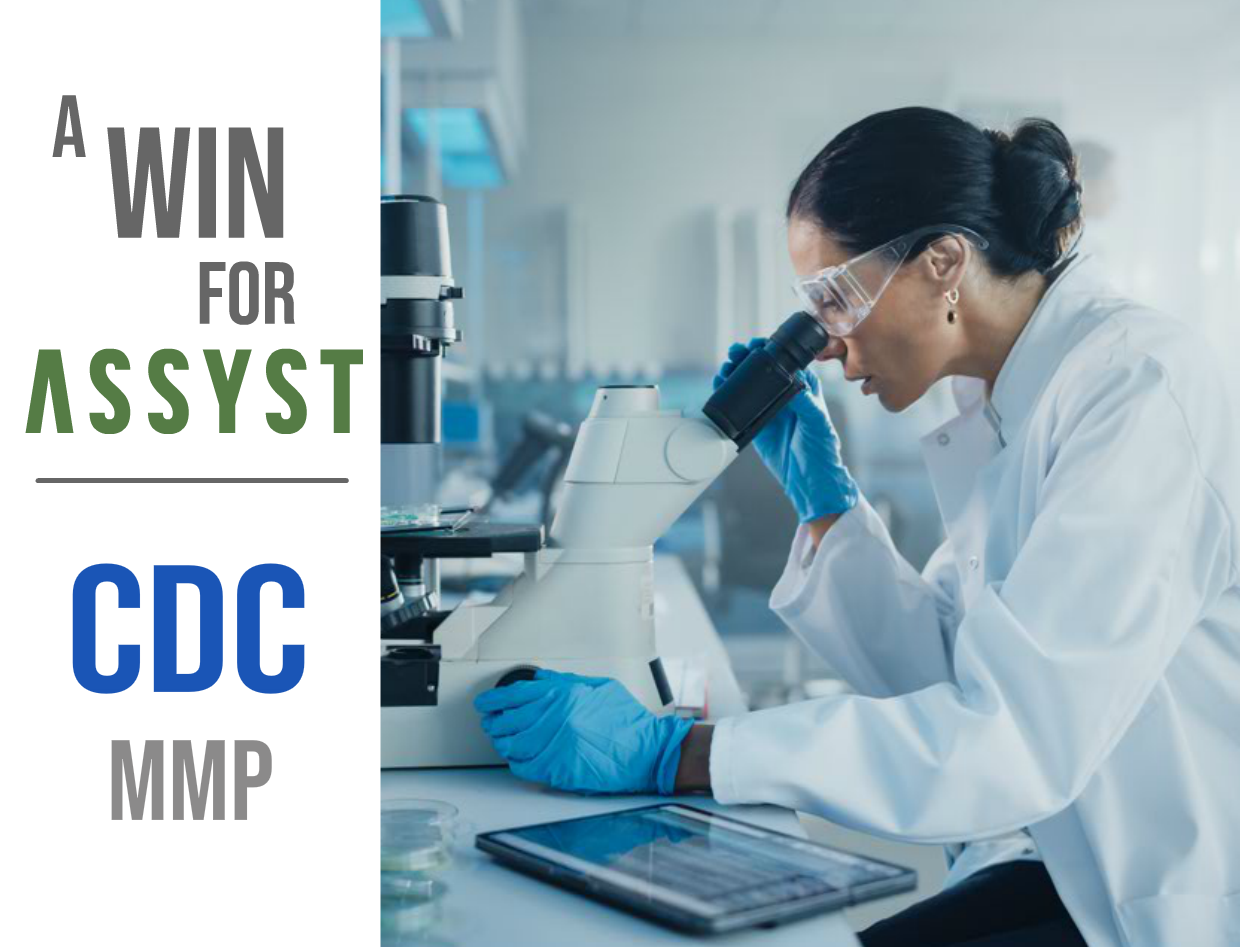
CDC’s Division of HIV Prevention (DHP) leads high-impact HIV prevention efforts, focusing on reducing new infections, improving health outcomes, and addressing disparities. The Behavioral and Clinical Surveillance Branch (BCSB) implements rigorous HIV surveillance, while the Prevention Communication Branch (PCB) manages communications and campaigns. The Medical Monitoring Project (MMP), coordinated by BCSB, gathers vital data through annual surveys to inform national HIV strategies and initiatives.
Under the contract, ASSYST will develop, support, and maintain the Medical Monitoring Project (MMP) Meta Database and the PCB Metrics Database. The Task Order has been awarded under the NIH NITAAC CIO-SP3 Small Business GWAC.
“ We're proud to support the CDC DHP's vital mission in combating HIV," said Khalil Zebdi, EVP of Federal Business Development. Modernizing these key databases will enhance our ability to track, report, and ultimately reduce the impact of HIV across the nation.
Khalil Zebdi, EVP - Federal Business Development | LinkedIn
-
About ASSYST HealthIT Services
ASSYST, a Health IT Systems Integrator and Platform Solutions provider, brings over 25 years of unwavering commitment and experience in the healthcare industry. Our track record of supporting US government health and human services agencies, research organizations, and nonprofits in delivering high-quality health and wellness services, including notable projects with CMS, CDC, FDA, HRSA, PSC, and various State and Local Government HHS agencies, reassures our clients of our capabilities.
Our long-standing commitment to Health Data Interoperability is exemplified by our Hephaestus platform, a unique solution that promotes the adoption of Fast Healthcare Interoperability Resources (FHIR®). This platform is designed to [unique features], showcasing our innovative approach to health data interoperability. We excel in providing solutions for data interoperability, exchange, compliance, and dissemination, supporting standards such as XML, GJXDM, NIEM, XBRL, EDI, X12, and SDMX. As an HL7 Gold Level and NCPDP community member, ASSYST continues to drive innovation in health data interoperability to enhance patient care and operational efficiency.
Looking ahead, we are excited about our goals. We are dedicated to expanding our capabilities and partnerships to advance further the integration and use of health data across systems, ensuring improved outcomes and efficiency in healthcare delivery. This commitment to growth and innovation should inspire optimism in our clients and partners.


Overview
ASSYST partnered with a Global Development Financial Institution to develop an advanced AI-based Budget and Business Intelligence Chatbot. Powered by the Microsoft AI Stack, this solution is designed to streamline financial management, risk assessment, and budgeting processes across corporate and global development projects. The chatbot integrates a Chat UI into users' daily routines and workflows, enhancing employee productivity by automating routine tasks and providing secure, role-based access to information. It also centralizes data, supports self-service capabilities, and ensures interoperability with existing systems. The chatbot provides real-time insights and scalable solutions by enhancing knowledge management and facilitating effective process discovery, thereby significantly improving operational efficiency and decision-making throughout the institution.
Challenges
The institution faced several significant challenges. Business administration, IT, and financial data were dispersed across multiple systems, making it difficult to catalog and present a unified view. Traditional manual methods of aggregating reports were time-consuming, error-prone, and resource-intensive, hampering operational efficiency. As the institution expanded and diversified, managing and locating data effectively became increasingly complex.
Solution
ASSYST proposed an intuitive and intelligent chatbot application to address these challenges. The chatbot automates the discovery of FAQs by continuously analyzing user queries and system interactions, providing information about systems by accessing relevant databases and documents, and extracting insights from diverse data sources using advanced AI algorithms. This approach reduces the time and effort required for analysis, thereby improving overall operational efficiency.
Key features of the solution include:
- Streamlined Automation: The chatbot utilizes Azure AI Search to extract insights and identify frequently asked questions, thereby significantly enhancing operational efficiency.
- Specialized AI Assistants: Multiple bots were developed, each tailored to specific focus areas. These bots facilitate human-like conversations with enterprise data, including documents, making it easier for users to interact with and extract information from complex datasets.
- LLM Capabilities: By integrating Large Language Models (LLMs) such as Azure OpenAI’s GPT-4, the chatbot can summarize information, answer basic queries, and perform semantic searches, improving accessibility to insights.
- The chatbot’s interface is designed with the user in mind, ensuring that technical knowledge is not a barrier to accessing data and insights. This user-friendly design makes the system easily accessible to all users, promoting a sense of comfort and ease.
- Agentic AI with Model Context Protocol (MCP): To further elevate intelligence and adaptability, the chatbot incorporates Agentic AI powered by the Model Context Protocol (MCP). This structured framework allows the AI to autonomously retrain, update, and apply relevant contextual knowledge across interactions. As a result, the chatbot delivers smarter, more personalized responses, thereby minimizing redundant processing, improving performance & deepening its understanding of user intent.
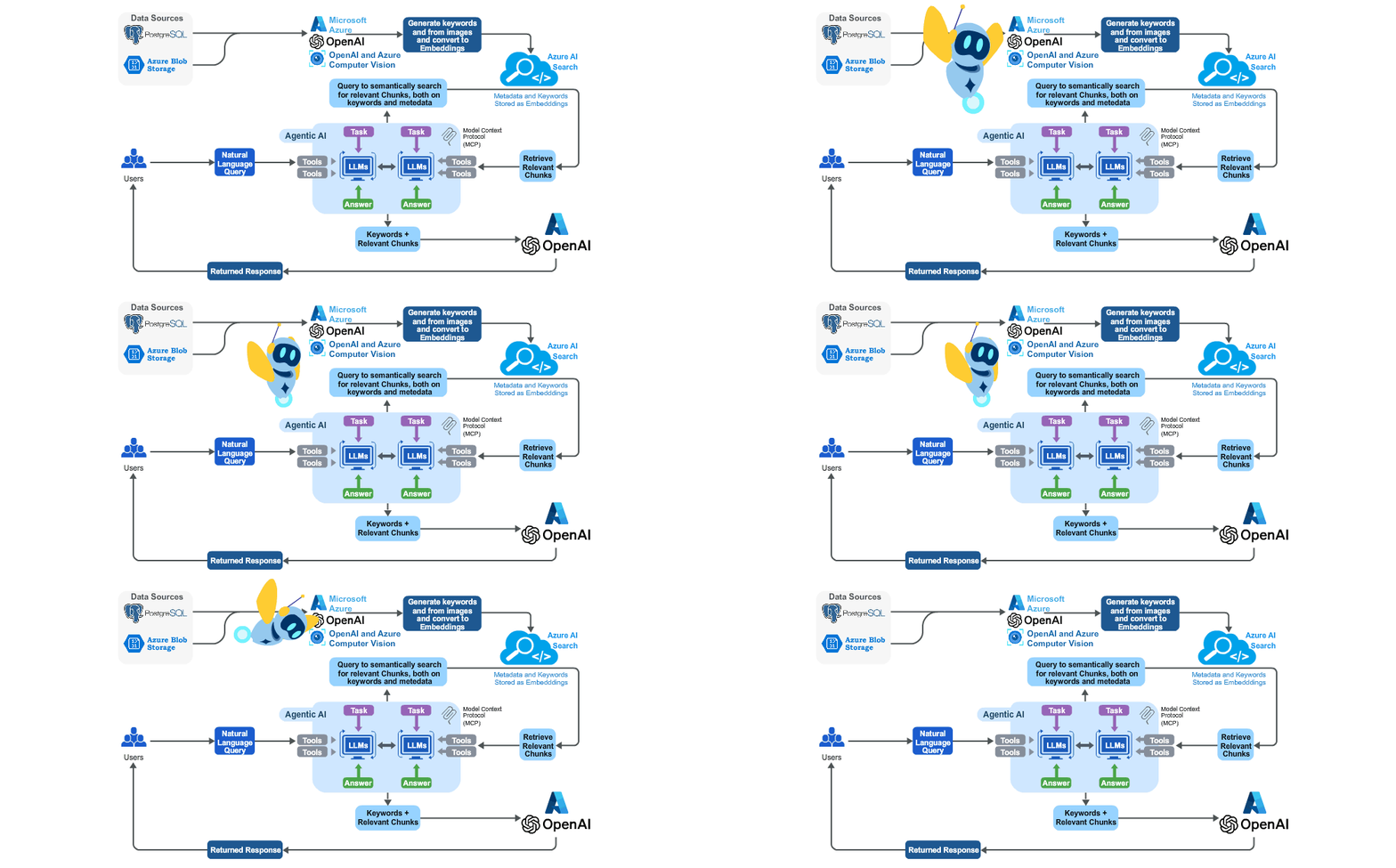
Agentic AI Architecture
The solution is implemented across three distinct channels:
- Chatbot for Analytics: This application enables users to gain insights into complex data through intelligent, conversational interactions. Integration with Microsoft Teams enhances accessibility and usability.
- FAQ Bot: Designed for corporate budgeting needs, this bot provides intelligent responses to frequently asked questions related to procurement, budgeting, and administration. Using the Azure AI-Language service, it retrieves accurate information relevant to user queries.
- Enterprise Application Bot: Integrated with various enterprise applications, this bot offers brief descriptions and links to relevant applications, guiding users based on their specific needs.
Notable features include Microsoft Teams integration and functionalities similar to ChatGPT, such as PDF summarization, data extraction from PDFs, and database connectivity. Users can provide feedback, and the system suggests actions such as initiating a call to the IT team, directing users to IT Helpdesk chat support, or offering email support.
Technology Stack
The project utilized an advanced technology stack to support the solution. The core AI infrastructure was based on the Microsoft Azure Stack, with LLM capabilities provided by Azure OpenAI (GPT-4). The user interface was built using ReactJS, ensuring an intuitive and responsive experience. The Semantic Kernel handled AI orchestration and meta-prompt management, while Azure Search, enhanced with Cognitive Search, provided memory and search capabilities. Throughout the project, data security and trust were given top priority. Institutional data remained secure, with fine-tuned data securely maintained within the subscription, emphasizing data sovereignty and customer copyright for applications built on the Azure OpenAI Service. This approach underscores our commitment to implementing ethical and responsible AI, ensuring the system's safety and reliability.
Impact
The AI-based Budget and Business Intelligence Chatbot has profoundly transformed the user experience of financial and budgeting systems by introducing innovative interaction modes. This solution has enhanced financial insights, streamlined budgeting processes, and improved risk management by addressing challenges such as scattered systems, manual inefficiencies, and increasing complexity. Beyond these improvements, the chatbot has significantly elevated broader knowledge gain and process literacy within the organization. By offering intuitive access to complex data and delivering clear, actionable insights, it has empowered users to better understand and navigate financial systems, resulting in a more informed and capable workforce. The chatbot’s capabilities in autonomous data analysis, dynamic reporting, and user-friendly interaction have driven sustainable improvements and increased overall efficiency.

ASSYST AI Services
The ASSYST AI Center of Excellence (CoE) partners with customers and their internal business and technology teams to embed AI expertise, enhancing agility and growth as AI matures. The CoE provides AI resources, training, and best practices, embedding data scientists, machine learning experts, and product managers into project teams to work closely with domain experts. Clear communication channels ensure ongoing collaboration and knowledge sharing.
The CoE evaluates Agentic AI use cases, prioritizing them based on impact, feasibility, and strategic alignment. These use cases may include automating repetitive tasks, enhancing customer experiences, improving communication strategies by identifying user behavior patterns, and detecting fraud or anomalies in financial transactions. For instance, AI can be used to automate the identification and flagging of potential security threats, thereby enhancing the efficiency of Security Operations Center (SOC) teams.
We leverage the ASSYST Green Accelerator Program and solutions like Collab AI and ComplySyncAI to deliver accelerators that support these use cases. We focus on data collection, preprocessing, and ensuring the quality and privacy of the data. Model development leverages algorithms such as decision trees, support vector machines, and neural networks with precise training, validation, and performance assessment. By incorporating and committing to human-centered design principles, we deliver intuitive, user-friendly, responsible, and humane AI solutions that meet the needs of end-users.
Let’s discuss your Agentic AI Use Case.

ASSYST received a contract award for maintaining and operating the Cost Activity Code System (CACS). We are honored to have continuously served the NRC, providing technological capabilities and solutions integral to the Agency's mission and regulatory programs.
Khalil Zebdi, EVP of Federal Business Development, ASSYST, said, " Our digital transformation and application modernization focus on delivering innovative approaches to operational excellence to regulatory agencies and enabling them to adopt Cloud and AI capabilities securely."
Khalil Zebdi, LinkedIn
Overview
Robust and adaptive cybersecurity frameworks are crucial in the face of persistent and evolving cyber threats. ASSYST's partnership with a major U.S. Health and Human Services Federal Agency has substantially enhanced threat detection and response capabilities, delivering significant cost efficiencies and optimizing resource allocation.
Challenges
The agency encountered significant challenges due to scattered systems where business administration, IT, and financial data were dispersed across various sources. This fragmentation made it difficult to catalog and present a unified view of data. Manual aggregation methods were time-consuming, error-prone, and resource-intensive, severely impacting operational efficiency. As the agency expanded, managing and locating data became increasingly complex.
Solution
To address these challenges, ASSYST implemented a comprehensive solution centered around a Security Data Lake framework integrated with advanced AI for vulnerability detection.
Architectural Design and Data Integration: The Security Data Lake framework is meticulously designed to meet the agency’s cybersecurity needs. It integrates data from various sources, including Content Delivery Networks (CDNs), agentless architecture services, cyber risk measurement tools, Cloud Security Posture Management (CSPM) tools, Governance, Risk, and Compliance (GRC) tools, Endpoint Detection and Response (EDR) systems, Network Intrusion Detection Systems (NIDS), Security Information and Event Management (SIEM) systems, Identity and Access Management (IAM) systems, Web Application Firewalls (WAFs), and Data Loss Prevention (DLP) tools. This integration ensures optimized threat detection and response processes by providing a comprehensive view of the security landscape.
Snowflake Integration and Data Ingestion: Leveraging Snowflake’s features, the solution enhances efficiency and security through advanced data management techniques. Automated ETL pipelines streamline data processing, while real-time data streaming is managed using Snowpipe and AWS Kinesis. Data validation and cleansing are performed to ensure integrity before AI model analysis, improving overall system performance.
Deploying ML based Anomaly Detection for Dataset Quality in SDL: The solution employs an advanced anomaly detection model that continuously monitors vital metrics, such as daily row counts and distinct primary and secondary IDs. This model integrates techniques like z-scores for statistical analysis, forecasting for predictive insight, and tree-based machine learning classification to identify anomalies—unusual patterns that could indicate issues in the data ingestion process. Upon detecting an anomaly, the system takes two critical actions: first, it visually flags the anomaly within Apache Superset dashboards; second, it generates and sends alerts directly to the Security Data Lake development team, enabling them to promptly review, analyze, and address the issue before the data is made available to consumers.
Visualization and Actionable Insights: Apache Superset, integrated with Snowflake, offers real-time analytics and visualization. Interactive dashboards display critical metrics such as threat detection rates, incident response times, and false positive rates. Superset supports various chart types, customizable widgets, and auto-updates, providing users with accurate and timely data insights.
Collaboration, Communication, and Workflow Integration: Integrating diverse data sources via APIs into the Security Data Lake fosters enhanced cross-team collaboration. These APIs enable real-time notifications and alerts through tools like Slack, providing contextual details on detected vulnerabilities, including threat severity, affected assets, and recommended actions. Tailored to team roles, these alerts ensure timely and actionable information, improving response efficiency and seamlessly integrating into existing workflows.
Governance and Compliance: The solution follows strict data governance and compliance policies to ensure accuracy, consistency, and security. Snowflake’s access control features restrict data access to authorized personnel, while detailed audit logs support compliance and forensic investigations. Automated policy enforcement ensures adherence to industry standards and regulatory requirements, including NIST guidelines and Continuous ATO processes.
Zero Trust and SOC Integration: The solution continuously verifies all users and devices following the Zero Trust security model. It integrates with Security Operations Centers (SOCs) for centralized monitoring, incident response, and threat intelligence, enabling real-time threat detection, rapid incident response, and enhanced security posture.
Metrics and Outcomes
The implementation has led to measurable improvements in cybersecurity posture. Continuous monitoring and real-time detection capabilities facilitate swift identification and resolution of security issues, reduce false positives, and enhance compliance with regulatory standards. Improved collaboration between cybersecurity and application teams further strengthens the security infrastructure.
Realized Benefits
The solution delivers several key benefits:
- Continuous monitoring and real-time vulnerability detection mitigate threats before they escalate.
- Secure data sharing and real-time notifications enhance team collaboration.
- Snowflake’s scalable architecture ensures efficient resource utilization.
- Comprehensive threat visibility improves security measures and reduces breach risks.
- Robust governance policies and audit trails support regulatory compliance.

ASSYST AI/ML Services
The ASSYST AI/ML Center of Excellence (CoE) collaborates with customers and their internal business and technology teams to integrate AI expertise, fostering agility and driving growth as AI capabilities evolve. The CoE provides AI resources, training, and best practices, embedding data scientists, machine learning experts, and product managers into project teams to work alongside domain experts. Clear communication channels facilitate ongoing collaboration and knowledge sharing.
The CoE systematically evaluates AI use cases, prioritizing them based on impact, feasibility, and strategic alignment. These use cases may include automating repetitive tasks, enhancing customer experiences, improving communication strategies by analyzing user behavior patterns, and detecting fraud or anomalies in financial transactions. ASSYST leverages the Green Accelerator Program and solutions like Collab AI and ComplySyncAI to deliver accelerators that support these strategic use cases.
Our approach emphasizes robust data collection, preprocessing, and data quality and privacy maintenance. Model development leverages advanced algorithms, including decision trees, support vector machines, and neural networks, with rigorous training, validation, and performance assessment. The deployment process seamlessly integrates models into production environments using platforms like Microsoft Azure OpenAI, AWS Bedrock, and Mistral AI. Continuous monitoring and maintenance ensure sustained accuracy, scalability, and reliability. By incorporating human-centered design principles, we deliver intuitive, user-friendly, responsible, and humane AI solutions that effectively meet end-users' needs.
Let’s discuss your AI Use Case.

Overview
ASSYST partnered with a government agency to modernize its financial systems, specifically focusing on enhancing debt and case management. Leveraging Cloud Native Architecture, Microservices, advanced analytics, AI/ML, and automation, the project aimed to achieve dynamic portfolio management, improve case processing, enhance customer experience, conduct thorough risk assessments, ensure rigorous regulatory compliance, optimize resource allocation, and significantly improve debt recovery strategies. By integrating these technologies, the modernization effort sought to streamline workflows, reduce operational inefficiencies, and enhance the overall effectiveness and responsiveness of the federal financial system.
Challenges
Significant challenges rooted in legacy infrastructure and outdated processes hampered the government's financial systems. Aging hardware and software components created compatibility issues with modern technologies and microservices architectures, exacerbated by a lack of support for critical updates. Manual data entry and processing led to errors and operational inefficiencies, stifling agility and workflow coordination. Additionally, limited automation in debt processing and reliance on outdated batch systems hindered efficiency and regulatory compliance. Data silos and disjointed databases obstructed real-time insights and data sharing across departments, adversely affecting decision-making. Accumulated technical debt from legacy code posed risks of security vulnerabilities and limited the system’s adaptability to evolving demands. Addressing these obstacles was crucial to improving system efficiency, scalability, and resilience in the dynamic financial landscape.
Methodology
ASSYST’s approach to modernizing the debt management system centered on integrating advanced AI/ML techniques to enhance efficiency and accuracy. The data collection process involved gathering debtor files such as emails, snapshots, and PDFs, which served as the foundation for training and testing AI models. The AI model selection and tuning utilized a Transformer Neural Network powered by the PyTorch framework, capable of processing document embeddings to classify critical information such as Name, SSN, and Address through contextual learning.
The AI models were deployed via a Flask API integrated into the Debt Management System, enabling streamlined document uploads and returning predictions as REST API calls. This setup allowed for seamless interaction within the application. The focus on AI/ML driven document extraction significantly reduced manual data entry and enhanced accuracy, leading to optimized decision-making in debt management through co-piloting. The system also employed adaptive strategies based on evolving debtor profiles, ensuring effective case resolution. Continuous learning and model adjustment further boosted efficacy, enabling ongoing debt management improvement.
Technology Stack
The modernization of the debt management system was built on a robust technology stack that included the PyTorch deep learning framework, enhanced by BERT Transformers and HuggingFace for advanced model tuning. Natural Language Processing (NLP) capabilities were powered by NLTK and spaCy, ensuring accurate text extraction and processing. Document scanning and data extraction were facilitated by Pytesseract, an OCR tool well-suited for handling diverse document types. The AI models were deployed through a Flask API, enabling seamless integration within the System for real-time processing. Data was securely stored using PostgreSQL for structured data and AWS S3 for unstructured data, providing a scalable and reliable storage solution that supported the system’s data-intensive operations. This comprehensive technology stack ensured that the modernization efforts were efficient and aligned with industry best practices for scalability, security, and performance.
Outcomes
Efficiency Gains: Automating debt creation and classification processes significantly reduced workload and increased system accuracy. These efficiency gains resulted in substantial operational cost savings, underscoring the transformative impact of AI and automation on modernizing government financial systems.
Enhanced Decision-Making: The co-piloting approach optimized decision-making processes, contributing to robust improvements in debt recovery rates. This adaptive strategy, informed by evolving debtor profiles, highlights the effectiveness of our AI and automation solutions in driving tangible outcomes.
Risk Management: The solution’s comprehensive risk assessment features facilitated better resource allocation and ensured strict regulatory adherence. These enhancements in risk management provided case processors with real-time insights into debtor behaviors, effectively mitigating risks and bolstering confidence in the financial system.
Customer Experience: By applying Human-Centered Design principles, the system’s interfaces were personalized to adapt to user profiles, streamline processes, and reduce response times. These improvements significantly boosted the overall customer experience, leading to a marked increase in customer satisfaction scores.
Scalability: The new system is inherently scalable, seamlessly integrating additional data sources and models. This scalability ensures adaptability to evolving technological and regulatory landscapes, providing a future-proof solution that grows with the government's financial management needs.
Impact
The modernization initiative driven by Cloud Native Microservices, AI, and workflow automation has significantly enhanced debt management processing. AI played a crucial role in improving efficiency, accuracy, and effectiveness across the board. This transformation optimized debt management and recovery strategies, enhanced risk management practices, streamlined case management processes, and ensured more efficient case resolutions. This initiative has established a robust foundation for continuous innovation and improved adaptability by enabling proactive decision-making, reducing operational costs, and increasing transparency. The result is a substantial and sustainable long-term improvement in the government’s financial management capabilities.

ASSYST AI/ML Services
The ASSYST AI/ML Center of Excellence (CoE) played a crucial role in this project, collaborating with the Global Development Financial Institution and their internal business and technology teams. The CoE provided AI resources, training, and best practices, embedding data scientists, machine learning experts, and product managers into project teams to work alongside domain experts. Clear communication channels facilitated ongoing collaboration and knowledge sharing, ensuring the successful integration of AI expertise and fostering agility as AI capabilities evolve.
The CoE systematically evaluates AI use cases, prioritizing them based on their potential impact, feasibility, and strategic alignment with the institution's goals. These use cases may include automating repetitive tasks, enhancing customer experiences, improving communication strategies by analyzing user behavior patterns, and detecting fraud or anomalies in financial transactions. ASSYST leverages the Green Accelerator Program and solutions like Collab AI and ComplySyncAI to deliver accelerators that support these strategic use cases, ensuring that AI solutions are aligned with the institution's business goals.
Our approach emphasizes robust data collection, preprocessing, and maintaining data quality and privacy. Model development employs advanced algorithms, including decision trees, support vector machines, and neural networks, with rigorous training, validation, and performance assessment. The deployment process seamlessly integrates models into production environments, utilizing platforms like Microsoft Azure OpenAI, AWS Bedrock, and Mistral AI. Continuous monitoring and maintenance ensure sustained accuracy, scalability, and reliability. Incorporating human-centered design principles, we deliver intuitive, user-friendly, responsible, and humane AI solutions that effectively meet end-users' needs.
Let’s discuss your AI Use Case.


As Government agencies strive to enhance their digital services, integrating content management systems, user experience (UX), and artificial intelligence (AI) is becoming essential to improve the Customer Experience (CX). ASSYST leads this cloud transformation by offering comprehensive, enterprise-level solutions that modernize digital services and deliver engaging, compliant experiences across various channels and formats, including websites, mobile apps, search platforms, and open data portals.
Empowering Agencies with Scalable Solutions
Government agencies require robust, scalable solutions to manage extensive content volumes measuring terabytes or even petabytes of data and efficiently handle substantial traffic. ASSYST delivers state-of-the-art content management architectures through versatile Platform-as-a-Service (PaaS) solutions, ensuring optimal performance, reliability, and data availability across various digital platforms. We develop user-friendly websites and portals that manage complex data and deliver consistent performance under high-traffic conditions. Our publishing solutions enable real-time content updates and personalization, enhancing user engagement and customer satisfaction.

Advanced Search and Indexing for Large-Scale Projects
Effective search and indexing capabilities are crucial for large government websites, both internal and external. ASSYST employs advanced search architectures to handle complex queries quickly and accurately, ensuring users can easily find the necessary information.

AI-Driven Innovations for better User Experience and Content Management
ASSYST is at the forefront of integrating AI-driven innovations into content management and CX projects. Our AI-powered tools enhance both front-end user experiences and back-end content management processes, utilizing Retrieval Augmented Generation (RAG). This AI framework combines generative large language models (LLMs) with traditional information retrieval systems.
- Smart Forms with AI: AI-enhanced forms guide users through complex processes, ensuring accurate and complete submissions while reducing the need for manual intervention.
- Visual Testing with AI: AI-driven visual testing tools detect and flag inconsistencies or errors in web interfaces, ensuring all updates and changes are visually flawless across different devices and browsers.
- Data Exploration with AI Chatbot: AI chatbots enable intuitive exploration of data and content, using natural language queries to retrieve information quickly and accurately.
- Retrieval Augmented Generation (RAG): Helps large language models (LLMs) produce more relevant, accurate, and up-to-date results by providing access to external data from public websites and private repositories not included in the AI's initial training. This approach allows organizations to customize LLM outputs using their proprietary data without fine-tuning or retraining the model.

Building an Architecture That Supports Future Growth
A resilient and scalable architecture is essential for government agencies to manage high-traffic, top-level domains. ASSYST's approach involves using microservices, containerization, and cloud-native technologies to build an architecture that can grow with the agency's needs. This ensures scalability and performance, enhanced security, compliance with federal mandates, and disaster recovery capabilities.

Ensuring Compliance with Federal Mandates
Compliance with federal mandates such as the U.S. Web Design System (USWDS), the IDEA Act, Section 508, and various Executive Orders is a core aspect of ASSYST's digital transformation framework. Our solutions are designed to meet and exceed these requirements, ensuring that government digital services are accessible, secure, and user-friendly.

Integration with Legacy Systems
Many government agencies operate with legacy systems that may have to be integrated with new web and content management solutions. ASSYST specializes in seamless data migration and integration, ensuring that new systems work harmoniously with existing infrastructures. This approach minimizes disruptions and provides a smooth transition to modern platforms.

Future-Proofing Government Digital Services with AI
As digital landscapes undergo a generational shift and content growth accelerates, Government agencies must evolve to stay ahead. ASSYST's digital transformation strategy embraces this change by integrating advanced AI models and technologies. Our solutions offer dynamic content recommendations, sophisticated predictive analytics, and tailored user experiences, ensuring that government services adapt to rapid content growth and remain at the forefront of innovation.

Partner with ASSYST
ASSYST's digital transformation solutions bring agility to managing complex, high-traffic government websites and enhancing customer experiences for a multigenerational audience. By leveraging advanced search and indexing capabilities, including Elasticsearch and search platforms, AI-driven innovations, and scalable architecture using Drupal, WordPress, and full-stack solutions, we ensure that government agencies comply with federal mandates and are positioned for future growth. Our integration of cloud platforms like AWS and Azure enhances scalability and performance. At the same time, our commitment to Human-Centered Design (HCD) ensures solutions are accessible and user-friendly across diverse age groups. Our expertise in integrating legacy systems, optimizing content management, and facilitating seamless transitions further strengthens our ability to deliver comprehensive, enterprise-level web and content solutions tailored to the unique needs of large government agencies and their diverse audiences.