

FILTER BY


In this ASSYST OnPoint conversation, I am discussing with Rajeev Chapagain, Solutions Engineer, how conformance testing platforms accelerate the adoption of standards across complex government ecosystems. Drawing on ASSYST’s experience in Testing-as-a-Service and interoperability programs supporting HRSA and ONC initiatives such as eRx and RTPB, they explore how standards such as FHIR®, HL7, NCPDP SCRIPT, XBRL, and SDMX are evolving from documentation to executable policy frameworks. Our discussion highlights how AI-enabled testing, policy-as-code, and continuous conformance can help agencies modernize systems and implement regulatory decisions more quickly, consistently, and with greater trust.
Read More

Read my perspective on why federal agencies need governed, searchable, mission-ready security data to defend faster, investigate deeper, and modernize cyber operations.
Federal cybersecurity is entering a visibility-first era. The latest federal direction on agency logging and network visibility makes one point unmistakable: agencies do not simply need more logs. What they need is usable cyber intelligence.
OMB Memorandum M-26-14 reinforces this shift by moving the logging conversation from broad retention to operational value. It emphasizes continuous event monitoring, threat hunting, investigation, response, and forensics. That is an important evolution. Logging is no longer just a compliance artifact. It is becoming a mission defense capability. For the past few years, we have seen this shift firsthand through our work supporting enterprise cybersecurity, cyber risk management, and Security Data Lake initiatives in complex federal environments. As agencies modernize their cyber operations, the ability to connect fragmented security telemetry across systems, tools, users, vulnerabilities, and mission functions is becoming essential.
The future of federal cyber defense depends on one foundational capability: turning distributed telemetry into searchable, governed, mission-ready evidence. That is why the Security Data Lake is becoming a federal cyber imperative.
Read on LinkedIn


A Moment in the Security Operations Center
Late afternoon in the security operations center, an analyst is reviewing alerts from multiple systems, cloud security posture dashboards, vulnerability scanners, identity logs, and endpoint monitoring tools. The alerts themselves are not unusual; modern systems generate thousands of signals every day. What matters is understanding which of those signals represent real risk to mission systems.
Across federal cybersecurity programs, this moment is becoming more common. Teams are surrounded by powerful tools, yet the real challenge remains helping people like analysts, engineers, and Information System Security Officers (ISSOs) make informed decisions quickly.
That realization is prompting many organizations to rethink cybersecurity around a simple yet powerful idea: human-centered cybersecurity.
Security Tools Were Built for Systems, Not People
For years, cybersecurity programs focused primarily on protecting systems and networks. Frameworks such as NIST SP 800-53, NIST SP 800-37 (RMF), and the NIST Cybersecurity Framework provided the structure needed to manage risk. Yet as environments grew more complex, spanning cloud platforms, SaaS services, DevSecOps pipelines, and hybrid infrastructure, cyber teams encountered a new problem. Security tools multiplied. Analysts often have to jump across several systems just to answer a basic question:
What is the current security posture of this system?
Each tool produced its own dashboard, alerts, reports, and compliance outputs in manually logged spreadsheets. By the time these outputs and reports are collected, consolidated, and assessed, the information they contain is no longer relevant. Our analysis is static, often leading to a cyber approach predicated on reactivity rather than proactivity, leaving cyber teams behind the curve and reviewing a simple snapshot at a single point in time rather than securing the mission.
The Human Role in the RMF
The Risk Management Framework places humans at the center of cybersecurity decision-making.
Roles such as Authorizing Officials (AO), Information System Security Officers (ISSO), System Owners, and Security Control Assessors (SCA) exist because cybersecurity ultimately requires risk-based judgment, not just automated controls.
The RMF process relies on people to interpret evidence and determine whether risk is acceptable for mission operations. Demonstrating compliance often requires an all-hands-on-deck approach from cyber teams, leadership, and system owners to compile all the information, submit it for approval, and organize it for audits.
But as systems produce more data, the challenge shifts from collecting information to making it understandable and actionable for the people responsible for security decisions.
When Cybersecurity Becomes Human-Centered
Human-centered cybersecurity focuses on designing systems that help people quickly and clearly understand risk.
Instead of asking analysts to manually correlate information across roles and tools, organizations are exploring platforms that bring relevant signals together in one place.
This is particularly important in areas such as:
- continuous monitoring under CA-7
- vulnerability prioritization for RA and SI controls
- identity and access management oversight for AC and IA controls
- audit and accountability monitoring for AU controls
When operational data is presented in a way that aligns with the NIST control families' structure, cybersecurity professionals can move from searching for information to interpreting it for leadership, enabling them to take action and guide organizational strategy. Rather than accumulating a growing backlog of vulnerabilities and non-compliant controls, cyber teams can address them instantly and continuously.
AI as a Support Tool for Cyber Professionals
As cybersecurity environments produce more operational data than humans can manually interpret, organizations are increasingly applying advanced analytics and artificial intelligence to help surface the signals that matter most.
Artificial Intelligence is increasingly being used to support this human-centered approach. Rather than replacing cybersecurity professionals, AI can help analyze large volumes of operational data and highlight patterns that might otherwise be difficult to detect.
For example, AI-enabled compliance platforms such as ComplySyncATO help translate security telemetry from multiple sources into structured insights aligned with frameworks such as NIST SP 800-53 and FedRAMP. By integrating signals from vulnerability management tools, identity systems, and cloud security platforms, these solutions help cybersecurity teams see how operational activity directly relates to control effectiveness.
The goal is not to automate decision-making, but to elevate the roles of ISSO teams and security analysts by providing better real-time situational awareness.
The ISSO as a Cyber Risk Navigator
As cybersecurity environments evolve, the role of the ISSO is evolving as well. Instead of spending time collecting artifacts or correlating alerts across tools, ISSOs increasingly act as risk navigators, interpreting signals from across the system and advising leadership on security posture.
This shift reflects a broader change in how cybersecurity programs operate. Technology still enforces controls, but people remain responsible for understanding how those controls affect mission risk. With quicker, more accurate insights, cyber teams are empowered to proactively lead with security first.
When cybersecurity systems are designed with the human user in mind, analysts gain the clarity they need to focus on what matters most: protecting the system and supporting the mission.
Security That Works With People
Human-centered cybersecurity recognizes a simple truth: Technology alone does not secure systems; talented and skilled people do.
The most effective cybersecurity programs combine strong technical controls with platforms that help security professionals understand the environment they are protecting. Solutions such as ComplySyncATO illustrate how operational data, automation, and governance frameworks can work together to support the people responsible for cybersecurity.
In the end, the goal is not just better tools. It provides better insight for the humans who must make security decisions.

ASSYST's flagship cyber compliance automation platform, ComplySyncATO, has met a significant milestone with a FedRAMP 20x certification. This achievement reinforces ASSYST’s commitment to accelerating cybersecurity compliance in modern digital and operational environments by leveraging Agentic Automation and machine-readable data to standardize and centralize practices across enterprises.
With the current pace of innovation, organizations are modernizing mission systems, cloud platforms, cyber-physical infrastructure, and AI-enabled operations. The need for continuous cyber assurance, interoperable compliance evidence, and real-time governance visibility has become increasingly critical to securely deploy compliant systems. ComplySyncATO is designed to help agencies and enterprises transition from static, document-centric compliance processes toward intelligent, continuously validated cyber operations aligned with Zero Trust and continuous authorization initiatives. The platform enables agencies to operationalize cybersecurity compliance at the speed of innovation and accelerate workflows for Continuous Authority to Operate (cATO).
ComplySyncATO offers a comprehensive suite of capabilities designed to streamline compliance operations and automate workflows required to maintain authorization status. Our platform integrates Agentic AI-assisted evidence collection and control validation, generates machine-readable OSCAL artifacts, and leverages telemetry from continuous monitoring workflows. ComplySyncATO also provides real-time visibility into an organization’s cyber posture and delivers actionable compliance intelligence. This helps cyber specialists and leaders get real-time compliance intelligence into a single operational framework.
Seamless integration with enterprise GRC systems, DevSecOps pipelines, and cyber telemetry ecosystems ensures broad compatibility and effective governance. Additionally, ComplySyncATO supports modernization and innovation initiatives that leverage AI, automation, cloud technologies, and evolving operational tools. Its persona-aware design tailors experiences for CISOs, ISSOs, SOC teams, engineers, system owners, and other operational stakeholders, enabling them to navigate and address compliance requirements more effectively with greater transparency.

“FedRAMP 20x reflects a broader industry transformation toward machine-readable trust, automation, and continuous validation,” said Vijay Narasimhan, CTO of ASSYST. “ComplySyncATO was developed to help agencies to modernize cybersecurity compliance for increasingly dynamic mission and operational environments where AI, cloud, automation, and interconnected systems are rapidly converging. For agencies to successfully achieve this, we needed to find a way to compress authorization timelines and create an environment where compliance serves as a byproduct of secure development practices. Achieving this milestone validates our commitment to enabling scalable cyber assurance architectures that reduce manual burden while improving operational resilience and innovation readiness.”
ASSYST believes the future of cybersecurity compliance will increasingly depend on platforms capable of transforming operational telemetry, governance processes, and security evidence into continuously validated trust signals that support adaptive and resilient digital ecosystems.
https://www.fedramp.gov/marketplace/products/FR2619434440/
https://www.assyst.net/complysyncato
About ASSYST
ASSYST is an Agile, CMMI Level 3-appraised and ISO 9001, ISO 20000, and ISO 27001-certified technology firm that excels at simplifying complex IT and business processes by removing redundancy and delivering targeted information for faster, smarter decision-making.
Founded in 1993, ASSYST brings more than 30 years of experience supporting mission-critical cybersecurity and modernization programs across the U.S. Government. ASSYST supports critical cyber programs for the Department of War (DoW), the Department of Health and Human Services (HHS), the Department of Energy (DOE), and numerous state and local governments responsible for essential public services and critical infrastructure.
At ASSYST, cybersecurity expertise is the bedrock of our corporate identity. By centering our approach on security, privacy, and compliance, we transform IT modernization from simple technical delivery into a strategic partnership. We provide risk and vulnerability management, continuous monitoring, threat detection, and security operations to help agencies strengthen their cybersecurity posture and meet FISMA, OMB, and NIST standards.
ASSYST provides organizations with more than technology; we provide a secure, transparent, and agile foundation for resilient mission systems and trusted digital services.

John Kimberl, Business Development Specialist | jkimberl@assyst.net | 703-677-1470


ASSYST is delighted to announce that we have been awarded a Task Order under the United States Department of Agriculture USDA STRATUS Basic Ordering Agreement to provide Cloud Subject Matter Expertise supporting the migration of USDA Rural Development’s (RD) IT systems from on-premises infrastructure to secure government cloud environments.

Eugene Goldlust, Sr. Account Executive at ASSYST, said: “Advancing a thoughtful migration from legacy infrastructure to resilient government cloud platforms creates the foundation for modern digital services and a data-centric architecture that enables unified farmer records, streamlined reporting, and improved program delivery to better support farmers, families, and rural businesses.”
Leveraging its Green Accelerator and PhoenixGA, ASSYST will accelerate cloud transformation by enabling AI-driven engineering, automation, and secure, scalable digital services that create a significant impact on mission outcomes.
ASSYST is honored to support USDA’s mission of strengthening rural communities through secure, scalable, and future-ready technology.
More on USDA STRATUS visit - www.assyst.net/stratus
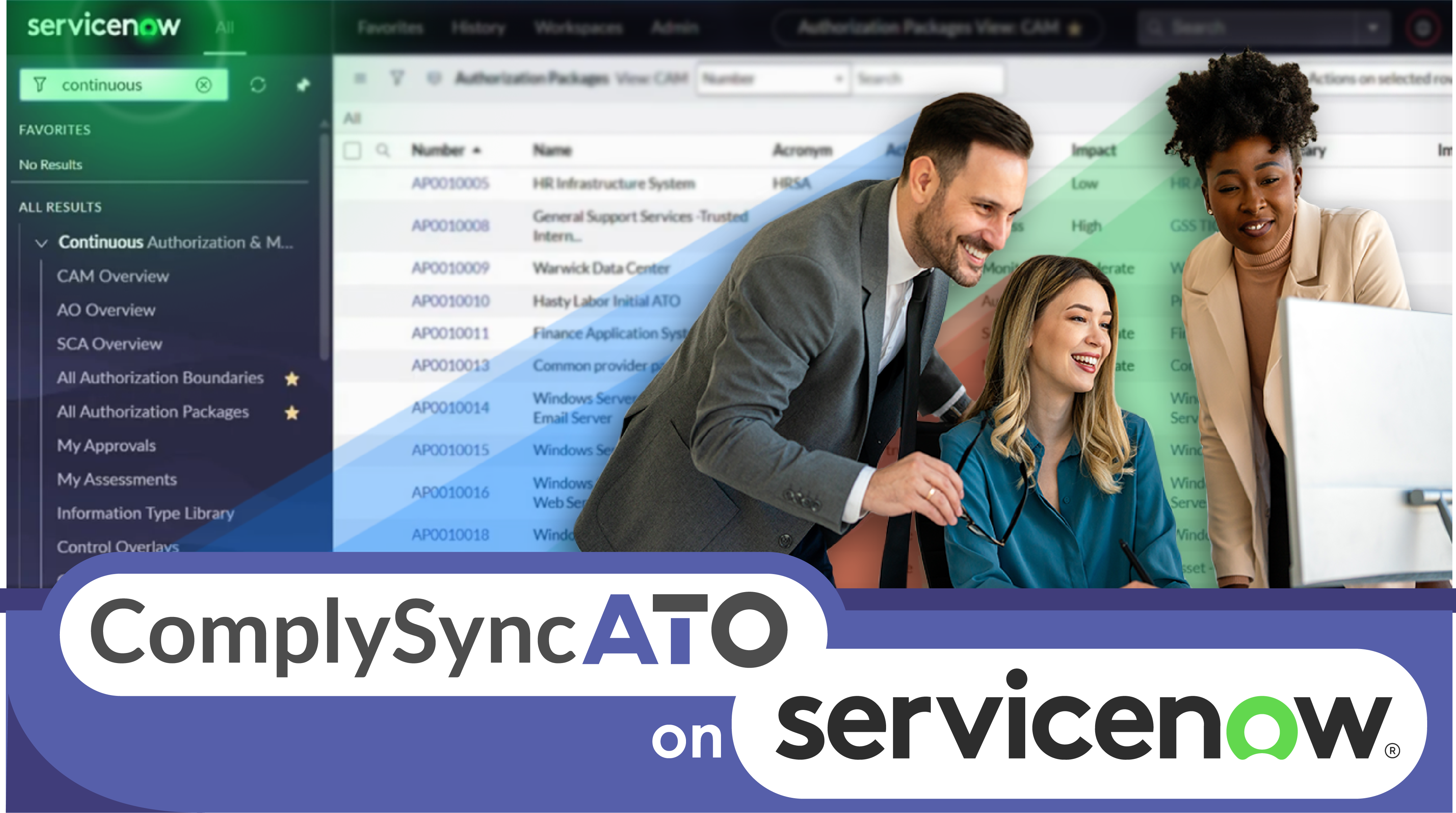
Empowering ServiceNow Integrated Risk Management (IRM) and Continuous Authorization and Monitoring (CAM) customers to accelerate human-centric cybersecurity with AI. This enables faster authorization, boosts efficiency, and ensures real-time compliance.
Today, ASSYST announced ComplySyncATO, built on the ServiceNow AI Platform, designed to bridge automated security telemetry with federal risk management workflows within ServiceNow.
ComplySyncATO serves as an AI validation engine for the NIST Risk Management Framework (RMF), automating labor-intensive compliance activities including technical evidence collection, control validation, baseline monitoring, and the generation of machine-readable OSCAL artifacts required for federal authorization and continuous monitoring.
ASSYST integrates directly with ServiceNow Integrated Risk Management (IRM) and CAM workflows, enabling cybersecurity teams, ISSOs, and compliance managers to operate within familiar ServiceNow environments. ComplySyncATO continuously validates security controls and implementation status on information systems, with easily mappable assets, risks, and vulnerabilities. This approach transforms compliance from a documentation-heavy process into a real-time, continuously verified authorization capability.
As a ServiceNow Build Partner, ASSYST delivers ComplySyncATO as an application on the ServiceNow AI Platform, providing a unified workspace where cyber and compliance specialists can leverage AI to collect technical evidence, validate NIST controls, and prepare OSCAL packages required for FISMA compliance.
ComplySyncATO is now available on the ServiceNow Store

With ComplySyncATO, ServiceNow IRM, and CAM, customers can rapidly adopt AI to simplify complex compliance processes, reduce manual workload for cybersecurity teams, and improve the overall user experience of authorization workflows. Automated evidence pipelines eliminate documentation bottlenecks, accelerate authorization decisions, and help organizations maintain a continuously current and audit-ready security posture.

“ComplySyncATO integration with the ServiceNow AI Platform is a gamechanger for federal compliance and digital transformation,” said Vijay Narasimhan , the Chief Technology Officer at ASSYST. “By feeding machine-readable security data directly into the CAM framework, we replace manual evidence collection with real-time AI validation. The result is faster authorization decisions, improved operational efficiency, and a better experience for cybersecurity professionals responsible for managing compliance.”
The ServiceNow Partner Program rewards partners for their expertise and innovation in delivering applications on the ServiceNow AI Platform that expand platform capabilities and deliver transformative outcomes for joint customers. As a Build Partner, ASSYST develops and distributes applications that integrate seamlessly with ServiceNow to automate risk management, accelerate compliance processes, and improve operational outcomes.
About ASSYST
ASSYST is an Agile, CMMI Level 3-appraised and ISO 9001, ISO 20000, and ISO 27001-certified technology firm that excels at simplifying complex IT and business processes by removing redundancy and delivering targeted information for faster, smarter decision-making.
Founded in 1993, ASSYST brings more than 30 years of experience supporting mission-critical cybersecurity and modernization programs across the U.S. Government. ASSYST supports critical cyber programs for the Department of War (DoW), the Department of Health and Human Services (HHS), the Department of Energy (DOE), and numerous state and local governments responsible for essential public services and critical infrastructure.
At ASSYST, cybersecurity expertise is the bedrock of our corporate identity. Centering our approach around security, privacy, and compliance, we transform IT modernization from simple technical delivery into a strategic partnership. Our services span risk management, vulnerability management, continuous monitoring, threat detection, and security operations, helping agencies strengthen their cybersecurity posture while ensuring strict adherence to FISMA, OMB, and NIST standards.
ASSYST provides organizations with more than technology; we provide a secure, transparent, and agile foundation for resilient mission systems and trusted digital services.
ServiceNow, the ServiceNow logo, and other ServiceNow marks are trademarks and/or registered trademarks of ServiceNow, Inc. in the United States and/or other countries.

To Schedule Consultation and Demonstration

John Kimberl | Business Development Specialist | jkimberl@assyst.net | 703-677-1470

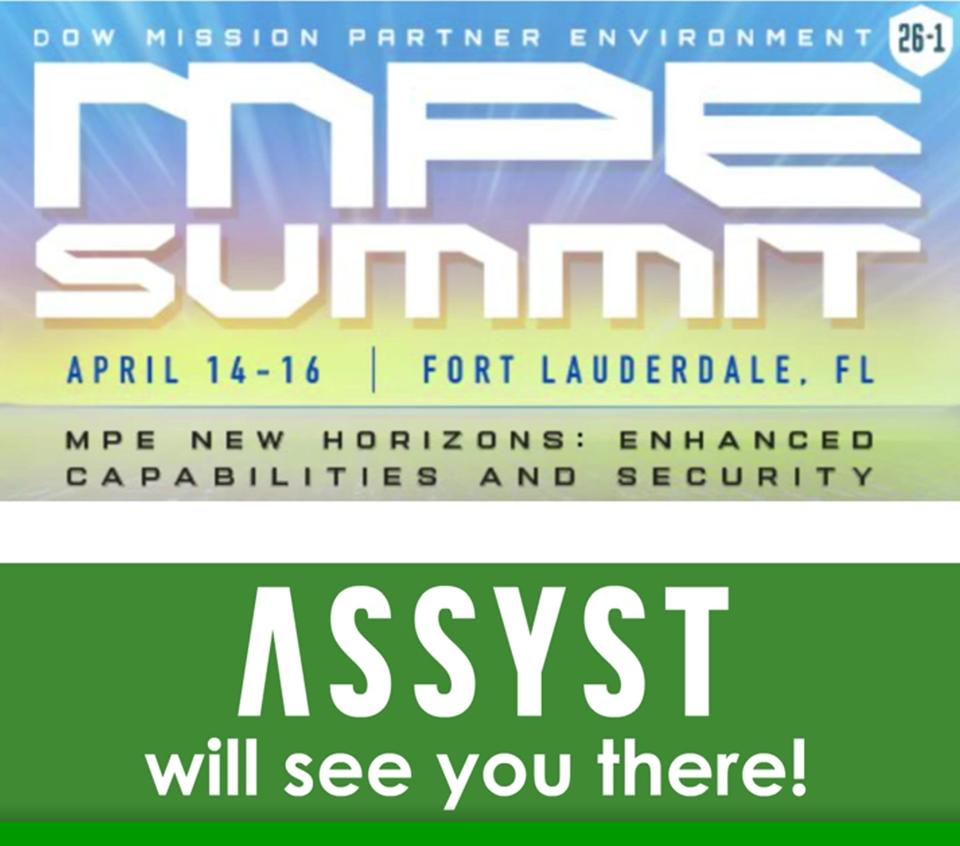
If you are attending the DoW MPE Summit in Fort Lauderdale, FL, I hope to meet you there.
Event Website:https://www.ncsi.com/event/mpe/agenda/
Connect with me on LinkedIn: https://www.linkedin.com/in/eugenegoldlust/
For more than a decade, modernization in enterprise technology circles largely meant one thing: move legacy systems to the cloud. And to be fair, that shift solved many real problems. Elastic compute replaced hardware constraints, distributed storage improved resilience, and infrastructure provisioning became dramatically faster.
But as agencies increasingly operate across complex ecosystems of cloud services, data platforms, analytics engines, and mission applications, something interesting has started to happen. Teams are realizing that simply moving systems to the cloud doesn’t automatically free them from the architectural gravity of the past. Many systems that migrated successfully still behave like they did when they lived in data centers, rigid, tightly coupled, and surprisingly difficult to evolve.
Read on LinkedIn

ASSYST will be exhibiting at AFCEA Belvoir Industry Days, May 5-7, 2026 (ABID 2026), a premier defense and technology event hosted at the Hilton Alexandria Mark Center, 5000 Seminary Rd, Alexandria, VA 22311.
https://www.afceabelvoirindustrydays.com/event/c4f8035c-4584-4af1-b668-af3c23d6e854/agenda
The event brings together leaders from the Department of War, the U.S. Army, federal agencies, and industry to discuss mission priorities, technology modernization, cybersecurity, data analytics, and artificial intelligence solutions that support national security.
Representing ASSYST at the event will be Loren Gray, Program Manager, and William Earp, General Manager of G-14C, ASSYST’s joint venture partner.

LOREN GRAY, Program Manager, DoW/Army Programs | LinkedIn

WILLIAM EARP, General Manager, G-14C, LLC | LinkedIn
With more than three decades of experience supporting federal civilian, defense, and public-sector missions, ASSYST continues to invest in advanced capabilities, including AI-enabled software engineering, secure data platforms, and mission-ready cybersecurity solutions.
ASSYST looks forward to meeting with program leaders, technology partners, and mission stakeholders attending AFCEA Belvoir Industry Days 2026.


The Breach That Logs In: Joe Anderson and William Earp discuss Insider Threat, AI-Ready Architecture, and the Science of Behavioral Risk.