

Type:
USDA’s Intelligent Data Future for Farmers and America
Eugene Goldlust, Sr. Account Executive, ASSYST, Inc.
For more than 160 years, USDA. has collected agricultural information to help farmers, policymakers, and the public make better decisions Its new Data Modernization Plan signals something bigger than another IT modernization cycle: a shift from simply collecting agricultural data toward creating an increasingly connected, intelligent, trusted and most importantly actionable agricultural data ecosystem.
The plan is built around four practical priorities: modernizing the data-reporting experience, improving acreage and yield estimation, integrating data and technology platforms, and strengthening trust and transparency with producers.
A Future Where Farmers Report Less, and Data Does More
One of the most powerful ideas in the plan is remarkably straightforward: do not ask a producer for information USDA already has.
USDA intends to make greater use of administrative data from FSA, RMA, NRCS, and other agencies; expand pre-filled survey fields; improve mobile experiences; and reduce duplicative reporting. It also plans to standardize data-collection workflows through its READI platform.
That is what a meaningful digital government should look like. Technology disappears into the background while the experience becomes simpler.
For farmers and ranchers, the benefit is not “modernization” as an abstract concept. It is time returned to the mission, less repetitive reporting, fewer unnecessary interactions, and better access to information that helps them operate.

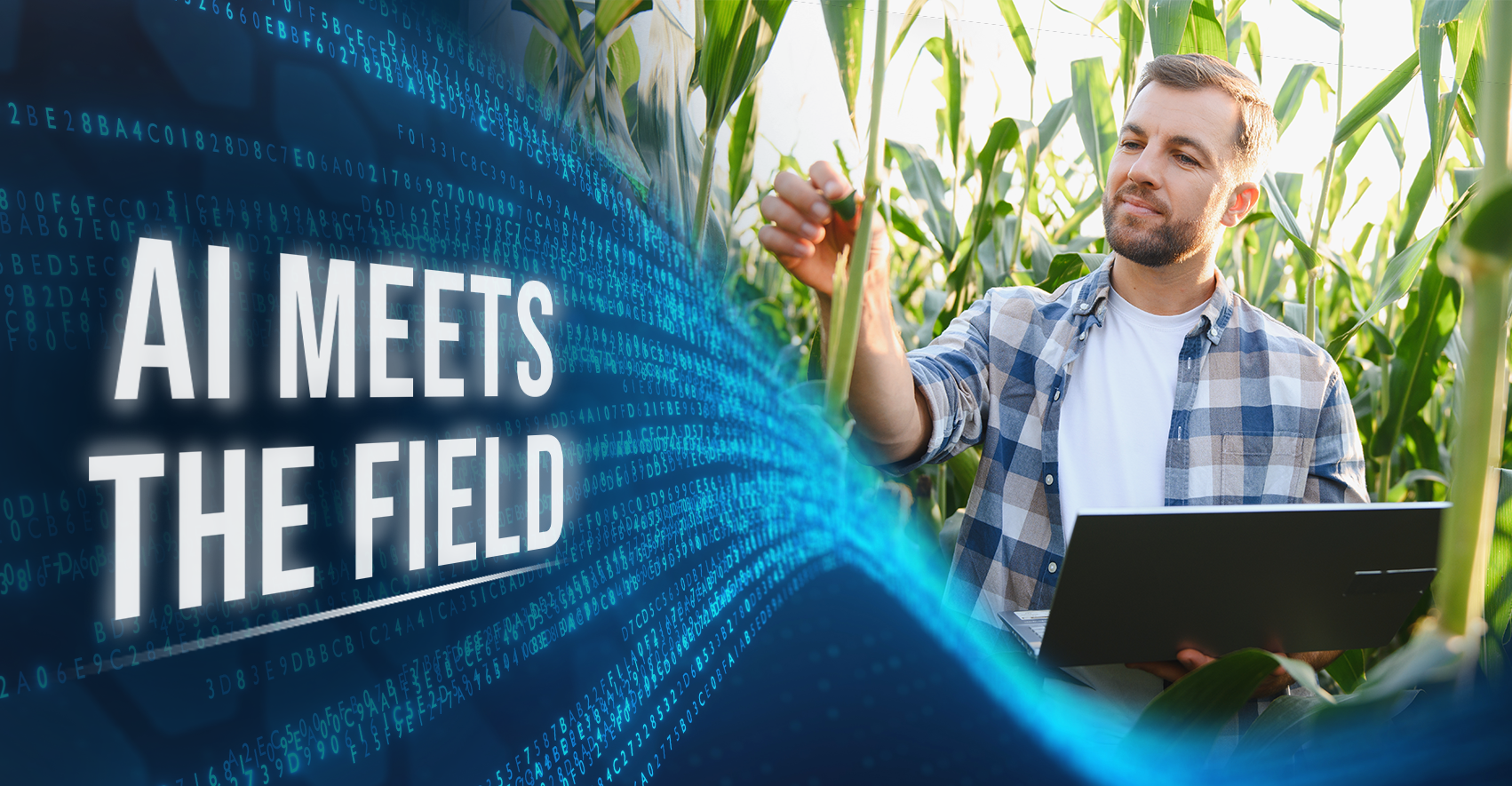
AI Meets the Field
The most futuristic elements of the plan may be happening far beyond the traditional government application.
USDA envisions combining administrative records with satellite imagery, remote sensing, precision agriculture, geospatial observations, modern modeling, and machine learning. It plans to expand collaboration with NASA on areas including soil moisture, crop-yield modeling, satellite missions, and tools such as CropCASMA, VegScape, and CropScape. The Cropland Data Layer has already moved from 30-meter to 10-meter resolution. data-modernization
The direction is compelling: imagine increasingly sophisticated agricultural intelligence capable of helping understand crop conditions, acreage, yields, and disaster impacts with greater speed and precision, while preserving the essential role of producer information.
USDA also explicitly calls for the responsible use of AI, machine learning, and advanced analytics, with privacy, scientific rigor, human oversight, and accountability built into the approach. data-modernization
The opportunity is not AI for AI’s sake. It is AI attached to a mission outcome.
A Significant Signal to the GovCon Community
For the federal technology industry, one paragraph in the plan deserves particular attention.
USDA proposes cloud-based data pipelines and shared analytical environments, invites qualified technology providers to address defined agricultural data challenges, and plans machine-learning pilots spanning workflow automation, data integration, anomaly detection, and geospatial analysis. Critically, USDA says it will establish pathways for successful pilots to move from research environments into supported production systems.
That changes the conversation for GovCon.
The opportunity is no longer simply to modernize an application. The emerging challenge is to connect cloud engineering, interoperable data, AI, geospatial technology, cybersecurity, automation, and digital experience into production environments that can operate securely and help the farmers at mission scale.
For technology companies, the differentiation will increasingly be the ability to cross the difficult gap between an impressive prototype and a trusted operational capability.

Making Agricultural Data More Accessible
The plan also points toward a different relationship between citizens and government data.
USDA intends to continue developing AgStatBot and related conversational tools to help users find and interpret NASS data, while AgInsights is envisioned as an interactive environment for curated data, charts, maps, prototype visualizations, and emerging geospatial products.
That is an important glimpse of the future.
Instead of asking people to understand government databases, schemas, and reporting structures, AI can increasingly help government information understand the question being asked of it.
Farmers gain easier access to information. Researchers gain richer analytical capabilities. Policymakers gain better evidence. And citizens gain a more accessible window into one of America's most important economic and national resources: affordable agriculture.

Modernization Ultimately Runs on Trust
USDA also recognizes that technological sophistication alone will not determine success. Its plan emphasizes privacy, confidentiality, cybersecurity, producer engagement, transparent methodologies, published performance measures, and disclosure of lessons learned from modernization pilots.
That may be the most important architecture of all: trusted data + trusted technology + trusted outcomes.
At ASSYST, this transformation connects directly to work we are already advancing across agriculture, healthcare, and regulated federal missions. Our support for USDA Rural Development’s cloud strategy and modernization, our longstanding work with FDA’s mission-critical food and health programs, and our experience helping CMS strengthen health-data security through modern Security Data Lake capabilities give us a practical view of what it takes to turn distributed federal data into trusted, operational intelligence. We are also investing in our Green Accelerator capabilities, including PhoenixGA and AthenaGA, to help agencies accelerate secure AI-enabled modernization, intelligent data access, workflow automation, advanced analytics, and governed decision support. For USDA, we see the next generation of agricultural technology not as another collection of applications, but as a connected ecosystem where trusted data, cloud, AI, cybersecurity, automation, and human expertise converge to deliver better outcomes for producers, programs, and the public.
The technology will continue to evolve. The measure of success should remain remarkably human:
A farmer spends less time reporting information. A USDA employee gets better insight sooner. A researcher can ask a more sophisticated question. A citizen can understand agricultural information more easily. And trusted AI helps turn America’s agricultural data into actionable intelligence.
That is when data modernization becomes mission modernization.
