

Type:
Envisioning Testing as a Service CoE for Rapid Application Deployment
ASSYST offers Testing as a Service (TaaS), enabling our customers to scale their testing capacity for enterprise applications. We understand that in today's rapidly evolving, automation-driven digital landscape, characterized by multi-cloud and multi-vendor environments, ensuring reliability, quality, and deploying software at the speed of business is crucial for the enterprise's success.
Our Center of Excellence (CoE) model is central to this offering, designed to assist customers in seamlessly integrating Testing as a Service (TaaS) within their business, systems, and infrastructure. Through TaaS, ASSYST provides a comprehensive suite of testing methodologies, including unit, integration, system, functional, regression, performance, load, and stress testing. We incorporate industry-standard approaches such as Behavior Driven Development (BDD) and Test Driven Development (TDD) into these methodologies to ensure better code quality, improved product quality, and, most importantly, an enhanced user experience.
Our CoE enables customers to refine their testing strategies through collaborative partnerships and custom solutions, delivering exceptional results. With TaaS supported by our CoE model, ASSYST can help customers navigate the complexities of modern software development.

- Extend Test Coverage: Ensures that all critical aspects of the software are thoroughly tested, reducing the likelihood of undiscovered defects.
- Expand Test Spectrum: Adopt diverse testing methodologies, ensuring comprehensive validation of the software's functionality, performance, and security.
- Enhance Efficiency through Automation: Streamlines testing processes, reduces manual effort, and accelerates the feedback loop, enabling faster time-to-market.
- Drive Quality through Innovation: Foster a culture of continuous improvement by adopting technological advancements such as Artificial Intelligence and Machine Learning (AI/ML), leading to innovative testing techniques and technologies for enhanced quality and faster time to market.
- Increase Awareness using Visualization: Provides stakeholders with actionable insights into testing activities, facilitating informed decision-making and driving team alignment.
Center of Excellence (CoE)
The Center of Excellence (CoE) is a strategic hub for driving testing excellence across various organizational domains. At ASSYST, we firmly believe that "if you can't measure it, you can't improve it." Therefore, in alignment with our strategic direction, the CoE focuses on defining and testing Key Performance Indicators (KPIs) to ensure that testing efforts effectively measure and contribute to overall business objectives.

Additionally, within the technology domain, the CoE will develop, maintain, and monitor an automation strategy to enhance efficiency and effectiveness in testing processes. This involves integrating innovative approaches such as AI-driven testing and leveraging machine learning algorithms into Continuous Integration/Continuous Deployment (CI/CD) pipelines to ensure that Testing is seamlessly embedded throughout the development lifecycle. These initiatives aim to improve the usability, accessibility, and reliability of products and services. The CoE will monitor performance metrics such as defect density, test coverage, automation coverage, cost of quality, and, most importantly, customer satisfaction to gauge the effectiveness of these strategies in achieving testing objectives.
Testing as a Service Offerings

Testing as a Service (TaaS) offers a comprehensive suite of testing solutions designed to meet the diverse needs of modern day software development. With TaaS, organizations gain access to functional testing experts who ensure each feature meets specified requirements. In addition to functional Testing, automated Testing accelerates the testing process and improves efficiency. Leveraging data-driven Testing enhances test coverage, reusability, and the velocity needed for rapid software deployment. Performance testing ensures application scalability and an optimal user experience. TaaS provides a seamless and scalable approach to Testing, enabling organizations to detect and address issues early in the development cycle, reduce costs, and deliver high-quality software products.
Test Automation Platform
The Test Automation Platform is powered by ASSYST's Green Accelerator program. The automation platform provides unified capabilities to various stakeholders and partners, including business users, end users, application developers, and information security teams. The platform delivers the following benefits:
Scalability and Flexibility: Quickly scale resources up or down based on testing needs, aligning with cloud strategies and ensuring efficient resource utilization.
Parallel Testing: Execute tests concurrently across multiple environments to reduce overall test execution time and enhance coverage.
Environment Management: Rapidly create isolated, production-like environments for thorough Testing without impacting live systems.
Integration Testing: Seamlessly integrate with APIs and microservices, ensuring robust validation and compatibility with enterprise systems.
Role Based Security Testing: Ensure that the software enforces role-based access control (RBAC). RBAC assigns permissions based on authorized user groups, ensuring that application users can access only the information and actions relevant to their roles.
Accessibility Testing: Automated and manual accessibility testing ensures application compliance with Web Content Accessibility Guidelines (WCAG).
Performance Testing: Simulate high user loads to identify performance bottlenecks and ensure the application can handle expected traffic.
Central Repository of Automation Test Scripts: Maintain a reusable central repository for automation test scripts to enhance efficiency.
Visual Execution: Facilitate visual execution of test scripts for better understanding and validation.
Support for Development Frameworks: Support Data Driven and Behavior Driven Development frameworks for comprehensive Testing.
Generative AI in Testing: Use AI to generate test cases and synthetic data sets, reducing manual effort and improving test coverage.
UI Testing: Expedite UI testing using visualization tools driven by AI/ML.
The automation platform establishes a centralized repository of test assets, including automated test scripts, test data, and test configurations, which helps Agile/SAFe portfolio-level teams collaborate effectively, share resources, and avoid redundancy and duplication of effort.
The TaaS Center of Excellence (CoE) emphasizes secure coding and privacy principles by incorporating Static Application Security Testing (SAST), Dynamic Application Security Testing (DAST), and privacy-focused testing techniques into its solutions. This approach ensures that security vulnerabilities are identified and addressed early in the development process, promoting secure coding practices and mitigating risks. By integrating these testing methodologies into TaaS solutions, the CoE helps organizations build secure, resilient, and privacy-aware applications, aligning with industry standards and compliance requirements.
Another benefit is that the platform integrates with AI-based code generation tools and ensures code quality and accuracy by validating functionality, performance, and adherence to coding standards. This integration also enhances security measures by identifying and addressing potential vulnerabilities.
Impact and Outcome
Testing as a Service (TaaS) offers a transformative solution for organizations seeking to optimize their testing processes and achieve superior outcomes. By embracing TaaS, agencies can unlock myriad benefits, including increased efficiency, enhanced test coverage, improved customer experience, and lower cost of ownership.
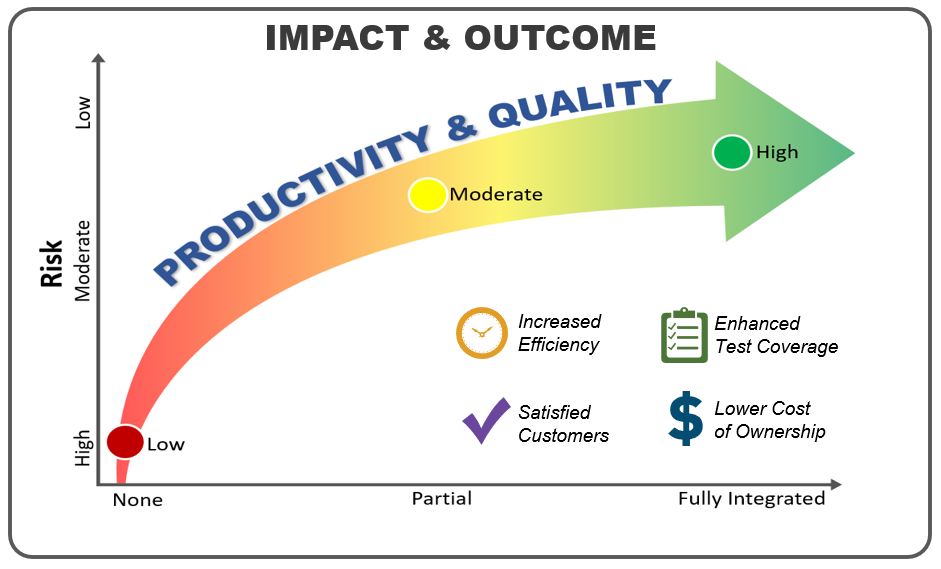
Through TaaS, organizations can streamline their testing operations and become better service product owners. They can leverage specialized expertise and modern technologies to execute testing activities with unprecedented efficiency by meeting customer experience goals. This enables faster product deployment and service launch while maintaining uncompromising quality standards and customer expectations.
Moreover, TaaS facilitates broader test coverage, ensuring that all critical functionalities and use cases are thoroughly validated. This comprehensive approach to Testing enhances product reliability and resilience, mitigating the risk of defects and ensuring a seamless user experience. TaaS empowers organizations to optimize their testing investments, delivering significant cost savings compared to traditional testing models.
About ASSYST
ASSYST is a trusted provider of Testing, Independent Verification, and Validation solutions tailored to government agencies. Our unparalleled expertise in serving Federal, State, and Local governments underscores our commitment to delivering testing services that meet the public sector's unique needs and rigorous standards. At ASSYST, we offer a comprehensive suite of testing capabilities, ranging from unit and regression testing to API and security testing, all aimed at ensuring the seamless functioning of government systems and applications. With a focus on innovation and efficiency, we stand ready to support government agencies in navigating the complexities of modern technology landscapes while delivering frictionless service experiences to citizens and stakeholders alike.